Love this? Save it for later!
Share the inspiration with your friends
It was a Tuesday afternoon in late October, and I’d stopped by my buddy Mark’s place to borrow a trailer hitch. He wasn’t trying to impress me, honestly, I don’t think he even remembered I was coming. But the smell hit me before I got through the screen door. Something sweet, smoky, and deeply savory—like a soy-sauce caramel cloud that just hung in the air. I stood there for a second, just breathing it in, while he rummaged through his garage for the hitch. When I finally walked into his kitchen, there it was: a dehydrator humming away on the counter, and a baking sheet covered in thin, dark strips of meat that looked like they’d been lacquered. He glanced over his shoulder and said, “Oh, that’s just some jerky I threw together. Deer from last season.” Just some jerky. Like it was nothing. I mean, I’ve had store-bought jerky that tastes like salted cardboard, and here he was, casually making the best teriyaki venison jerky I’d ever put in my mouth. I didn’t leave with the trailer hitch that day—I left with a Ziploc bag full of the stuff and a promise to get the recipe. Maybe you’ve been there, where a simple visit turns into a food memory you can’t shake. That’s what this recipe is for me, and now, it’s what I bring to every gathering. It’s the snack that disappears before the main course even hits the table.
Why You’ll Love This Recipe
Let me tell you, I’ve tested this recipe about a dozen times to get it just right. The first batch was too salty. The second was too tough. But this version? This is the one that got a standing ovation at a Super Bowl party. No joke.
- Perfect for Hosting: This jerky is a crowd magnet. Set out a bowl at your next gathering, and watch it vanish. It’s the kind of snack that gets people talking—and asking for the recipe before they leave.
- Simple Ingredients: You don’t need a specialty grocery store. Soy sauce, brown sugar, ginger, garlic—stuff you probably already have. The venison is the star, and it’s easier to find than you think.
- Quick & Easy Prep: The marinade comes together in 10 minutes. The hardest part is waiting for the meat to soak up all that flavor. Honestly, the hands-on time is minimal.
- Unbelievably Delicious: The texture is chewy but tender, and the teriyaki glaze caramelizes just enough to give you that sweet-savory punch. It’s not just jerky—it’s an experience.
- Crowd-Pleaser: I’ve served this to hunters, vegetarians (who caved), and picky kids. Everyone loves it. It’s the snack that bridges the gap between “gamey” and “gourmet.”
What makes this different from every other jerky recipe out there? It’s the balance. The marinade isn’t just slapped on—it’s carefully measured to complement the venison without overpowering it. I’ve learned through trial and error that a little pineapple juice in the mix helps tenderize the meat naturally, giving you that melt-in-your-mouth texture without any chemical junk. This isn’t just another version of teriyaki jerky; it’s the one you’ll come back to, batch after batch. And when you bring it to a party, you’ll feel like a kitchen rockstar.
What Ingredients You Will Need
This recipe uses simple, wholesome ingredients to deliver bold flavor and satisfying texture without the fuss. Most of these are pantry staples, but a few key players make all the difference.
- Venison (2 lbs, sliced against the grain into 1/4-inch strips): The star of the show. I prefer using a hind quarter roast or backstrap for the leanest cut. If you’re new to venison, don’t worry—the marinade does the heavy lifting. (Pro tip: Partially freeze the meat for 30 minutes before slicing. It makes cutting those thin strips so much easier.)
- Soy Sauce (1/2 cup): This is your salty backbone. I use low-sodium soy sauce to control the salt level. Tamari works great if you’re gluten-free.
- Brown Sugar (1/4 cup, packed): For that deep, molasses-like sweetness that caramelizes during dehydration. Dark brown sugar gives a richer flavor, but light works just fine.
- Pineapple Juice (1/4 cup): The secret weapon. The natural enzymes in pineapple juice help tenderize the venison without making it mushy. Plus, it adds a subtle sweetness that balances the soy sauce.
- Rice Vinegar (2 tablespoons): A little tang to brighten up the marinade. Apple cider vinegar works in a pinch.
- Fresh Ginger (1 tablespoon, grated): Don’t use the powdered stuff here. Fresh ginger brings a warm, zesty kick that’s irreplaceable. I keep a knob in the freezer and grate it straight from frozen—no peeling needed.
- Fresh Garlic (4 cloves, minced): Because garlic makes everything better. Let it sit in the marinade for a few minutes before adding the meat to really wake up the flavor.
- Sesame Oil (1 tablespoon): A little goes a long way. It adds that nutty, toasty note that screams “teriyaki.”
- Red Pepper Flakes (1 teaspoon, optional): For a subtle heat that builds. I add this when I’m serving a crowd that likes a little kick.
- Black Pepper (1 teaspoon, freshly ground): Adds depth without overpowering the other flavors.
I’ve made this with beef flank steak when venison wasn’t available, and it’s still fantastic. But there’s something about the lean, rich flavor of venison that takes this jerky to another level. If you’re buying venison, look for meat that’s deep red and well-trimmed. Any silver skin will make the jerky tough, so take the time to remove it.
Equipment Needed
You don’t need a fancy kitchen to pull this off, but the right tools make the process smoother. Here’s what you’ll need:
- Dehydrator: This is your best friend for jerky. I use an Excalibur 9-tray model, and it’s been worth every penny. If you don’t have one, a conventional oven set to the lowest temperature (usually 170°F) works—just prop the door open with a wooden spoon to let moisture escape.
- Sharp Knife or Meat Slicer: A sharp chef’s knife is fine, but a meat slicer gives you consistent, even strips. I’ve used both, and honestly, the slicer saves time and effort.
- Large Mixing Bowl: For the marinade and meat. Glass or stainless steel is best—plastic can absorb odors.
- Ziploc Bag or Vacuum Sealer Bag: For marinating. A Ziploc bag lets you massage the marinade into the meat easily. A vacuum sealer speeds up the process, but it’s not necessary.
- Baking Sheets and Parchment Paper: If you’re using an oven, you’ll need these. Parchment paper makes cleanup a breeze.
- Cooling Rack: Placing the strips on a rack over a baking sheet allows air to circulate, helping the jerky dry evenly.
- Meat Thermometer: Not essential, but handy if you’re worried about food safety. Venison jerky should reach an internal temperature of 160°F to kill any bacteria.
I remember my first batch—I used a dull knife and ended up with strips that looked like puzzle pieces. Learn from my mistake: invest in a sharp blade. It makes all the difference.
Preparation Method
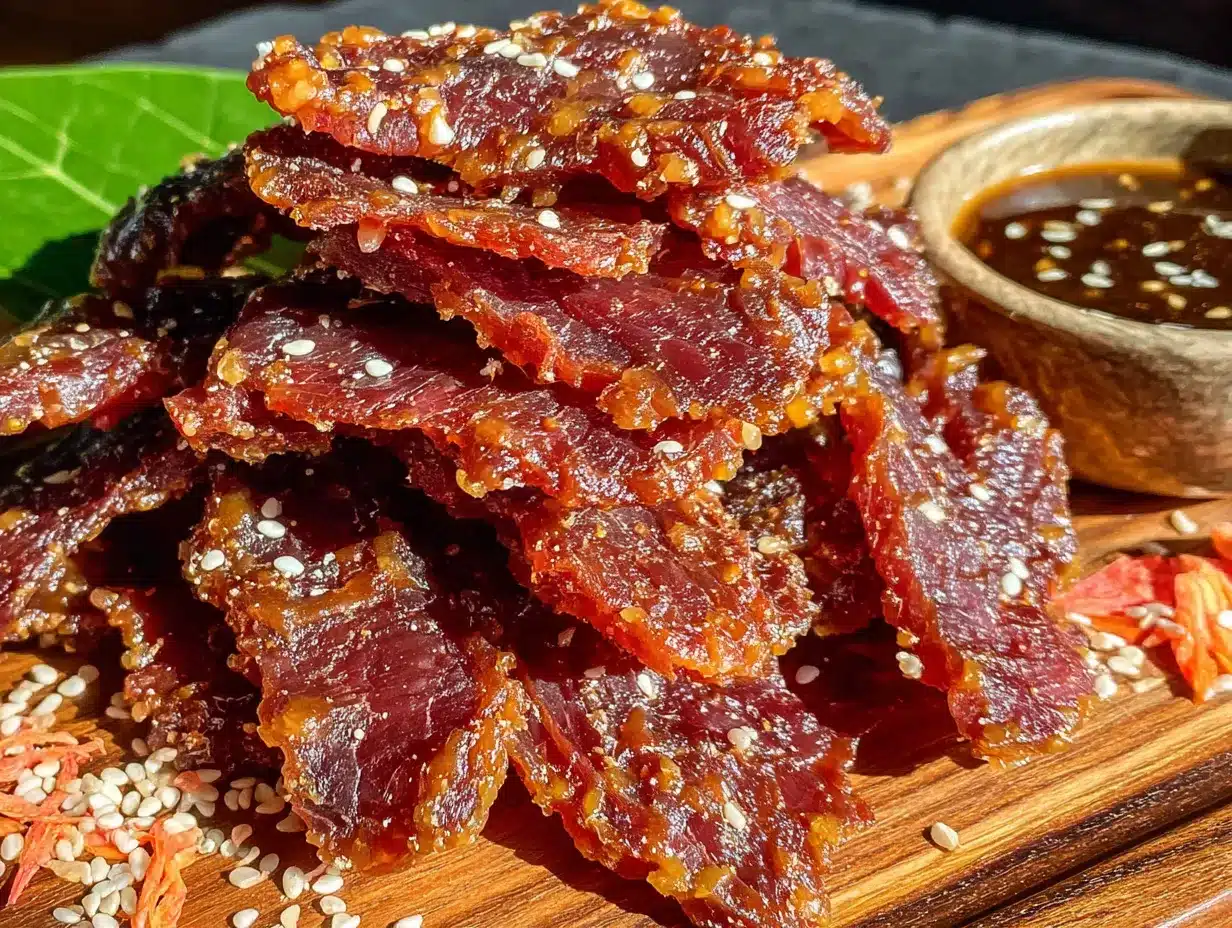
Ready to make the best teriyaki venison jerky your friends have ever tasted? Let’s get to it.
- Prep the Venison (20 minutes): Start by trimming any visible fat or silver skin from the meat. Venison is lean, but any fat left on will go rancid during dehydration. Partially freeze the meat for 30 minutes—it firms up just enough to make slicing a breeze. Slice against the grain into 1/4-inch thick strips. For a chewier texture, slice with the grain. I prefer against the grain for tenderness, especially when serving a crowd.
- Make the Marinade (10 minutes): In a large mixing bowl, whisk together the soy sauce, brown sugar, pineapple juice, rice vinegar, grated ginger, minced garlic, sesame oil, red pepper flakes (if using), and black pepper. Stir until the sugar is fully dissolved. Take a moment to smell it—that’s the aroma that’ll fill your kitchen.
- Marinate the Meat (8-12 hours, or overnight): Place the venison strips in a large Ziploc bag. Pour the marinade over the meat, seal the bag, and massage it gently to coat every strip. Lay the bag flat in the refrigerator. Flip it halfway through to ensure even distribution. I’ve let it go for 24 hours before, and the flavor was even deeper—just don’t go beyond that, or the pineapple juice can make the meat mushy.
- Prepare for Dehydration (15 minutes): Remove the meat from the fridge and let it sit at room temperature for 15 minutes. Drain the strips in a colander, but don’t rinse them—you want that glaze. Pat them dry with paper towels to remove excess moisture. This step is crucial for a good texture; too much liquid on the surface will steam the meat instead of drying it.
- Dehydrate the Jerky (4-6 hours): Arrange the strips in a single layer on your dehydrator trays, leaving space between each piece for air circulation. Set the dehydrator to 160°F. If using an oven, place the strips on a cooling rack over a baking sheet and set the oven to its lowest temperature (170°F or so). Prop the door open with a wooden spoon. Start checking at the 4-hour mark. The jerky is done when it bends and cracks, but doesn’t snap in half. It should feel dry to the touch but still pliable.
- Cool and Test (30 minutes): Let the jerky cool completely on the trays. This allows the moisture to redistribute evenly. Tear a piece in half—if you see any moisture beads inside, it needs another 30 minutes in the dehydrator. Trust your senses here; the texture should be chewy, not crispy.
- Store and Enjoy (5 minutes): Once cooled, transfer the jerky to an airtight container or a vacuum-sealed bag. Let it rest overnight before serving—the flavors meld and deepen. I’ve made the mistake of eating it fresh out of the dehydrator, and while it’s good, it’s even better the next day.
Cooking Tips & Techniques
I’ve had my share of jerky disasters. One batch came out so tough I could’ve used it as a shingle. Here’s what I’ve learned so you don’t have to repeat my mistakes.
Slice Evenly: Consistency is everything. If some strips are thicker than others, they’ll dry at different rates. You’ll end up with a mix of over-dried and under-dried pieces. Use a meat slicer if you have one, or take your time with a sharp knife.
Don’t Skip the Pineapple Juice: I know it sounds weird, but it’s a game-changer. The natural enzymes break down the muscle fibers just enough to keep the jerky tender. Just don’t marinate for more than 24 hours, or you’ll end up with meat mush.
Pat Dry Before Dehydrating: This is a step I overlooked for years. Wet meat steams instead of dehydrates, giving you a rubbery texture. A quick pat with paper towels makes a world of difference.
Rotate Trays: If your dehydrator doesn’t have a fan, rotate the trays halfway through. The bottom trays dry faster than the top ones. I learned this the hard way when my bottom batch turned into beef chips.
Test for Doneness: The bend test is your friend. Take a piece out, let it cool for a minute, and bend it. It should flex and show small cracks on the surface without breaking. If it snaps, it’s overdone. If it feels spongy, it needs more time.
Multitask Smartly: While the jerky is dehydrating, clean up your kitchen. The marinade smell lingers, so wash your bowl and knife immediately. I’ve left a marinade-covered bowl in the sink overnight, and let me tell you, the next morning’s smell is not pleasant.
Batch Size Matters: For a gathering, double the recipe. This jerky disappears fast. I once brought a single batch to a poker night and it was gone in 20 minutes. Now I always make at least 4 pounds for any party.
Variations & Adaptations
This recipe is a fantastic base, but don’t be afraid to play around. Here are some twists I’ve tried and loved.
Spicy Mango Teriyaki: Swap the pineapple juice for mango nectar and add an extra teaspoon of red pepper flakes. The sweetness of the mango pairs beautifully with the heat. I made this for a summer barbecue, and it was gone before the burgers came off the grill.
Smoky Maple Version: Replace the brown sugar with maple syrup and add a teaspoon of liquid smoke. This gives the jerky a sweet, smoky flavor that’s perfect for fall gatherings. It tastes like autumn in a strip.
Gluten-Free Adaptation: Use tamari or coconut aminos instead of soy sauce. The flavor profile shifts slightly, but it’s still delicious. I’ve served this to friends with celiac disease, and they couldn’t tell the difference.
Dehydrator vs. Oven: I prefer a dehydrator for consistency, but the oven works in a pinch. Just remember to prop the door open and keep an eye on it. Ovens can run hot, so check your jerky at the 3-hour mark.
Venison Substitute: No venison? No problem. Beef flank steak or sirloin tip works beautifully. Even turkey breast can be used for a leaner option. Just adjust the slicing thickness—poultry is more delicate and dries faster.
Teriyaki Garlic Lover’s Version: Double the garlic and add a tablespoon of garlic powder to the marinade. It’s punchy, bold, and absolutely addictive. I made this for a game night, and one friend asked if he could buy a bag off me.
Honestly, the best part about this recipe is how forgiving it is. You can tweak the sweetness, heat, or saltiness to match your crowd. The first time I made the spicy mango version, I was nervous it would be too sweet. Turned out to be the most requested variation at my next potluck.
Serving & Storage Suggestions
When it comes to serving this jerky at a gathering, presentation matters. I like to pile it high on a wooden cutting board or in a rustic ceramic bowl. A few sprigs of fresh rosemary or a sprinkle of sesame seeds on top adds a touch of elegance without trying too hard.
Serving Temperature: Room temperature is best. The flavors are more pronounced, and the texture is at its peak. If you’ve stored it in the fridge, let it sit out for 15-20 minutes before serving.
What to Serve Alongside: This jerky pairs beautifully with a cold beer or a crisp lager. For a non-alcoholic option, try iced green tea with a squeeze of lemon. I also love setting out small bowls of pickled ginger, wasabi peas, or salted edamame for a Japanese-inspired snack board. It’s a hit at any party.
Storage Instructions: Keep the jerky in an airtight container or a vacuum-sealed bag. Stored in a cool, dark pantry, it’ll last for 2-3 weeks. In the refrigerator, it stays fresh for up to 2 months. For longer storage, freeze it in a vacuum-sealed bag—it’ll keep for 6 months without losing quality.
Reheating Tips: Honestly, jerky doesn’t need reheating. But if you prefer a slightly warm snack, pop it in a 300°F oven for 3-4 minutes. Let it cool before serving, as it firms up again quickly.
Flavor Development: Here’s a little secret: this jerky tastes better after a day or two. The flavors meld and deepen, and the texture evens out. I always make it at least 24 hours before my gathering. It’s like the jerky knows it’s about to be the star of the snack table.
Nutritional Information & Benefits
Venison is one of the leanest meats you can eat, and this jerky packs a serious nutritional punch. Here’s a rough estimate per serving (about 2 ounces):
- Calories: 120
- Protein: 22g
- Fat: 2g
- Carbohydrates: 6g
- Sugar: 5g
- Sodium: 480mg
Health Benefits: Venison is rich in B vitamins, zinc, and iron—nutrients that support energy levels and immune function. It’s also lower in saturated fat than beef, making it a heart-friendly choice. The ginger and garlic in the marinade offer anti-inflammatory properties, and the pineapple juice provides a small dose of vitamin C.
Dietary Considerations: This recipe is naturally low-carb and keto-friendly if you use a sugar substitute like monk fruit sweetener. It’s also gluten-free if you swap the soy sauce for tamari. The only potential allergen is soy, so keep that in mind for guests with sensitivities.
I’m not a nutritionist, but I love knowing that this snack isn’t just delicious—it’s also packed with protein and free from the preservatives you find in store-bought jerky. It’s a win-win for your body and your taste buds.
Conclusion
There’s a reason this teriyaki venison jerky has become my go-to for every gathering. It’s simple to make, incredibly flavorful, and always steals the show. Whether you’re hosting a game night, a backyard barbecue, or a holiday party, this jerky will have your guests hovering around the snack table, asking for the recipe.
I encourage you to make it your own. Tweak the heat, swap in different juices, or double the garlic. The beauty of this recipe is that it’s a canvas for your creativity. And when you bring it to your next gathering, watch the smiles spread—it’s a feeling that never gets old.
I’d love to hear how it turns out for you. Drop a comment below with your favorite variation or tag me in your photos. Happy snacking, and here’s to the best teriyaki venison jerky you’ll ever make!
Frequently Asked Questions
Can I use beef instead of venison?
Absolutely! Beef flank steak or sirloin tip works perfectly. The cooking time may vary slightly, so start checking at the 3-hour mark.
How long does the jerky last?
Stored in an airtight container in a cool, dark pantry, it lasts 2-3 weeks. In the fridge, it stays fresh for up to 2 months. For longer storage, freeze it for up to 6 months.
Do I have to use a dehydrator?
Not at all. A conventional oven set to its lowest temperature (170°F) works great. Just prop the door open with a wooden spoon to let moisture escape.
Why is my jerky tough?
This usually happens from over-drying or slicing with the grain. Next time, slice against the grain and check for doneness earlier. The jerky should bend and crack, not snap.
Can I make this recipe sugar-free?
Yes! Substitute the brown sugar with monk fruit sweetener or erythritol. The texture will be slightly different, but the flavor will still be delicious.
Pin This Recipe!
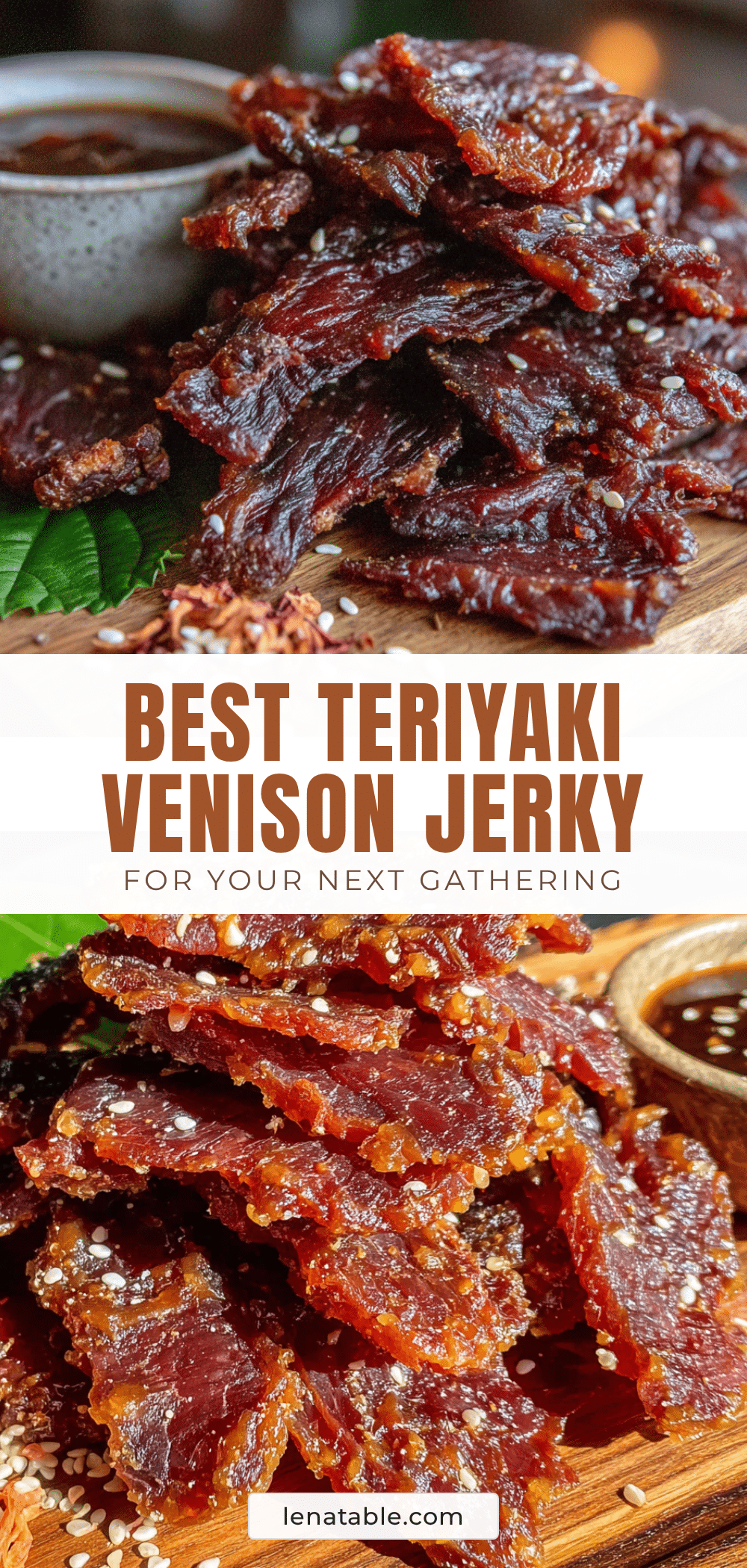
Best Teriyaki Venison Jerky Easy Homemade Snack
This teriyaki venison jerky is a crowd-pleasing snack that’s sweet, smoky, and deeply savory. Made with a simple marinade and a dehydrator or oven, it’s the perfect homemade snack for any gathering.
- Prep Time: 20 minutes
- Cook Time: 4-6 hours
- Total Time: 4 hours 50 minutes to 6 hours 50 minutes (plus 8-12 hours marinating)
- Yield: 8 servings 1x
- Category: Snack
- Cuisine: Japanese-inspired
Ingredients
- 2 lbs venison (hind quarter roast or backstrap), sliced against the grain into 1/4-inch strips
- 1/2 cup low-sodium soy sauce
- 1/4 cup packed brown sugar
- 1/4 cup pineapple juice
- 2 tablespoons rice vinegar
- 1 tablespoon fresh ginger, grated
- 4 cloves garlic, minced
- 1 tablespoon sesame oil
- 1 teaspoon red pepper flakes (optional)
- 1 teaspoon freshly ground black pepper
Instructions
- Prep the Venison (20 minutes): Trim any visible fat or silver skin from the meat. Partially freeze the meat for 30 minutes to firm it up. Slice against the grain into 1/4-inch thick strips.
- Make the Marinade (10 minutes): In a large mixing bowl, whisk together soy sauce, brown sugar, pineapple juice, rice vinegar, grated ginger, minced garlic, sesame oil, red pepper flakes (if using), and black pepper until the sugar is fully dissolved.
- Marinate the Meat (8-12 hours or overnight): Place venison strips in a large Ziploc bag. Pour marinade over the meat, seal the bag, and massage gently to coat. Lay flat in the refrigerator, flipping halfway through.
- Prepare for Dehydration (15 minutes): Remove meat from fridge and let sit at room temperature for 15 minutes. Drain strips in a colander (do not rinse). Pat dry with paper towels to remove excess moisture.
- Dehydrate the Jerky (4-6 hours): Arrange strips in a single layer on dehydrator trays, leaving space between pieces. Set dehydrator to 160°F. If using an oven, place strips on a cooling rack over a baking sheet, set oven to lowest temperature (170°F), and prop door open with a wooden spoon. Start checking at the 4-hour mark. Jerky is done when it bends and cracks but doesn’t snap in half.
- Cool and Test (30 minutes): Let jerky cool completely on trays. Tear a piece in half; if you see moisture beads inside, it needs another 30 minutes.
- Store and Enjoy (5 minutes): Transfer cooled jerky to an airtight container or vacuum-sealed bag. Let rest overnight before serving for best flavor.
Notes
Slice against the grain for tenderness. Don’t marinate more than 24 hours or the pineapple juice can make the meat mushy. Pat dry before dehydrating to avoid steaming. Rotate trays if your dehydrator doesn’t have a fan. The jerky tastes better after a day or two as flavors meld.
Nutrition
- Serving Size: 2 ounces
- Calories: 120
- Sugar: 5
- Sodium: 480
- Fat: 2
- Saturated Fat: 0.5
- Carbohydrates: 6
- Protein: 22
Keywords: teriyaki venison jerky, homemade jerky, venison snack, easy jerky recipe, deer jerky, teriyaki jerky