Love this? Save it for later!
Share the inspiration with your friends
“I wasn’t expecting to find a lemon herb cake recipe scribbled inside a dusty garden journal at the local flea market,” I admitted, brushing off a smudge of dirt from the faded page. It was a chilly Saturday morning, and honestly, I was just killing time between errands. But there it was—a recipe that promised a bright, fresh cake with a honey buttercream frosting that sounded too good to pass up.
Let me tell you, the way the lemon zest and fragrant herbs mingle in this cake is something that stuck with me from the very first bite. The texture is so moist and tender, it almost feels like the cake is giving you a little hug. I remember almost forgetting to add the fresh thyme because I got distracted by a phone call, and somehow that happy accident brought out a subtle depth I didn’t expect.
Maybe you’ve been there—looking for something simple but special to bake, a recipe that feels homemade but still impressive. This moist lemon herb cake with honey buttercream frosting has become my go-to for exactly that. It’s perfect for afternoon tea, a springtime gathering, or just when you want to bring a little sunshine into your kitchen. Honestly, it’s one of those recipes that makes you pause and savor the moment, and I keep making it because every time, it surprises me a little more.
Why You’ll Love This Recipe
After countless tests and tweaks, this moist lemon herb cake recipe with easy honey buttercream frosting has proven to be a standout. I mean, I’ve baked a lot of cakes, but this one ticks so many boxes — it’s quick, flavorful, and just downright satisfying.
- Quick & Easy: Comes together in about 45 minutes, including baking time, so it’s fantastic for those last-minute dessert needs or weekend baking moods.
- Simple Ingredients: No need for fancy or hard-to-find items. You probably have lemon, fresh herbs, and honey hiding in your kitchen already.
- Perfect for Spring & Summer: The fresh lemon and herb combo feels light and refreshing, ideal for brunches, garden parties, or casual dinners.
- Crowd-Pleaser: Friends and family always ask for seconds — and the kids surprisingly love it too, even with the herbs!
- Unbelievably Moist: The secret is a bit of sour cream in the batter that keeps the crumb tender and soft for days.
What sets this recipe apart is the subtle yet noticeable herb infusion—fresh thyme and rosemary give the lemon flavor a beautiful, aromatic twist that isn’t overwhelming. Pairing that with a honey buttercream frosting—not just plain sugar—adds a natural sweetness and a silky finish that balances the cake perfectly.
This isn’t just a lemon cake; it’s a fresh take on a classic that feels both simple and special. You’re not just making dessert, you’re making a memory.
What Ingredients You Will Need
This recipe uses simple, wholesome ingredients to deliver bold flavor and a satisfying texture without any fuss. Everything plays a role, from the fresh herbs that add fragrance to the honey that brings a nuanced sweetness.
- For the Cake Batter:
- 2 ½ cups (310g) all-purpose flour (I prefer King Arthur for consistent results)
- 2 ½ tsp baking powder
- ½ tsp baking soda
- ¼ tsp salt
- 1 cup (227g) unsalted butter, softened (room temp is key!)
- 1 ¾ cups (350g) granulated sugar
- 3 large eggs, room temperature
- 1 cup (240ml) sour cream (adds incredible moisture)
- 2 tbsp finely grated lemon zest (about 2 large lemons)
- ¾ cup (180ml) freshly squeezed lemon juice (about 3 lemons)
- 1 tbsp fresh thyme leaves, finely chopped (optional but highly recommended)
- 1 tsp fresh rosemary, finely chopped (use sparingly)
- For the Honey Buttercream Frosting:
- 1 cup (227g) unsalted butter, softened
- 3 cups (360g) powdered sugar, sifted
- ¼ cup (85g) honey (local honey works best for flavor)
- 2 tbsp heavy cream or milk
- 1 tsp vanilla extract
- Pinch of salt
Feel free to swap the all-purpose flour with a gluten-free blend if needed. For a dairy-free option, try coconut yogurt instead of sour cream and a plant-based butter substitute. When picking herbs, fresher is better — if you can’t find fresh rosemary, a small amount of dried will work, but reduce the quantity to avoid overpowering the cake.
Equipment Needed
- 9-inch (23cm) round cake pans (two) — I use non-stick pans, but you can also line regular pans with parchment paper for easy release
- Mixing bowls (medium and large)
- Electric mixer or stand mixer — handheld works fine, but a stand mixer saves your arms!
- Zester or fine grater for lemons
- Measuring cups and spoons (dry and liquid) — accurate measurement is key for baking success
- Rubber spatula for scraping bowls
- Cooling racks to cool the cakes evenly
- Offset spatula or butter knife for frosting the cake smoothly
If you don’t have a stand mixer, a sturdy whisk and some elbow grease will work just fine. For budget-friendly pans, I recommend checking out local thrift stores or online marketplaces — sometimes you find gems for a fraction of retail. Keeping your butter at room temperature is easier if you have a kitchen thermometer (65°F or 18°C is ideal), but just a gentle poke with your finger works too.
Preparation Method
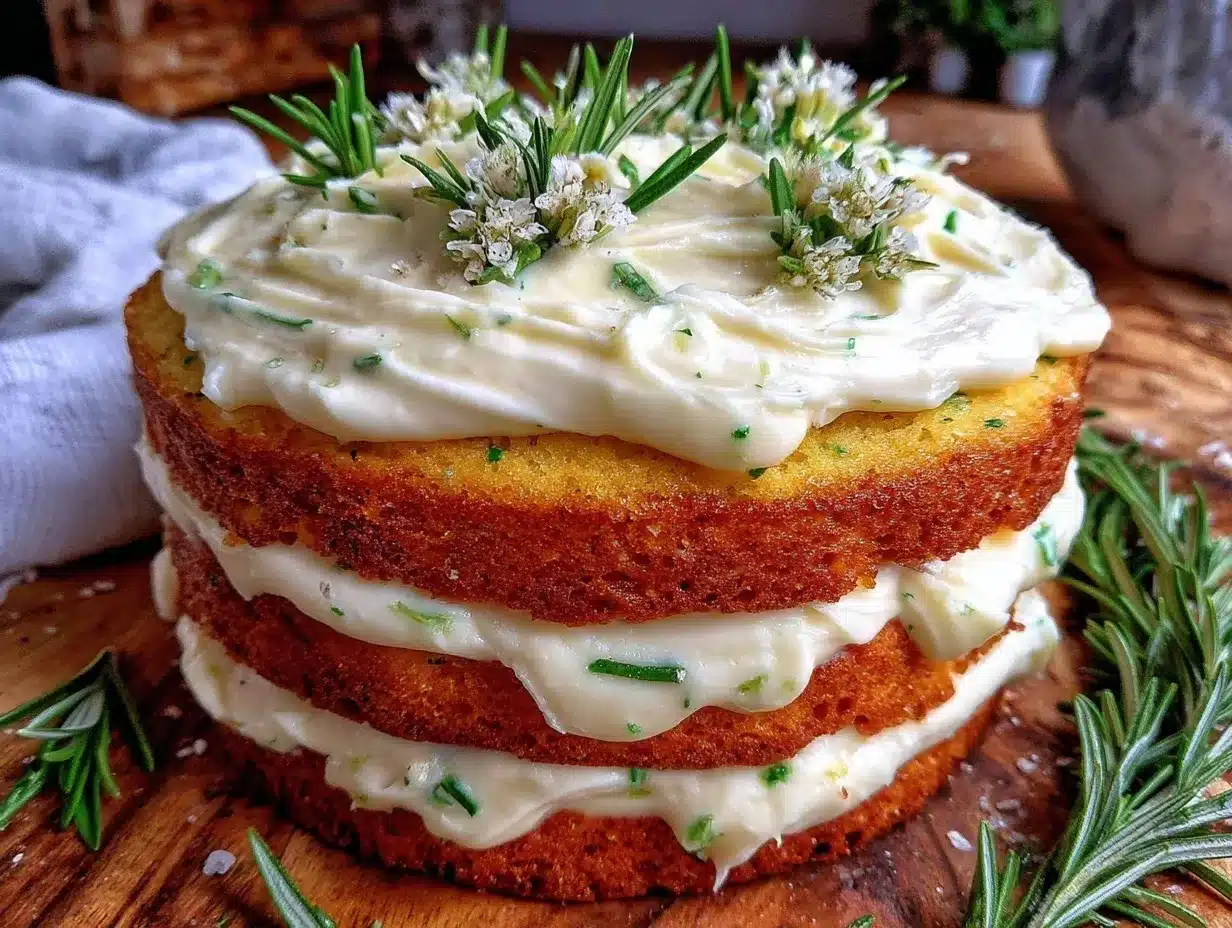
- Prep the Pans and Oven (10 minutes): Preheat your oven to 350°F (175°C). Grease two 9-inch round cake pans with butter or non-stick spray, then line the bottoms with parchment paper. This helps the cakes release perfectly after baking.
- Mix Dry Ingredients (5 minutes): In a medium bowl, whisk together 2 ½ cups all-purpose flour, 2 ½ tsp baking powder, ½ tsp baking soda, and ¼ tsp salt. Set aside.
- Cream Butter and Sugar (5-7 minutes): Using an electric mixer, beat 1 cup softened unsalted butter with 1 ¾ cups granulated sugar until light and fluffy. This usually takes about 5-7 minutes. The color should lighten and texture become airy.
- Add Eggs One at a Time (3 minutes): Beat in 3 large eggs, one at a time, mixing well after each addition. This ensures the batter emulsifies properly. If the mixture looks like it might curdle, don’t worry—it will come together soon.
- Incorporate Lemon Zest, Juice, and Herbs (3 minutes): Stir in 2 tbsp lemon zest, ¾ cup freshly squeezed lemon juice, 1 tbsp chopped thyme, and 1 tsp rosemary. The batter will smell bright and herbal. Be careful not to overdo the herbs; you want a subtle hint, not an overpowering punch.
- Add Dry Ingredients Alternately with Sour Cream (5 minutes): Reduce mixer speed to low. Add the dry ingredients in three parts, alternating with 1 cup sour cream—start and end with the dry mix. Mix gently to combine after each addition, avoiding overmixing. The batter should be smooth and pourable but thick.
- Pour Batter into Pans and Bake (30-35 minutes): Divide the batter evenly between the prepared pans. Smooth the tops gently with a spatula. Bake for 30-35 minutes, or until a toothpick inserted in the center comes out clean or with a few moist crumbs. The cake will spring back lightly when touched.
- Cool Completely (at least 1 hour): Let the cakes cool in their pans for 10 minutes, then turn out onto wire racks to cool completely. Don’t frost while warm—it’ll melt the buttercream and make a mess.
- Make the Honey Buttercream Frosting (10 minutes): Beat 1 cup softened butter until creamy. Gradually add 3 cups powdered sugar, then mix in ¼ cup honey, 2 tbsp heavy cream, 1 tsp vanilla extract, and a pinch of salt. Beat on high speed until light and fluffy, about 3-5 minutes.
- Assemble the Cake: Place one cake layer on a serving plate. Spread a generous layer of frosting on top. Add the second cake layer and cover the entire cake with the remaining frosting. If you like, garnish with fresh lemon slices or a sprinkle of finely chopped herbs for a pretty touch.
If you notice your batter is too thick—maybe your sour cream was cold—add a tablespoon of milk to loosen it up. If it’s too runny, a quick extra minute in the oven might help. The key is to watch the toothpick test closely.
Trust me, this method works every time once you get the hang of it. I often make this cake on lazy Sunday afternoons when I want something both comforting and a little fancy.
Cooking Tips & Techniques
Here are some nuggets I’ve picked up over the years baking this moist lemon herb cake with honey buttercream frosting:
- Room Temperature Ingredients: Make sure your butter, eggs, and sour cream are all at room temperature. Cold ingredients can cause the batter to curdle or bake unevenly.
- Don’t Overmix: Once you add the flour, mix just until combined. Overmixing develops gluten, which can make your cake dense instead of tender.
- Fresh Herbs Matter: Use fresh thyme and rosemary for that bright herbal note. Dried herbs can be too intense or bitter if not measured carefully.
- Test Early: Start checking your cake at 30 minutes. Oven temperatures vary, and you don’t want to dry out this moist beauty.
- Buttercream Consistency: If your honey buttercream is too soft, chill for 10 minutes before frosting. If it’s too stiff, add a splash more cream or milk.
- Multitasking: While the cakes bake, whip up the frosting so everything’s ready when the cakes cool. This keeps you efficient and avoids letting the cakes sit too long.
- Personal Lesson: I once swapped lemon juice with lime by mistake—surprisingly, it worked but the flavor was sharper. Lesson: stick to the recipe unless you’re feeling adventurous!
Variations & Adaptations
This lemon herb cake is pretty versatile. Here are a few twists I’ve tried or considered:
- Gluten-Free Version: Replace all-purpose flour with a 1-to-1 gluten-free baking flour blend. Add an extra ½ tsp baking powder to help with rise.
- Vegan Adaptation: Use a flax egg (1 tbsp ground flaxseed + 3 tbsp water) instead of eggs, coconut yogurt for sour cream, and a vegan butter substitute. The honey buttercream can be swapped for a maple or agave sweetened frosting.
- Seasonal Herbs: Swap thyme and rosemary for lavender or basil for a different floral note. Be careful to research edible quantities as some herbs can be more potent.
- Lemon Blueberry Upgrade: Fold in 1 cup fresh or frozen blueberries into the batter for bursts of juicy sweetness (toss them in flour first to prevent sinking).
Personally, I once added a pinch of cardamom to the batter for a warm, spicy hint that paired beautifully with the honey frosting. It’s a subtle surprise that’s worth trying if you want something a little different.
Serving & Storage Suggestions
This cake is best served at room temperature to let the honey buttercream shine. I like to slice it thin with a serrated knife to keep the layers neat and serve with a cup of herbal tea or a sparkling lemonade for a refreshing pairing.
If you’re hosting, garnish the cake with thin lemon slices or a sprinkle of finely chopped herbs for that extra wow factor. It looks like you spent hours decorating when really, it’s all about simple, fresh ingredients.
Store leftover cake covered tightly in the refrigerator for up to 4 days. The flavors actually deepen when chilled, though the frosting firms up a bit. Bring the slices back to room temperature before serving, or warm gently in a microwave for 10-15 seconds.
You can freeze the unfrosted cake layers wrapped well in plastic wrap and foil for up to 3 months. Thaw overnight in the fridge before frosting and serving.
Nutritional Information & Benefits
This moist lemon herb cake is a treat that balances indulgence with some natural goodness. Each serving contains approximately 350 calories, with moderate fat content mainly from butter and sour cream.
Key ingredients like lemon provide vitamin C, while fresh herbs add antioxidants and subtle anti-inflammatory properties. Using honey in the buttercream adds natural sweetness and trace nutrients, unlike refined sugar alone.
For those watching carbs, the cake is not low-carb but can be adapted with almond flour and sugar substitutes for a lighter version. It’s gluten-free adaptable too, making it approachable for many dietary needs.
I appreciate this cake as a mindful indulgence—something you can enjoy without feeling like you’re overdoing it, especially when paired with fresh, wholesome ingredients.
Conclusion
If you’re looking for a cake that feels special but is actually straightforward to make, this moist lemon herb cake with honey buttercream frosting fits the bill perfectly. It’s fresh, tender, and has a little twist that makes it stick in your memory.
Don’t be afraid to play with the herbs or try the variations to make it your own. Honestly, that’s part of the fun with baking—tweaking a recipe until it’s just right for your tastes.
I keep coming back to this recipe because it feels like a little celebration in every bite, and I hope it becomes a favorite in your kitchen too. If you try it out, I’d love to hear how you made it yours—drop a comment or share your photos!
Here’s to sweet moments and even sweeter cakes!
FAQs
Can I make this lemon herb cake ahead of time?
Yes! You can bake the cake layers up to two days in advance and keep them wrapped in the fridge. Frost just before serving for the freshest taste.
What herbs work best in this cake?
Fresh thyme and rosemary are ideal for their mild, complementary flavors. You can experiment with basil or lavender but use sparingly to avoid overpowering the lemon.
How do I store leftover cake?
Keep the cake covered in an airtight container in the refrigerator for up to 4 days. Bring to room temperature before serving for best flavor.
Is there a dairy-free version of the honey buttercream?
Absolutely! Use vegan butter and a plant-based milk like almond or oat, then sweeten with maple syrup instead of honey for a dairy-free frosting.
Can I use bottled lemon juice instead of fresh?
Fresh lemon juice is best for vibrant flavor, but if you must use bottled, try to get one without added preservatives or sugars to keep the taste bright.
Pin This Recipe!
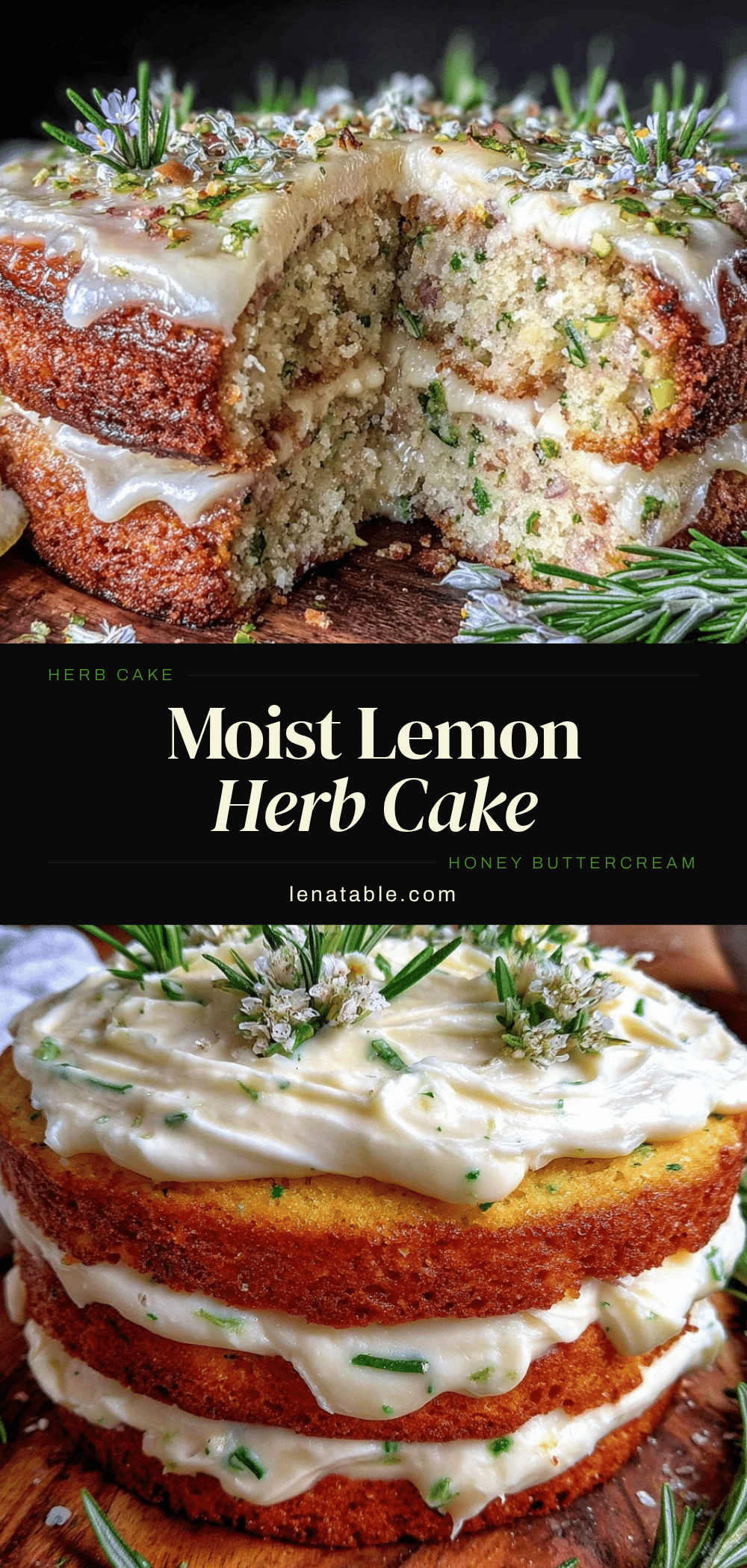
Moist Lemon Herb Cake Recipe with Easy Honey Buttercream Frosting
A bright, fresh lemon herb cake with a moist, tender crumb and a silky honey buttercream frosting. Perfect for spring gatherings or afternoon tea, this cake combines fresh thyme and rosemary with lemon zest and juice for a subtle aromatic twist.
- Prep Time: 20 minutes
- Cook Time: 30-35 minutes
- Total Time: 50-55 minutes
- Yield: 12 servings 1x
- Category: Dessert
- Cuisine: American
Ingredients
- 2 ½ cups (310g) all-purpose flour
- 2 ½ tsp baking powder
- ½ tsp baking soda
- ¼ tsp salt
- 1 cup (227g) unsalted butter, softened
- 1 ¾ cups (350g) granulated sugar
- 3 large eggs, room temperature
- 1 cup (240ml) sour cream
- 2 tbsp finely grated lemon zest (about 2 large lemons)
- ¾ cup (180ml) freshly squeezed lemon juice (about 3 lemons)
- 1 tbsp fresh thyme leaves, finely chopped (optional but recommended)
- 1 tsp fresh rosemary, finely chopped
- For the Honey Buttercream Frosting:
- 1 cup (227g) unsalted butter, softened
- 3 cups (360g) powdered sugar, sifted
- ¼ cup (85g) honey
- 2 tbsp heavy cream or milk
- 1 tsp vanilla extract
- Pinch of salt
Instructions
- Preheat oven to 350°F (175°C). Grease two 9-inch round cake pans and line bottoms with parchment paper.
- In a medium bowl, whisk together flour, baking powder, baking soda, and salt. Set aside.
- Using an electric mixer, beat softened butter and granulated sugar until light and fluffy, about 5-7 minutes.
- Add eggs one at a time, mixing well after each addition.
- Stir in lemon zest, lemon juice, thyme, and rosemary.
- Reduce mixer speed to low. Add dry ingredients in three parts, alternating with sour cream, starting and ending with dry ingredients. Mix gently until combined.
- Divide batter evenly between prepared pans and smooth tops.
- Bake for 30-35 minutes or until a toothpick inserted in the center comes out clean or with a few moist crumbs.
- Cool cakes in pans for 10 minutes, then turn out onto wire racks to cool completely.
- To make frosting, beat softened butter until creamy. Gradually add powdered sugar, then mix in honey, heavy cream, vanilla extract, and salt. Beat on high speed until light and fluffy, about 3-5 minutes.
- Assemble cake by spreading frosting on one layer, topping with second layer, and covering entire cake with remaining frosting. Garnish with lemon slices or chopped herbs if desired.
Notes
Use room temperature ingredients for best results. Do not overmix after adding flour to avoid dense cake. Start checking cake at 30 minutes to prevent drying out. If frosting is too soft, chill before frosting; if too stiff, add a splash of cream or milk. Fresh herbs are preferred for best flavor. For gluten-free, substitute flour with gluten-free blend and add extra baking powder. For dairy-free, use coconut yogurt and plant-based butter, and swap honey for maple syrup in frosting.
Nutrition
- Serving Size: 1 slice (1/12th of c
- Calories: 350
- Sugar: 32
- Sodium: 220
- Fat: 18
- Saturated Fat: 11
- Carbohydrates: 45
- Fiber: 1
- Protein: 4
Keywords: lemon cake, herb cake, honey buttercream, lemon herb cake, moist cake, spring dessert, easy cake recipe, homemade cake