Love this? Save it for later!
Share the inspiration with your friends
Introduction
“You’ve got to stir it just right,” my neighbor Joe said, peering over the fence as rain drummed steadily on the roof. It was one of those soggy Sunday afternoons where the whole neighborhood seemed to slow down, wrapped in the kind of stillness only a good, slow rain can bring. Joe, who’s not much of a cook—honestly, I figured his idea of dinner was a hot dog and a can of beans—was standing there with a huge pot simmering on his porch stove. That beef stew smelled like a warm hug I didn’t know I needed.
I wasn’t expecting much at first—he’d been fiddling with the recipe for years, always tweaking, always promising “this one’s the keeper.” But that day? The stew had a golden, rich broth flecked with tender chunks of beef and veggies that looked like they’d been slow-cooked forever. The kind of stew that makes you forget the gray skies and just sit a little longer.
Maybe you’ve been there—watching the rain, craving some comfort food that feels like it was made just for you. I grabbed a cracked bowl from my kitchen, and Joe handed me a spoonful. The stew was everything I didn’t know I wanted: hearty, cozy, and slow-simmered to perfection. Let me tell you, this recipe stayed with me ever since. It’s the kind of dish that turns a gloomy afternoon into a memory, and honestly, that’s why I keep making it.
Why You’ll Love This Recipe
This beef stew recipe slow-simmered to perfection isn’t just any stew—it’s the kind of meal that makes you close your eyes after the first bite and sigh with contentment. Over countless rainy Sundays and family dinners, I’ve refined this recipe to balance rich flavors and tender textures that feel like a reward for patience. Here’s why it’s a go-to in my kitchen:
- Quick & Easy: While it simmers slowly, active prep time is under 30 minutes, perfect for busy weekends when you want cozy without the fuss.
- Simple Ingredients: No need for exotic spices or hard-to-find cuts—just hearty beef, fresh veggies, and pantry staples you likely have on hand.
- Perfect for Cozy Rainy Days: This stew is tailor-made for those chilly, wet afternoons where you just want to curl up and forget the weather.
- Crowd-Pleaser: Kids, picky eaters, and grown-ups alike always ask for seconds—there’s something about that slow-simmered goodness.
- Unbelievably Delicious: The beef melts in your mouth, and the broth is rich but never heavy—comfort food that feels fresh and satisfying.
What sets this stew apart? It’s the slow simmer and just the right seasoning balance that brings out deep, layered flavors without overpowering the natural taste of the beef and veggies. Plus, a little splash of Worcestershire sauce adds a subtle tang that ties everything together. It’s not just stew; it’s my rainy day ritual, and I think you’ll find it becomes one of yours.
What Ingredients You Will Need
This recipe uses simple, wholesome ingredients to deliver bold flavor and satisfying texture without the fuss. Most of these are pantry staples, and the fresh vegetables add a seasonal touch that keeps it homey and bright.
- Beef chuck roast, cut into 1-inch cubes (about 2 pounds / 900g) – I recommend grass-fed beef for richer flavor
- Vegetable oil or canola oil (2 tablespoons) – for browning the beef
- Yellow onion, chopped (1 large) – adds sweetness and depth
- Carrots, peeled and sliced into 1/2-inch rounds (3 medium) – for natural sweetness and texture
- Celery stalks, chopped (2 stalks) – for aromatic balance
- Garlic cloves, minced (3 cloves) – brings warmth and a touch of spice
- All-purpose flour (1/4 cup / 30g) – helps thicken the stew
- Beef broth (4 cups / 950ml) – homemade or store-bought, I prefer low sodium
- Red wine (1 cup / 240ml) – optional but highly recommended for depth
- Tomato paste (2 tablespoons) – adds richness and umami
- Worcestershire sauce (1 tablespoon) – subtle tang that rounds out flavors
- Bay leaves (2 leaves) – classic aromatic
- Fresh thyme (2 teaspoons, chopped) or 1 teaspoon dried – herbaceous touch
- Potatoes, peeled and cut into chunks (3 medium) – starchy and comforting, Yukon Gold works great
- Salt and black pepper, to taste – essential seasoning
Substitution tips: Use gluten-free flour for a gluten-free stew, swap in dairy-free broth if needed, or leave out the wine and add extra broth if preferred. In summer, baby new potatoes or fresh green beans can be great swaps for the potatoes and celery.
Equipment Needed
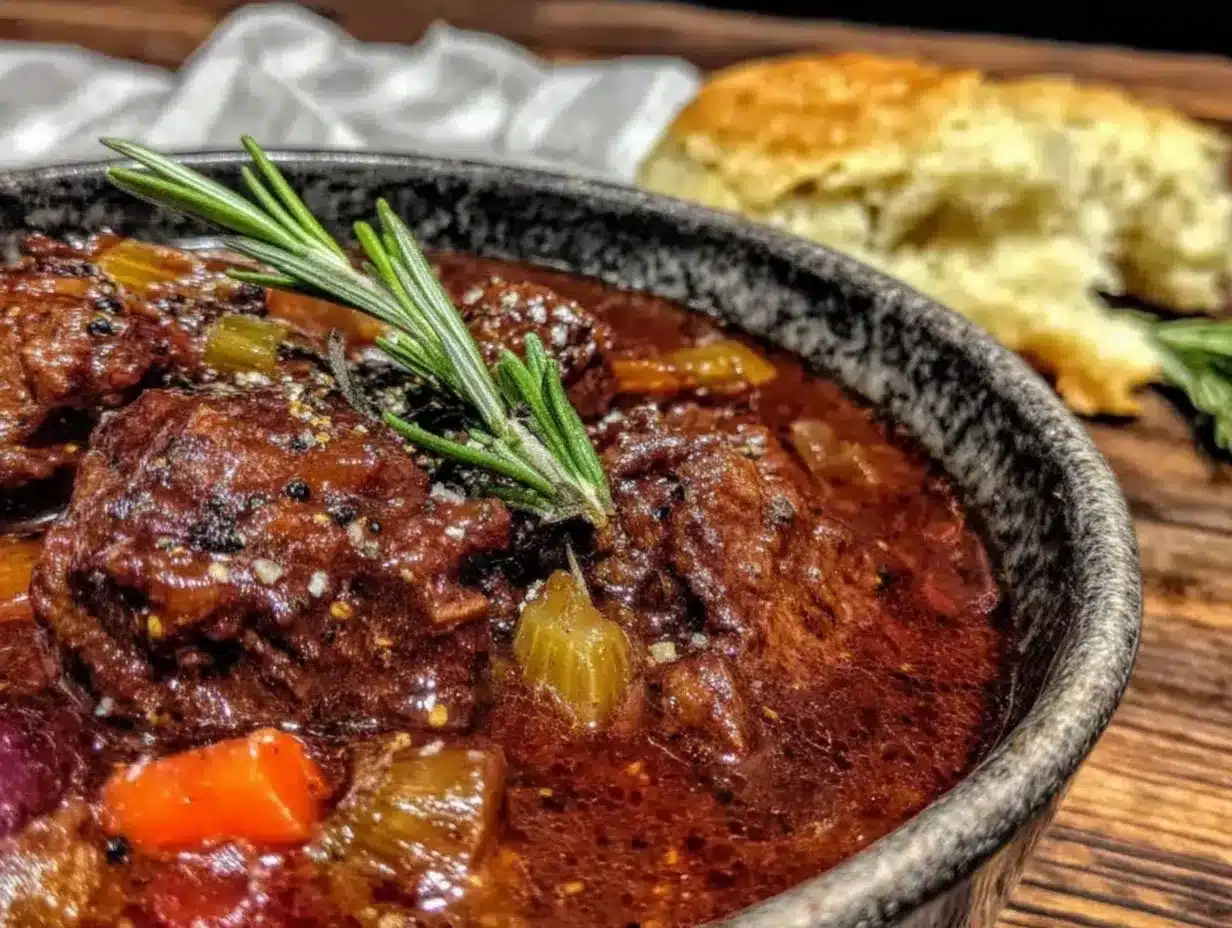
- Large heavy-bottomed pot or Dutch oven: Perfect for even heat distribution. My trusty cast iron Dutch oven from Le Creuset has taken a beating but still shines.
- Sharp chef’s knife: For chopping vegetables and cutting beef cubes. A dull knife makes prep frustrating, so keep it sharp!
- Wooden spoon or heatproof spatula: For stirring without scratching the pot.
- Measuring cups and spoons: To get seasoning and liquids right.
- Cutting board: Preferably one with a groove to catch juices.
If you don’t have a Dutch oven, a heavy pot with a tight-fitting lid works fine—just watch the heat so it doesn’t scorch. For budget-friendly options, enameled cast iron alternatives are widely available and easy to maintain. After cooking, soak the pot to loosen any stuck bits before cleaning; trust me, it saves scrubbing time later.
Preparation Method
- Prep the beef: Pat the beef cubes dry with paper towels to ensure a good sear. Season generously with salt and pepper. (About 10 minutes)
- Brown the beef: Heat 2 tablespoons of oil in your Dutch oven over medium-high heat. Working in batches to avoid overcrowding, brown the beef cubes until a deep golden crust forms on all sides. This usually takes about 5 minutes per batch. Transfer browned beef to a plate. (15 minutes)
- Sauté the aromatics: In the same pot, add the chopped onion, carrots, and celery. Cook over medium heat until softened and fragrant, about 5-7 minutes. Stir in minced garlic and cook for another minute. (8 minutes)
- Make the roux: Sprinkle the flour over the vegetables and stir well to coat. Cook for 2-3 minutes, stirring constantly, until the flour is lightly toasted but not burnt. This step helps thicken the stew later and removes the raw flour taste.
- Deglaze the pot: Slowly pour in the red wine, scraping up any browned bits stuck to the bottom—this is where the flavor magic happens! Let the wine reduce by half, about 3-4 minutes.
- Build the stew: Add the beef broth, tomato paste, Worcestershire sauce, bay leaves, and thyme. Stir to combine. Return the browned beef and any accumulated juices to the pot. Bring to a gentle simmer.
- Slow simmer: Cover the pot with a lid slightly ajar and let the stew simmer gently for 1.5 to 2 hours, stirring occasionally. The beef should become fork-tender and the broth rich and flavorful.
- Add potatoes: About 30 minutes before the end of cooking, add the potato chunks. Continue simmering until potatoes are tender but not falling apart.
- Final seasoning: Remove bay leaves, taste the stew, and adjust salt and pepper as needed. If the stew is too thick, add a splash of broth or water to loosen. (5 minutes)
- Rest and serve: Let the stew sit for 10 minutes off the heat before serving. This resting time allows flavors to meld beautifully.
Tip: If the stew starts to stick or looks dry during simmering, add small amounts of broth and lower the heat. The key is a gentle bubble, not a roaring boil. Also, don’t rush browning the beef; those browned bits are flavor gold.
Cooking Tips & Techniques
One trick I learned the hard way: never skip drying your beef cubes before browning. Moisture is the enemy of a good sear, and without that crust, the stew lacks depth. I once tossed wet beef straight into the pot and ended up with a boiled, bland mess—lesson burned in.
Patience is your best friend here. Slow simmering lets the tough fibers in chuck roast break down, turning chewy into tender. Resist the urge to crank up the heat for “faster” cooking; it just makes the meat tough.
When adding potatoes, choose those that hold their shape well like Yukon Gold or red potatoes. Russets tend to fall apart and make the stew too starchy. If you want extra body, toss in a handful of pearl onions or mushrooms during the last 20 minutes.
Multitasking tip: prep all your veggies while the beef is browning to save time. If your schedule’s tight, assemble everything in the morning and let the stew simmer low all day while you handle other tasks. It’s one of those recipes that rewards slow cooking.
Finally, let the stew rest before serving. Flavors deepen and marry, making every spoonful more satisfying. And honestly, who doesn’t love a meal that tastes better the next day?
Variations & Adaptations
- Slow Cooker Version: After browning the beef and sautéing veggies, transfer everything to a slow cooker. Cook on low for 6-8 hours or high for 3-4 hours, adding potatoes in the last hour.
- Gluten-Free Option: Swap all-purpose flour with cornstarch or a gluten-free flour blend to thicken. Mix cornstarch with a little cold water before adding to prevent clumps.
- Vegetarian Adaptation: Replace beef with hearty mushrooms like portobello or cremini and use vegetable broth. Add extra root veggies for substance.
- Spicy Twist: Add a diced jalapeño or a pinch of cayenne pepper when sautéing aromatics for a subtle heat that warms you up.
- Personal Favorite: I sometimes stir in a splash of balsamic vinegar right before serving to add brightness and cut through the richness.
Feel free to swap in seasonal vegetables or adjust herbs to your liking. This stew is forgiving and welcomes creativity.
Serving & Storage Suggestions
Serve this beef stew warm, preferably in deep bowls to catch every drop of that luscious broth. A crusty baguette or a slice of homemade garlic bread pairs beautifully, perfect for soaking up the juices. For drinks, a robust red wine or a malty beer complements the flavors nicely.
Leftovers keep well in the refrigerator for up to 4 days, and the flavors only improve over time—honestly, it’s even better the next day. For longer storage, freeze in airtight containers for up to 3 months. When reheating, do so gently on the stove or in the microwave, adding a splash of broth if it’s too thick.
Flavors develop as the stew rests, so making it a day ahead is a smart move for hosting or meal prep. Just remember to warm it slowly to maintain that tender texture.
Nutritional Information & Benefits
Each serving of this beef stew provides approximately 350-400 calories, with a balanced mix of protein, carbohydrates, and healthy fats. The beef chuck offers a good source of iron and zinc, essential for energy and immune support. Root vegetables like carrots and potatoes add fiber and vitamins A and C, making this a nourishing, hearty meal.
This stew is naturally gluten-free if you skip the flour or use a gluten-free thickener, and it’s free of added sugars. It fits well into a wholesome, balanced diet that values comfort without sacrificing nutrition.
I appreciate how this recipe offers warmth and sustenance without feeling heavy, making it a family favorite that doesn’t leave you feeling sluggish afterward.
Conclusion
So, there you have it—my cozy dad’s rainy Sunday beef stew slow-simmered to perfection. It’s a recipe born out of simple moments, a little patience, and the kind of flavors that stick with you. Whether you’re sheltering from a storm or just craving a warm, comforting meal, this stew is ready to welcome you in.
Feel free to make it your own: tweak the veggies, swap in your favorite herbs, or try the slow cooker method. I love this recipe because it brings people together and turns ordinary days into special ones. I’d love to hear how your version turns out, so don’t hesitate to share your tweaks or stories in the comments below.
Here’s to many cozy, stew-filled Sundays ahead!
FAQs About Beef Stew Recipe Slow-Simmered to Perfection
How long does it take to cook beef stew properly?
For the best tenderness, slow simmer the stew for about 1.5 to 2 hours. This allows the beef to become fork-tender and flavors to fully develop.
Can I make this beef stew in a slow cooker?
Absolutely! After browning the beef and sautéing the veggies, transfer everything to a slow cooker. Cook on low for 6-8 hours or high for 3-4 hours, adding potatoes in the last hour.
What cut of beef is best for stew?
Beef chuck roast is ideal because it becomes tender and flavorful with slow cooking. Avoid leaner cuts like sirloin which can dry out.
How can I thicken the stew if it’s too watery?
Mix a tablespoon of flour or cornstarch with cold water to create a slurry, then stir it into the simmering stew. Cook for a few minutes until thickened.
Can I freeze leftover beef stew?
Yes, beef stew freezes well. Store in airtight containers for up to 3 months. Thaw overnight in the fridge and reheat gently on the stove or microwave.
Pin This Recipe!
Beef Stew Recipe Slow-Simmered to Perfection for Cozy Rainy Sundays
A hearty and cozy beef stew slow-simmered to tender perfection, perfect for chilly, rainy days. This recipe balances rich flavors and tender textures with simple ingredients and a comforting broth.
- Prep Time: 25 minutes
- Cook Time: 2 hours
- Total Time: 2 hours 25 minutes
- Yield: 6 servings 1x
- Category: Main Course
- Cuisine: American
Ingredients
- 2 pounds beef chuck roast, cut into 1-inch cubes (grass-fed recommended)
- 2 tablespoons vegetable oil or canola oil
- 1 large yellow onion, chopped
- 3 medium carrots, peeled and sliced into 1/2-inch rounds
- 2 celery stalks, chopped
- 3 garlic cloves, minced
- 1/4 cup all-purpose flour (30g)
- 4 cups beef broth (950ml), low sodium preferred
- 1 cup red wine (240ml), optional but recommended
- 2 tablespoons tomato paste
- 1 tablespoon Worcestershire sauce
- 2 bay leaves
- 2 teaspoons fresh thyme, chopped (or 1 teaspoon dried)
- 3 medium potatoes, peeled and cut into chunks (Yukon Gold recommended)
- Salt and black pepper, to taste
Instructions
- Pat the beef cubes dry with paper towels and season generously with salt and pepper. (About 10 minutes)
- Heat 2 tablespoons of oil in a Dutch oven over medium-high heat. Brown the beef cubes in batches until a deep golden crust forms on all sides, about 5 minutes per batch. Transfer browned beef to a plate. (15 minutes)
- In the same pot, add chopped onion, carrots, and celery. Cook over medium heat until softened and fragrant, about 5-7 minutes. Stir in minced garlic and cook for another minute. (8 minutes)
- Sprinkle the flour over the vegetables and stir well to coat. Cook for 2-3 minutes, stirring constantly, until the flour is lightly toasted but not burnt.
- Slowly pour in the red wine, scraping up browned bits from the bottom. Let the wine reduce by half, about 3-4 minutes.
- Add beef broth, tomato paste, Worcestershire sauce, bay leaves, and thyme. Stir to combine. Return browned beef and juices to the pot. Bring to a gentle simmer.
- Cover the pot with a lid slightly ajar and simmer gently for 1.5 to 2 hours, stirring occasionally, until beef is fork-tender and broth is rich.
- About 30 minutes before the end of cooking, add potato chunks. Continue simmering until potatoes are tender but not falling apart.
- Remove bay leaves, taste stew, and adjust salt and pepper as needed. Add broth or water if stew is too thick. (5 minutes)
- Let stew rest off heat for 10 minutes before serving to allow flavors to meld.
Notes
Dry beef cubes thoroughly before browning to ensure a good sear. Use Yukon Gold or red potatoes to avoid mushy texture. If stew sticks or looks dry during simmering, add small amounts of broth and lower heat. Let stew rest before serving for best flavor. For gluten-free, substitute flour with cornstarch or gluten-free flour blend. Slow cooker adaptation available.
Nutrition
- Serving Size: 1 bowl (approximatel
- Calories: 375
- Sugar: 6
- Sodium: 450
- Fat: 15
- Saturated Fat: 5
- Carbohydrates: 25
- Fiber: 4
- Protein: 30
Keywords: beef stew, slow simmer, comfort food, rainy day recipe, hearty stew, easy beef stew, cozy meal