Love this? Save it for later!
Share the inspiration with your friends
Introduction
Last Sunday afternoon, I was wandering the aisles of the local farmers’ market when the sharp scent of browned butter mixed with earthy sage suddenly hit me — and instantly, I was ten years old standing in the cramped kitchen of my old apartment in Portland. It was the place where I first tried making risotto on a whim, armed with a stubborn little pot and a cracked wooden spoon that always seemed to slip from my grasp. I remember burning the butter once, then salvaging it by adding sage, which somehow turned a near disaster into this warm, nutty aroma that filled the whole room.
That very smell has haunted me ever since, tugging at the edges of memory each autumn when butternut squash appears on the shelves. Honestly, it’s not just about the dish — it’s about chasing that fleeting moment when the risotto becomes this silky, comforting embrace, and the browned butter with crispy sage leaves hits your tongue just right. Maybe you’ve been there, trying to capture a feeling you almost forgot, through a recipe that feels like a secret handshake between seasons and senses.
So, I set out to recreate that exact feeling with this creamy butternut squash risotto with sage brown butter. It’s not just a meal; it’s a memory you can eat, imperfect and all — with a little mess here and there, a forgotten stir, and plenty of love in between.
Why You’ll Love This Recipe
After countless attempts and tweaks in my kitchen, this creamy butternut squash risotto with sage brown butter has become my go-to comfort dish. Let me tell you why it stands out:
- Quick & Easy: Comes together in about 40 minutes, perfect when you want something cozy but not complicated.
- Simple Ingredients: Uses pantry staples plus seasonal squash — no need for fancy trips to specialty stores.
- Perfect for Fall Evenings: Ideal for chilly nights when you crave something hearty and soothing.
- Crowd-Pleaser: I’ve served this to friends with varying tastes, and it’s always met with smiles and second helpings.
- Unbelievably Delicious: The creamy risotto base paired with the nutty, herbaceous sage brown butter creates a flavor combo that feels like a warm hug.
This isn’t just another risotto recipe. The trick lies in gently roasting the butternut squash first to bring out its natural sweetness. Then, finishing everything with sage-infused brown butter adds a complex depth that’s hard to forget. Honestly, this recipe makes you close your eyes after the first bite and just savor the moment. Plus, it’s a great way to impress without breaking a sweat in the kitchen.
What Ingredients You Will Need
This recipe uses simple, wholesome ingredients that come together to create bold flavors and a silky texture without any fuss. Most of these are pantry staples or easy to find at your local market, and you can often swap to suit your needs.
- For the Risotto Base:
- 1 ½ cups Arborio rice (I prefer Carolina brand for its creamy finish)
- 4 cups vegetable broth, kept warm
- 1 small onion, finely chopped
- 2 cloves garlic, minced
- 2 tablespoons olive oil
- ½ cup dry white wine (optional, but adds nice acidity)
- Salt and freshly ground black pepper, to taste
- For the Butternut Squash:
- 1 medium butternut squash (about 2 pounds), peeled and cubed
- 1 tablespoon olive oil
- Pinch of salt
- For the Sage Brown Butter:
- 6 tablespoons unsalted butter (I like Plugrá for its rich flavor)
- 10 fresh sage leaves
- Pinch of salt
- Finishing Touches:
- ¼ cup grated Parmesan cheese (or a vegan alternative)
- Freshly cracked black pepper
- Optional: toasted pine nuts or walnuts for crunch
- Prepare the Butternut Squash: Preheat your oven to 400°F (200°C). Toss the peeled and cubed squash with 1 tablespoon olive oil and a pinch of salt. Spread evenly on a parchment-lined baking sheet. Roast for about 25-30 minutes until tender and slightly caramelized, stirring halfway through. This roasting brings out that natural sweetness we want in the risotto. (Tip: Don’t overcrowd the pan or the squash will steam instead of roast.)
- Warm the Broth: In a saucepan, keep your vegetable broth warm on low heat. This keeps the risotto cooking evenly without cooling down each addition.
- Sauté Aromatics: In a heavy-bottomed saucepan, heat 2 tablespoons olive oil over medium heat. Add the chopped onion and cook for 4-5 minutes until translucent but not browned. Stir in the minced garlic and cook for another 30 seconds until fragrant.
- Add the Rice: Pour in the Arborio rice and stir to coat each grain with oil. Cook for 1-2 minutes until the edges look translucent. This step preps the rice for gradual liquid absorption.
- Deglaze with Wine: If using, add the white wine and stir until mostly absorbed (about 2-3 minutes). This adds a nice brightness that balances the richness of the squash and butter.
- Cook the Risotto: Begin adding warm broth ½ cup at a time, stirring frequently. Wait until the liquid is mostly absorbed before adding more. This slow process releases the rice’s natural starches, creating that signature creaminess. Total cooking time here will be about 20-25 minutes. (If the risotto feels too thick, add a splash more broth or water.)
- Mix in Roasted Squash: When the rice is tender but still has a slight bite, gently fold in the roasted butternut squash. Cook for another 2-3 minutes to warm through.
- Make the Sage Brown Butter: While the risotto cooks, melt butter in a small skillet over medium heat. Add sage leaves and cook until the butter turns golden brown and smells nutty, about 3-4 minutes. Be careful not to burn it! Remove from heat and set aside.
- Finish the Risotto: Remove from heat and stir in grated Parmesan cheese, salt, and pepper to taste. Pour the sage brown butter over the risotto and gently mix to combine.
- Serve & Enjoy: Spoon the risotto into bowls, garnish with crispy sage leaves and optional toasted nuts for texture. Serve immediately to enjoy the creamy, rich experience at its best.
- Keep broth warm: Adding cold broth slows cooking and can make the rice mushy if you rush. Warm broth keeps the temperature steady.
- Stir frequently but not obsessively: Stirring helps release starch for creaminess but too much stirring can break the grains. Gentle, consistent stirring is best.
- Roast your squash well: Don’t skip the roasting step. It’s what brings out the caramelized sweetness that pairs perfectly with the sage brown butter.
- Watch the butter: Browning butter can quickly go from nutty to burnt. Keep your eye on the color and smell — when it turns golden and smells toasty, it’s time to remove from heat.
- Season gradually: Add salt in stages to avoid over-seasoning. Remember, Parmesan and brown butter both add saltiness.
- Vegan Version: Use plant-based butter and nutritional yeast instead of Parmesan for a creamy, dairy-free risotto.
- Nutty Addition: Stir in toasted hazelnuts or walnuts for extra crunch and flavor contrast.
- Seasonal Swap: In spring or summer, replace butternut squash with roasted asparagus or peas for a fresher twist.
- Spicy Kick: Add a pinch of red pepper flakes when sautéing onions for a subtle heat.
- Alternative Grains: Substitute Arborio with Carnaroli rice for a slightly creamier texture or try pearl barley for a chewy, hearty feel.
- Can I make this risotto without wine? Yes! Simply skip the wine and add a little extra broth instead. The flavor is still rich and delicious.
- How do I know when the risotto is done? The rice should be tender but still have a slight bite — not mushy. It takes about 20-25 minutes of simmering.
- Can I prepare this ahead of time? You can roast the squash and make the sage brown butter in advance. The risotto itself is best made fresh for creaminess.
- What if I don’t have fresh sage? Dried sage won’t work as well for the brown butter. Try rosemary or thyme instead, or skip the herbs and just brown the butter.
- Is Arborio rice necessary? Arborio or another risotto rice (like Carnaroli) is best for the creamy texture. Long-grain rice won’t yield the same result.
Substitution tips: Use almond or oat milk broth for a dairy-free version. Swap Parmesan for nutritional yeast to keep it vegan. If butternut squash isn’t in season, sweet potatoes work well too.
Equipment Needed

For this recipe, you’ll want a few basic kitchen tools — nothing too fancy or expensive. A sturdy heavy-bottomed saucepan or skillet is key for even cooking and preventing burning during the risotto stirring process. I personally find a 4-quart saucepan works best. A wooden spoon or silicone spatula is perfect for constant stirring without scratching your pan.
A sharp chef’s knife and a vegetable peeler are needed to prep your squash safely. If you want to roast the squash first, a rimmed baking sheet lined with parchment paper makes cleanup easier. For the sage brown butter, a small skillet or saucepan works well to keep control over the browning process.
If you have a ladle, it’s handy for adding broth gradually, but a measuring cup works fine too. Honestly, I’ve done this with just a regular spoon when in a pinch — it’s all about patience here!
Preparation Method
Cooking Tips & Techniques
Risotto can seem intimidating, but honestly, with a few tricks, it’s quite forgiving. Here’s what I’ve learned:
One time, I accidentally added the squash too early, and it disintegrated into the risotto — still tasty, but I missed those sweet chunks. Patience is key here. Plus, multitasking by prepping the sage butter while the risotto simmers saves time.
Variations & Adaptations
Feel free to tweak this recipe based on your tastes or dietary needs:
One variation I love to make is adding a splash of browned sage-infused olive oil on top instead of butter, which adds a lighter but still herbaceous finish.
Serving & Storage Suggestions
This creamy butternut squash risotto with sage brown butter is best served hot — the texture and flavors are at their peak. I like to plate it simply, garnished with a few crispy sage leaves and a sprinkle of cracked black pepper. It pairs wonderfully with a crisp green salad or roasted vegetables.
Leftovers can be stored in an airtight container in the fridge for up to 3 days. When reheating, add a splash of broth or water to loosen the risotto, warming gently on the stove or in the microwave. The flavors deepen overnight, so sometimes leftovers taste even better the next day!
Nutritional Information & Benefits
This recipe offers a comforting yet nourishing meal. Butternut squash is packed with vitamins A and C, fiber, and antioxidants. Arborio rice provides energy-rich carbohydrates, while the butter and Parmesan add some fat and protein for satiety.
Depending on substitutions, it can be adapted to gluten-free or vegan diets. Just keep in mind the dairy content if you’re sensitive. Overall, it’s a balanced dish that satisfies without heaviness and brings seasonal goodness to your table.
Conclusion
So there you have it — a creamy butternut squash risotto with sage brown butter that’s easy to make, packed with flavor, and carries a little story in every bite. I hope you’ll try this recipe and make it your own, whether that means adding extra herbs, nuts, or a splash of your favorite wine.
For me, it’s more than food; it’s a way to hold on to a fleeting memory and the warmth of a kitchen filled with golden light and brown butter aroma. I’d love to hear how your version turns out or what memories this dish stirs up for you. Share your thoughts and tweaks — let’s keep this cozy tradition going!
Frequently Asked Questions
Pin This Recipe!
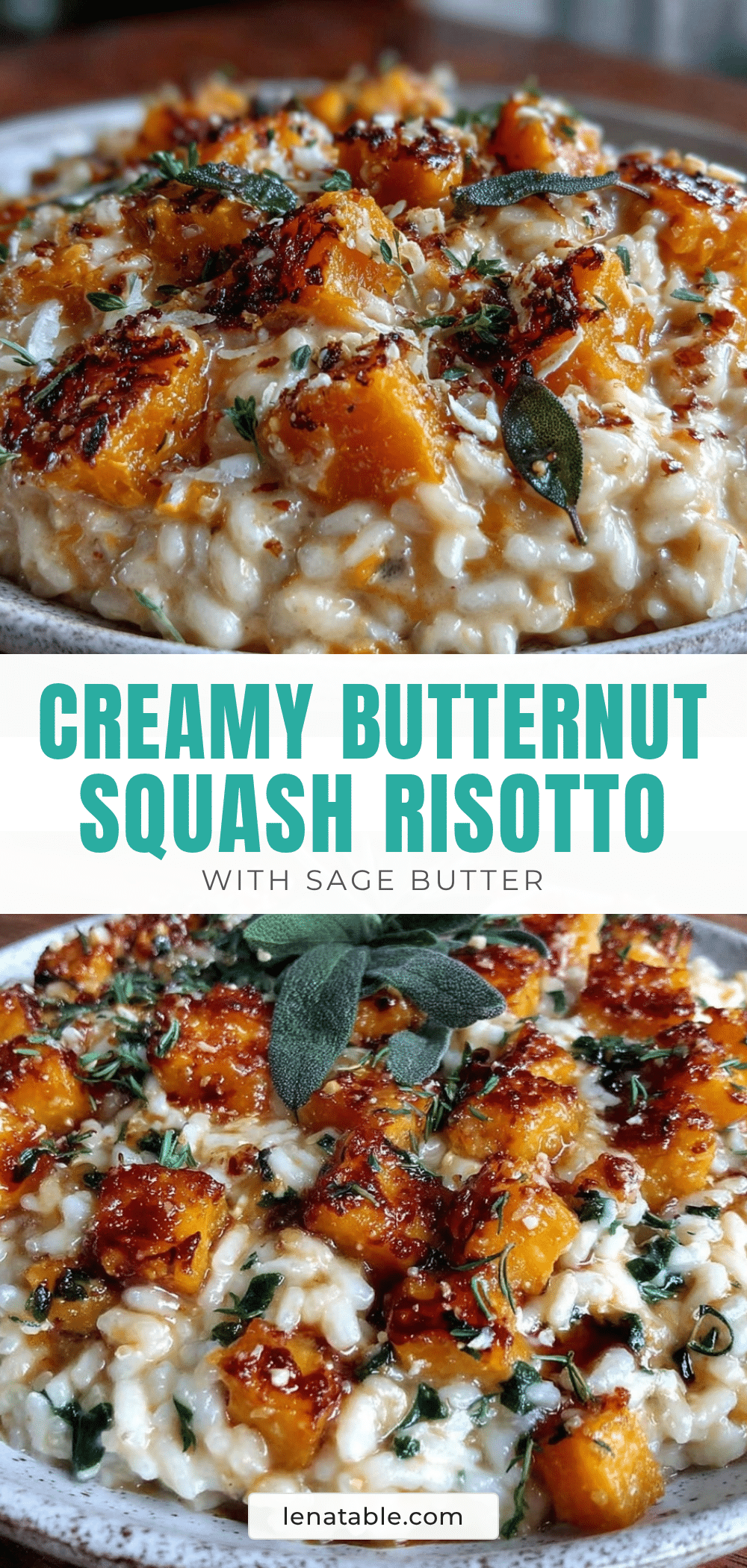
Creamy Butternut Squash Risotto with Sage Brown Butter

A comforting and creamy risotto featuring roasted butternut squash and nutty sage brown butter, perfect for cozy fall evenings.
- Prep Time: 15 minutes
- Cook Time: 30 minutes
- Total Time: 45 minutes
- Yield: 4 servings 1x
- Category: Main Course
- Cuisine: Italian
Ingredients
- 1 ½ cups Arborio rice
- 4 cups vegetable broth, kept warm
- 1 small onion, finely chopped
- 2 cloves garlic, minced
- 2 tablespoons olive oil
- ½ cup dry white wine (optional)
- Salt and freshly ground black pepper, to taste
- 1 medium butternut squash (about 2 pounds), peeled and cubed
- 1 tablespoon olive oil
- Pinch of salt
- 6 tablespoons unsalted butter
- 10 fresh sage leaves
- Pinch of salt
- ¼ cup grated Parmesan cheese (or vegan alternative)
- Freshly cracked black pepper
- Optional: toasted pine nuts or walnuts for crunch
Instructions
- Preheat oven to 400°F (200°C). Toss peeled and cubed butternut squash with 1 tablespoon olive oil and a pinch of salt. Spread on a parchment-lined baking sheet and roast for 25-30 minutes, stirring halfway, until tender and caramelized.
- Keep vegetable broth warm on low heat in a saucepan.
- Heat 2 tablespoons olive oil in a heavy-bottomed saucepan over medium heat. Sauté chopped onion for 4-5 minutes until translucent. Add minced garlic and cook for 30 seconds until fragrant.
- Add Arborio rice and stir to coat with oil. Cook 1-2 minutes until edges look translucent.
- If using, add white wine and stir until mostly absorbed, about 2-3 minutes.
- Add warm broth ½ cup at a time, stirring frequently and waiting until liquid is mostly absorbed before adding more. Cook for 20-25 minutes until rice is tender but slightly firm.
- Fold in roasted butternut squash and cook 2-3 minutes to warm through.
- In a small skillet, melt butter over medium heat. Add sage leaves and cook until butter is golden brown and nutty smelling, about 3-4 minutes. Remove from heat.
- Remove risotto from heat. Stir in grated Parmesan, salt, and pepper to taste. Pour sage brown butter over risotto and gently mix.
- Serve immediately, garnished with crispy sage leaves and optional toasted nuts.
Notes
Keep broth warm to maintain cooking temperature and prevent mushy rice. Stir gently and consistently to release starch without breaking grains. Roast squash well to bring out sweetness. Watch butter carefully when browning to avoid burning. Add salt gradually to avoid over-seasoning.
Nutrition
- Serving Size: Approximately 1 cup
- Calories: 420
- Sugar: 6
- Sodium: 600
- Fat: 18
- Saturated Fat: 9
- Carbohydrates: 52
- Fiber: 5
- Protein: 8
Keywords: butternut squash, risotto, sage brown butter, creamy, fall recipe, vegetarian, comfort food