Love this? Save it for later!
Share the inspiration with your friends
My neighbor Jen wasn’t trying to impress anyone. I’d stopped by to return her hedge clippers—the ones I’d borrowed three weeks earlier and honestly forgotten about—and the smell hit me before I even made it up her front steps. It was that deep, almost nutty scent of something baking with cinnamon and butter, but there was something else underneath. Something that smelled exactly like the apple orchard my family visited every fall when I was a kid. I stood there on her porch like a creep for a solid ten seconds just breathing it in.
She opened the door holding a bundt pan upside down over a plate, and this gorgeous golden cake slid out perfectly—no cracks, no sticking, just this beautiful ring of pure autumn. “Oh, that’s just the apple cider donut thing,” she said, waving her hand like it was nothing. Like she hadn’t just created the most intoxicating thing I’d smelled in months. She was wearing an old sweatshirt with a hole in the sleeve and had flour in her hair. I mean, honestly, it was the most relatable kitchen moment I’d ever witnessed.
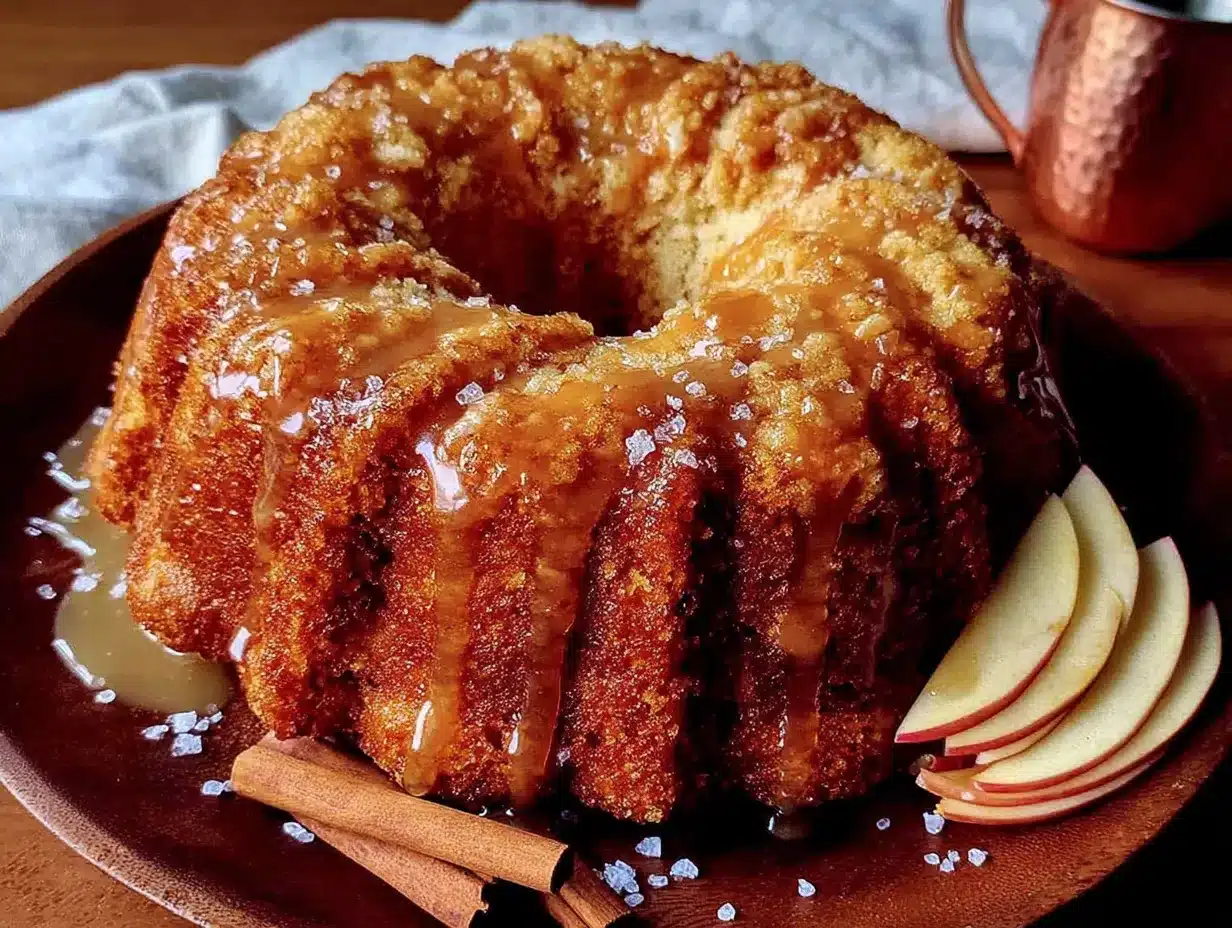
She cut me a slice while it was still warm, and I swear my eyes almost rolled back. It had that dense, tender crumb of a real apple cider donut—you know the ones from the farm stand that come in a brown paper bag—but it was somehow even better. The top had this sticky, nutty brown butter glaze that was pooling into all the crevices. I asked for the recipe before I’d even finished the slice. Maybe you’ve been there, where something so simple stops you cold and you just know you’re going to be making it for years. That’s this cake.
Why You’ll Love This Recipe
I’ve made this cake at least a dozen times since that afternoon on Jen’s porch, and every single time, someone asks for the recipe. It’s one of those rare dishes that feels both special and completely unfussy at the same time.
- Quick & Easy: You don’t need a mixer for this—just a whisk and two bowls. It comes together in about 15 minutes of active work, then the oven does the rest.
- Simple Ingredients: Nothing weird here. You probably have most of these in your pantry right now, assuming you keep apple cider and butter on hand (and honestly, why wouldn’t you?).
- Perfect for Fall Gatherings: This cake is the star of every Thanksgiving, Friendsgiving, or cozy weekend brunch. It travels well and actually gets better the next day.
- Crowd-Pleaser: I’ve served it to kids, picky in-laws, and professional chefs. Everyone loves it. It’s like a warm hug in cake form.
- Unbelievably Delicious: That brown butter glaze is the secret weapon here. It adds this deep, toasty, almost caramel-like flavor that takes the cake from “really good” to “I need another slice immediately.”
What makes this recipe different from every other apple cake out there is the technique. Reducing the apple cider concentrates the flavor into something intense and almost cider-like, without making the batter too wet. And browning the butter for the glaze isn’t just for show—it adds a layer of complexity that plain butter just can’t match. This isn’t another version of apple cake. It’s the one I keep coming back to, and I think you will too.
What Ingredients You Will Need
This recipe uses simple, wholesome ingredients that work together to create something magical. The key is using good quality apple cider—not apple juice—for that authentic orchard flavor. Here’s what you’ll need:
For the Cake
- 1 cup apple cider (unfiltered is best; I like the refrigerated kind from the produce section)
- 2 cups all-purpose flour (spooned and leveled—don’t scoop straight from the bag)
- 1 teaspoon baking powder
- 1/2 teaspoon baking soda
- 1/2 teaspoon salt
- 2 teaspoons ground cinnamon (fresh is noticeably better here)
- 1/2 teaspoon ground nutmeg (freshly grated if you have it—it makes a difference)
- 1/4 teaspoon ground cloves
- 1/2 cup unsalted butter, softened to room temperature
- 3/4 cup granulated sugar
- 1/2 cup packed light brown sugar
- 2 large eggs, room temperature
- 1 teaspoon vanilla extract
- 1/2 cup buttermilk (or make your own by adding 1/2 tablespoon lemon juice to regular milk)
For the Brown Butter Glaze
- 1/4 cup unsalted butter
- 1 1/2 cups powdered sugar, sifted (sifting prevents lumps)
- 3-4 tablespoons apple cider (or milk, if you want a milder flavor)
- 1/2 teaspoon vanilla extract
- Pinch of salt
Ingredient Notes: I’ve tried this with store-brand butter and fancy European butter, and honestly, for the glaze, the standard unsalted sticks work perfectly. For the apple cider, avoid the super-sweetened stuff—you want pure cider that tastes like actual apples. If you’re dairy-free, you can substitute the butter with a good vegan butter stick and use oat milk in the glaze, though the brown butter flavor won’t be quite as deep.
Equipment Needed
You don’t need a fancy kitchen to pull this off. Here’s what you’ll actually use:
- 10-cup bundt pan (the classic shape helps the glaze pool beautifully—if you don’t have one, a 9-inch loaf pan works, but you’ll need to adjust the baking time by about 10 minutes)
- Medium saucepan (for reducing the cider and browning the butter)
- Large mixing bowl (for the dry ingredients)
- Medium mixing bowl (for the wet ingredients)
- Whisk (a sturdy one—you’ll be doing some arm work)
- Rubber spatula (for scraping every last bit of batter into the pan)
- Cooling rack (essential for even cooling—don’t skip it)
- Small saucepan or skillet (for the brown butter—light-colored pan helps you see the color change)
Budget Tip: You don’t need a fancy bundt pan. I bought mine for eight dollars at a discount store, and it’s been going strong for years. Just make sure you grease it really well—I use a pastry brush to get butter into every nook and cranny, then dust it with flour.
Preparation Method
- Reduce the apple cider. Pour 1 cup of apple cider into a small saucepan and bring it to a boil over medium-high heat. Reduce the heat to medium and let it simmer, stirring occasionally, until it’s reduced to about 1/4 cup. This takes about 12-15 minutes. You’re looking for a syrupy consistency—it should coat the back of a spoon. Set it aside to cool while you prep everything else. Don’t rush this step; the concentrated flavor is what makes the cake taste like a dozen apple cider donuts in one slice.
- Preheat and prep. Preheat your oven to 350°F (175°C). Grease your bundt pan thoroughly—I mean, get in every crevice with softened butter or baking spray that contains flour. A poorly greased pan is the number one reason bundt cakes stick, and nobody wants that heartbreak.
- Whisk the dry ingredients. In a large bowl, whisk together the flour, baking powder, baking soda, salt, cinnamon, nutmeg, and cloves. Set this aside. The spices should smell fragrant and inviting—if your cinnamon smells dusty, it’s time to buy fresh.
- Cream the butter and sugars. In a medium bowl, beat the softened butter with the granulated sugar and brown sugar until light and fluffy. You can do this by hand with a wooden spoon or use a hand mixer—about 3 minutes of vigorous mixing. It should look pale and airy. Add the eggs one at a time, beating well after each addition. Stir in the vanilla extract and the cooled reduced cider. The mixture might look a little separated at this point—that’s okay, the flour will bring it together.
- Alternate adding dry and wet. Add about one-third of the flour mixture to the butter mixture and stir until just combined. Add half the buttermilk and stir again. Repeat with another third of flour, the remaining buttermilk, and finally the last of the flour. Stir until you no longer see streaks of flour, but don’t overmix—a few lumps are fine. Overmixing develops gluten and makes the cake tough, and we want that tender donut texture.
- Bake the cake. Pour the batter into the prepared bundt pan and spread it evenly. Tap the pan on the counter a few times to release any air bubbles. Bake for 40-50 minutes, or until a toothpick inserted into the thickest part comes out clean or with a few moist crumbs. The top should be golden brown and the kitchen should smell like a fall festival.
- Cool the cake. Let the cake cool in the pan on a wire rack for exactly 15 minutes. Set a timer—if you let it cool too long, it can stick. Then invert the pan onto the rack and let the cake cool completely. If it doesn’t release right away, gently tap the bottom of the pan with a wooden spoon. Don’t panic if a little bit sticks—just patch it together and cover it with glaze. I’ve done this more times than I’d like to admit.
- Make the brown butter glaze. While the cake is cooling, make the glaze. In a small light-colored saucepan, melt the 1/4 cup butter over medium heat. Swirl the pan occasionally as it melts. The butter will foam, then start to turn golden, then deepen to a nutty brown. You’ll see little brown specks forming at the bottom—that’s the milk solids toasting. This takes about 5-7 minutes. The moment it smells nutty and looks amber, remove it from the heat. Pour it into a heatproof bowl and let it cool for 5 minutes.
- Finish the glaze. Whisk the sifted powdered sugar, 3 tablespoons of apple cider, vanilla, and a pinch of salt into the brown butter. Whisk until smooth. If it’s too thick, add another tablespoon of cider. If it’s too thin, add a little more powdered sugar. The glaze should be thick enough to coat the back of a spoon but still pourable.
- Glaze the cake. Place the cooled cake on a serving plate. Slowly pour the glaze over the top, letting it cascade down the sides. Use a spoon to encourage it to drip evenly if needed. Let the glaze set for at least 15 minutes before slicing—I know it’s hard to wait, but the glaze needs time to firm up slightly.
Cooking Tips & Techniques
I’ve made this cake enough times to learn a few things the hard way. Here’s what I wish someone had told me:
Don’t skip reducing the cider. I tried it once without reducing, thinking it would save time. The cake came out wet and bland, and the flavor was so weak I could barely taste the apple. That reduction step is non-negotiable—it’s where all the concentrated apple magic happens.
Watch the brown butter like a hawk. The first time I made this, I walked away from the stove for “just a second” to answer a text. By the time I got back, my butter was black and smelled burnt. Brown butter goes from perfect to ruined in about 30 seconds. Stay with it, swirl the pan constantly, and pull it off the heat the moment it turns amber.
Room temperature ingredients matter. I know it’s annoying to wait for eggs and buttermilk to come to room temperature, but it really does make a difference. Cold ingredients don’t emulsify properly, and you end up with a denser, less tender crumb. If you’re in a hurry, place the eggs in a bowl of warm water for 5 minutes and microwave the buttermilk for 10 seconds.
Multitasking is your friend. While the cider is reducing, you can prep your dry ingredients. While the cake is baking, you can make the glaze. This recipe is actually pretty forgiving if you work efficiently—I can have the whole thing done in under an hour if I’m focused.
Variations & Adaptations
This cake is wonderful as-is, but it also welcomes adaptations. Here are a few I’ve tried and loved:
Gluten-Free Version: Substitute the all-purpose flour with a good 1:1 gluten-free baking flour blend. I’ve had great results with the King Arthur brand. The texture is slightly more delicate, but the flavor is still spot-on. Add 1/4 teaspoon of xanthan gum if your blend doesn’t already include it.
Maple Brown Butter Glaze: Replace 1 tablespoon of the apple cider in the glaze with pure maple syrup. It adds a woodsy sweetness that pairs beautifully with the apple and spice. I made this for a Thanksgiving brunch and it was gone in twenty minutes.
Apple Cider Donut Muffins: If you don’t have a bundt pan, this batter makes about 18 standard muffins. Grease a muffin tin, fill each cup about 2/3 full, and bake at 350°F for 15-18 minutes. Dip the tops in the glaze while they’re still warm for that classic donut shop look.
Spiced Variation: Add 1/4 teaspoon of cardamom and a pinch of white pepper to the dry ingredients. The cardamom adds a floral note, and the pepper gives a subtle warmth that most people can’t quite identify but love.
Serving & Storage Suggestions
This cake is best served at room temperature or slightly warm. If you want that fresh-from-the-oven experience, pop individual slices in the microwave for 10-15 seconds. The glaze gets slightly melty and the cake becomes incredibly tender.
What to serve with it: A dollop of lightly sweetened whipped cream or a scoop of vanilla ice cream turns this into a proper dessert. For breakfast (and I fully support cake for breakfast), a hot cup of coffee or spiced chai latte is perfect. The cake also pairs beautifully with a glass of cold apple cider or a hard cider for adults.
Storage: Store leftover cake in an airtight container at room temperature for up to 3 days. The glaze will stay glossy and the cake will actually become more moist on day two. I’ve never had leftovers last longer than that, but theoretically it would keep for 5 days.
Freezing: This cake freezes beautifully. Wrap the unglazed cake tightly in plastic wrap, then in foil, and freeze for up to 3 months. When you’re ready to serve, thaw it overnight in the refrigerator, bring it to room temperature, and then glaze it fresh. The glaze does not freeze well, so always add it after thawing.
Reheating: For individual slices, the microwave is your friend—10-15 seconds on high. For a whole cake, warm it in a 300°F oven for 10 minutes before glazing.
Nutritional Information & Benefits
Let’s be real—this is a treat, not a health food. But there are some redeeming qualities worth mentioning.
Estimated per slice (1/12 of cake with glaze):
- Calories: ~320
- Fat: 14g
- Carbohydrates: 47g
- Protein: 4g
- Fiber: 1g
- Sugar: 32g
Health Highlights: Apple cider contains antioxidants called polyphenols, which may help reduce inflammation. Cinnamon is known for its anti-inflammatory properties and can help stabilize blood sugar. The eggs provide high-quality protein and choline for brain health. And honestly? Sometimes the mental health benefits of a really good slice of cake are worth more than any nutritional statistic.
Dietary Considerations: This recipe contains gluten, dairy, and eggs. For a gluten-free version, see the variations section. For a dairy-free version, use vegan butter sticks and oat milk in the glaze. I haven’t tested an egg-free version, but a flax egg might work in a pinch—just know the texture will be denser.
Frequently Asked Questions
Can I use apple juice instead of apple cider? Technically yes, but the flavor won’t be as rich. Apple juice is thinner and more processed, so it doesn’t reduce as well and lacks that tangy, authentic apple cider taste. Stick with real cider if you can find it.
Why did my cake stick to the bundt pan? This happens to everyone at least once. Make sure you’re greasing every single crevice—I use a pastry brush to get butter into all the nooks. Also, don’t let the cake cool in the pan for more than 15 minutes. If it’s still stuck after inverting, let it cool for 5 more minutes and try again.
Can I make this cake ahead of time? Absolutely. In fact, it tastes better on day two. Bake the cake, let it cool completely, wrap it tightly, and store it at room temperature. Make the glaze fresh the day you’re serving it and pour it on just before serving.
My glaze turned out too thin. How do I fix it? Just whisk in a little more sifted powdered sugar, one tablespoon at a time, until it reaches the right consistency. If it’s too thick, add a splash more cider or milk. Glaze is very forgiving—don’t stress about it.
Can I add nuts or raisins to the batter? Sure! Fold in 1/2 cup of toasted chopped pecans or walnuts, or 1/3 cup of golden raisins. I’ve also added diced fresh apple (about 1 cup, peeled and finely chopped) for extra texture. Just toss the apple pieces in a little flour first so they don’t sink to the bottom.
Conclusion
This apple cider donut cake with brown butter glaze is the kind of recipe that becomes part of your fall rotation from the very first time you make it. It’s simple enough for a Tuesday night, impressive enough for a holiday table, and so delicious that people will ask you for the recipe before you’ve even finished pouring the glaze.
I love this cake because it reminds me of that afternoon on Jen’s porch—the smell, the surprise of something so ordinary being so extraordinary, and the way a simple recipe can make you feel like you’ve brought a little bit of autumn magic into your own kitchen. You can swap the spices, change the glaze, or turn it into muffins—it’s flexible enough to become your own.
I’d love to hear how yours turns out. Did you add a twist? Did it disappear too fast? Drop a comment below and let me know—I read every single one, and I’m always looking for new ideas to try. Now go make some memories (and some really good smells) in your kitchen!
Pin This Recipe!
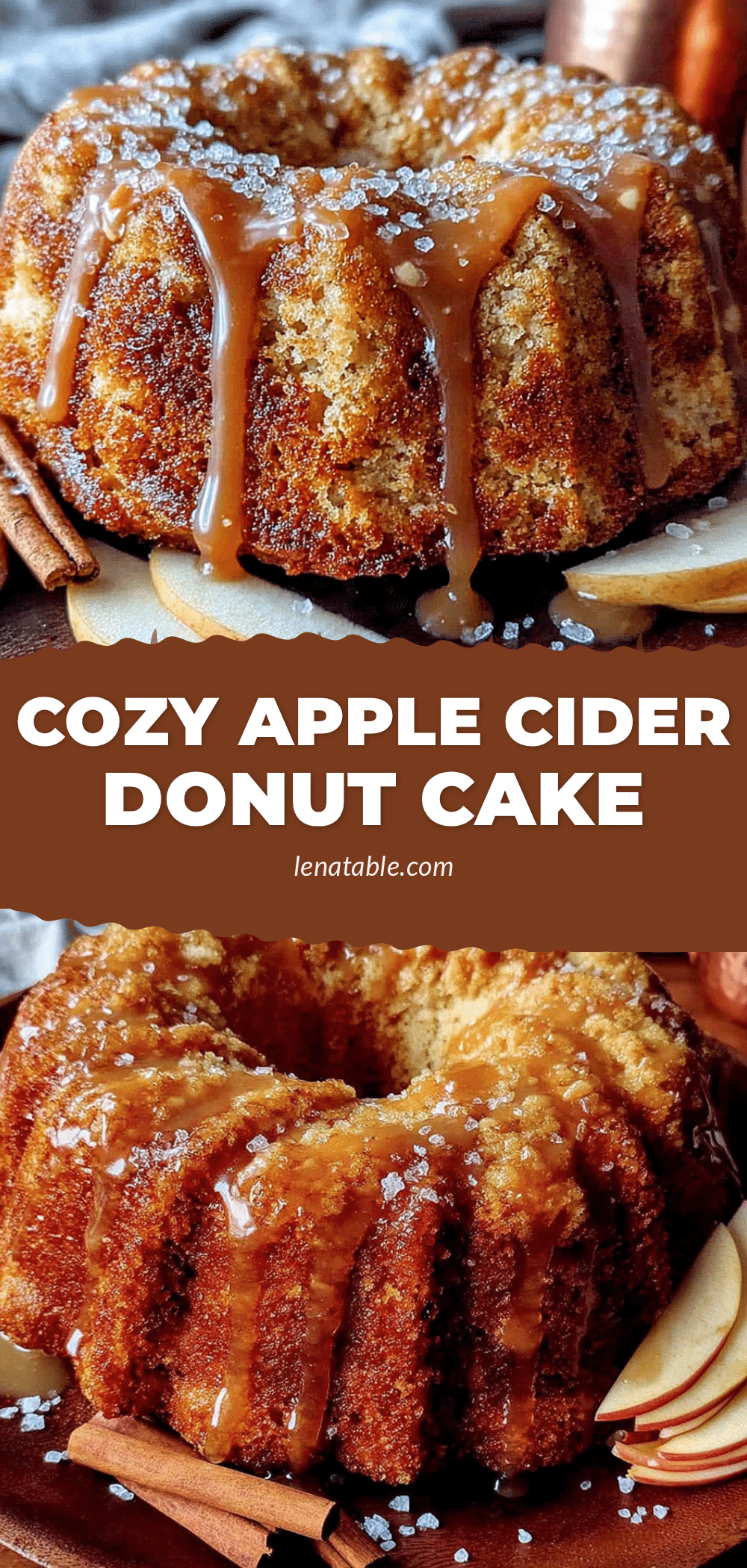
Best Easy Apple Cider Donut Cake with Brown Butter Glaze
This apple cider donut cake with brown butter glaze is a simple yet impressive fall dessert that tastes like a dozen apple cider donuts in one slice. The reduced apple cider and brown butter glaze create an intensely flavorful, tender crumb that’s perfect for any autumn gathering.
- Prep Time: 15 minutes
- Cook Time: 50 minutes
- Total Time: 1 hour 5 minutes
- Yield: 12 servings 1x
- Category: Dessert
- Cuisine: American
Ingredients
- 1 cup apple cider (unfiltered is best)
- 2 cups all-purpose flour (spooned and leveled)
- 1 teaspoon baking powder
- 1/2 teaspoon baking soda
- 1/2 teaspoon salt
- 2 teaspoons ground cinnamon
- 1/2 teaspoon ground nutmeg
- 1/4 teaspoon ground cloves
- 1/2 cup unsalted butter, softened to room temperature
- 3/4 cup granulated sugar
- 1/2 cup packed light brown sugar
- 2 large eggs, room temperature
- 1 teaspoon vanilla extract
- 1/2 cup buttermilk (or 1/2 tablespoon lemon juice plus milk to make 1/2 cup)
- 1/4 cup unsalted butter (for glaze)
- 1 1/2 cups powdered sugar, sifted
- 3–4 tablespoons apple cider (or milk, for glaze)
- 1/2 teaspoon vanilla extract (for glaze)
- Pinch of salt (for glaze)
Instructions
- Reduce the apple cider: Pour 1 cup of apple cider into a small saucepan and bring to a boil over medium-high heat. Reduce heat to medium and simmer, stirring occasionally, until reduced to about 1/4 cup (12-15 minutes). Set aside to cool.
- Preheat and prep: Preheat oven to 350°F (175°C). Grease a 10-cup bundt pan thoroughly with softened butter or baking spray.
- Whisk dry ingredients: In a large bowl, whisk together flour, baking powder, baking soda, salt, cinnamon, nutmeg, and cloves. Set aside.
- Cream butter and sugars: In a medium bowl, beat softened butter with granulated sugar and brown sugar until light and fluffy (about 3 minutes). Add eggs one at a time, beating well after each. Stir in vanilla and cooled reduced cider.
- Alternate adding dry and wet: Add one-third of the flour mixture to the butter mixture and stir until just combined. Add half the buttermilk and stir. Repeat with another third of flour, remaining buttermilk, and final third of flour. Stir until just combined; do not overmix.
- Bake the cake: Pour batter into prepared bundt pan and spread evenly. Tap pan on counter to release air bubbles. Bake for 40-50 minutes, until a toothpick inserted into the thickest part comes out clean or with a few moist crumbs.
- Cool the cake: Let cake cool in pan on a wire rack for exactly 15 minutes. Invert onto rack and let cool completely.
- Make the brown butter glaze: In a small light-colored saucepan, melt 1/4 cup butter over medium heat. Swirl pan occasionally until butter foams, turns golden, then deepens to nutty brown with brown specks (5-7 minutes). Remove from heat and pour into a heatproof bowl. Let cool for 5 minutes.
- Finish the glaze: Whisk sifted powdered sugar, 3 tablespoons apple cider, vanilla, and a pinch of salt into the brown butter until smooth. Adjust consistency with additional cider or powdered sugar as needed.
- Glaze the cake: Place cooled cake on a serving plate. Slowly pour glaze over the top, letting it cascade down the sides. Let set for at least 15 minutes before slicing.
Notes
Don’t skip reducing the cider—it concentrates the apple flavor. Watch the brown butter carefully as it can burn quickly. Room temperature ingredients help create a tender crumb. The cake can be made ahead and tastes even better on day two. For gluten-free, use a 1:1 gluten-free flour blend. For dairy-free, use vegan butter and oat milk.
Nutrition
- Serving Size: 1 slice (1/12 of cak
- Calories: 320
- Sugar: 32
- Sodium: 220
- Fat: 14
- Saturated Fat: 8
- Carbohydrates: 47
- Fiber: 1
- Protein: 4
Keywords: apple cider donut cake, brown butter glaze, fall dessert, bundt cake, apple cake, easy cake recipe