Love this? Save it for later!
Share the inspiration with your friends
This was supposed to be a simple marinara. I had a bag of cherry tomatoes threatening to go soft, a block of burrata I’d impulse-bought at the fancy grocery store, and exactly twenty minutes before I needed to have dinner on the table. The plan was straightforward: blister the tomatoes in olive oil, toss them with pasta, and plop the burrata on top like a lazy caprese. Simple, right?
Except I got distracted. My phone buzzed—my sister sending a photo of her cat wearing a Halloween costume—and I let the tomatoes sit in the hot pan a little too long. By the time I looked back, they weren’t just blistered. They were collapsing into themselves, swimming in a pool of golden, garlic-infused oil that smelled so good I actually stopped mid-text. The skins had wrinkled and split, and the juices had mingled with the oil to create this glossy, jammy situation that looked nothing like a marinara. Honestly, I thought I’d ruined it.
I almost started over. But I was hungry, the pasta was already drained, and let’s face it—I was out of tomatoes. So I tossed the spaghetti right into that oily pan, gave it a vigorous stir, and then tore the burrata over the top. The cheese melted into the warm pasta in these creamy, stretchy ribbons, and the confit tomatoes clung to every strand like little bursts of sunshine. That first bite? I actually laughed. I mean, a real, startled laugh. It was so much better than what I’d planned. Maybe you’ve been there—when a mistake in the kitchen turns out to be the best thing you’ve ever made. That’s this pasta. It’s the happy accident I keep making on purpose now.
Why You’ll Love This Recipe
This Creamy Burrata Cherry Tomato Confit Pasta is one of those rare dishes that feels both incredibly luxurious and effortlessly simple. I’ve tested this method at least a dozen times now, tweaking the oil temperature and the tomato-to-pasta ratio, and I can tell you with confidence—this version is the one. It’s the kind of meal that makes you look like a hero with almost zero effort.
- Quick & Easy: From start to finish, this comes together in about 20 minutes. Perfect for those nights when you want something special but don’t have the energy for a complicated recipe.
- Simple Ingredients: You likely have most of these in your pantry right now. Cherry tomatoes, garlic, olive oil, pasta, and burrata. No fancy trips to a specialty store required.
- Perfect for Date Night: There’s something undeniably romantic about a pasta dish with molten cheese. Serve it with a glass of wine and you’ve got a restaurant-quality meal at home.
- Crowd-Pleaser: I’ve served this to picky kids, skeptical in-laws, and foodie friends. Every single person has asked for the recipe. It’s that good.
- Unbelievably Delicious: The magic here is in the contrast—the sweet, jammy confit tomatoes against the cool, creamy burrata, all tangled up in al dente pasta. It’s comfort food that feels elevated without being fussy.
What makes this recipe different from the countless other tomato pasta recipes out there? It’s the technique. Slow-confitting the tomatoes in olive oil concentrates their flavor in a way that quick blistering just can’t match. And instead of mixing the burrata into the sauce, you tear it over the hot pasta at the very end, letting it melt into creamy pockets. It’s not just another pasta dish—it’s your new favorite weeknight indulgence.
What Ingredients You Will Need
This recipe relies on a handful of high-quality ingredients to deliver maximum flavor with minimal effort. The beauty of it is that each component plays a crucial role, from the rich olive oil to the creamy burrata.
- Cherry Tomatoes (2 pints or about 600g): Look for firm, ripe cherry tomatoes. I prefer the mixed-color ones from the farmers’ market when they’re in season—they add a beautiful visual pop. In winter, standard red cherry tomatoes work perfectly. Avoid grape tomatoes here; they’re a bit too dense and won’t break down as nicely.
- Extra-Virgin Olive Oil (1/2 cup or 120ml): This is not the time for your cheap cooking oil. Use a good-quality extra-virgin olive oil—you’ll be eating it in the sauce, and it makes a real difference. I like California Olive Ranch for a reliable everyday option.
- Garlic (4-5 cloves, smashed): Smash the cloves with the side of your knife rather than mincing them. This releases their flavor gently into the oil without burning. If you love garlic, feel free to add an extra clove or two.
- Fresh Basil (a handful): You’ll use some for the confit and more for garnish. It adds that essential fresh, peppery note that cuts through the richness. If you only have dried basil, add a teaspoon to the oil, but fresh really is best here.
- Dried Pasta (1 pound or 450g): I recommend a shape that catches the oil and tomatoes well—spaghetti, bucatini, or pappardelle are all excellent choices. My personal favorite is bucatini; the hollow center grabs onto the sauce beautifully. Cook it al dente—it will continue to cook slightly in the hot oil.
- Burrata Cheese (2 balls, about 8 ounces or 225g total): This is the star of the show. Burrata is essentially fresh mozzarella with a creamy, stracciatella center. Look for it in the specialty cheese section of your grocery store. Make sure it’s at room temperature before you use it so it melts beautifully into the pasta. If you can’t find burrata, fresh mozzarella is an acceptable substitute, but you’ll miss that luscious creamy center.
- Red Pepper Flakes (1/2 teaspoon, optional): A tiny pinch adds a gentle warmth that balances the sweetness of the tomatoes. Skip it if you’re sensitive to heat, but I find it really rounds out the flavor.
- Salt and Black Pepper (to taste): Use a flaky sea salt for finishing—it adds a lovely texture. I use Diamond Crystal kosher salt for cooking and Maldon for the final sprinkle.
Equipment Needed
You don’t need a fancy kitchen to make this pasta. Here’s what you’ll actually use:
- Large Skillet or Dutch Oven: A 12-inch skillet is ideal for confiting the tomatoes. I use my trusty Le Creuset braiser—it distributes heat evenly and looks beautiful on the table. A heavy-bottomed stainless steel or non-stick pan works perfectly too.
- Large Pot for Pasta: You need enough water to cook the pasta without it sticking. A 5-6 quart pot is perfect.
- Wooden Spoon or Silicone Spatula: For gently stirring the tomatoes without breaking them apart.
- Colander: For draining the pasta. Don’t forget to reserve that pasta water!
- Sharp Knife and Cutting Board: For smashing the garlic and chopping basil. Nothing fancy needed.
- Measuring Cups and Spoons: For accuracy, especially with the olive oil.
If you don’t have a Dutch oven, any heavy-bottomed skillet will do. The key is even heat distribution so the tomatoes cook gently without scorching. I’ve made this in a cheap non-stick pan before and it worked fine—just keep the heat low and watch it closely.
Preparation Method
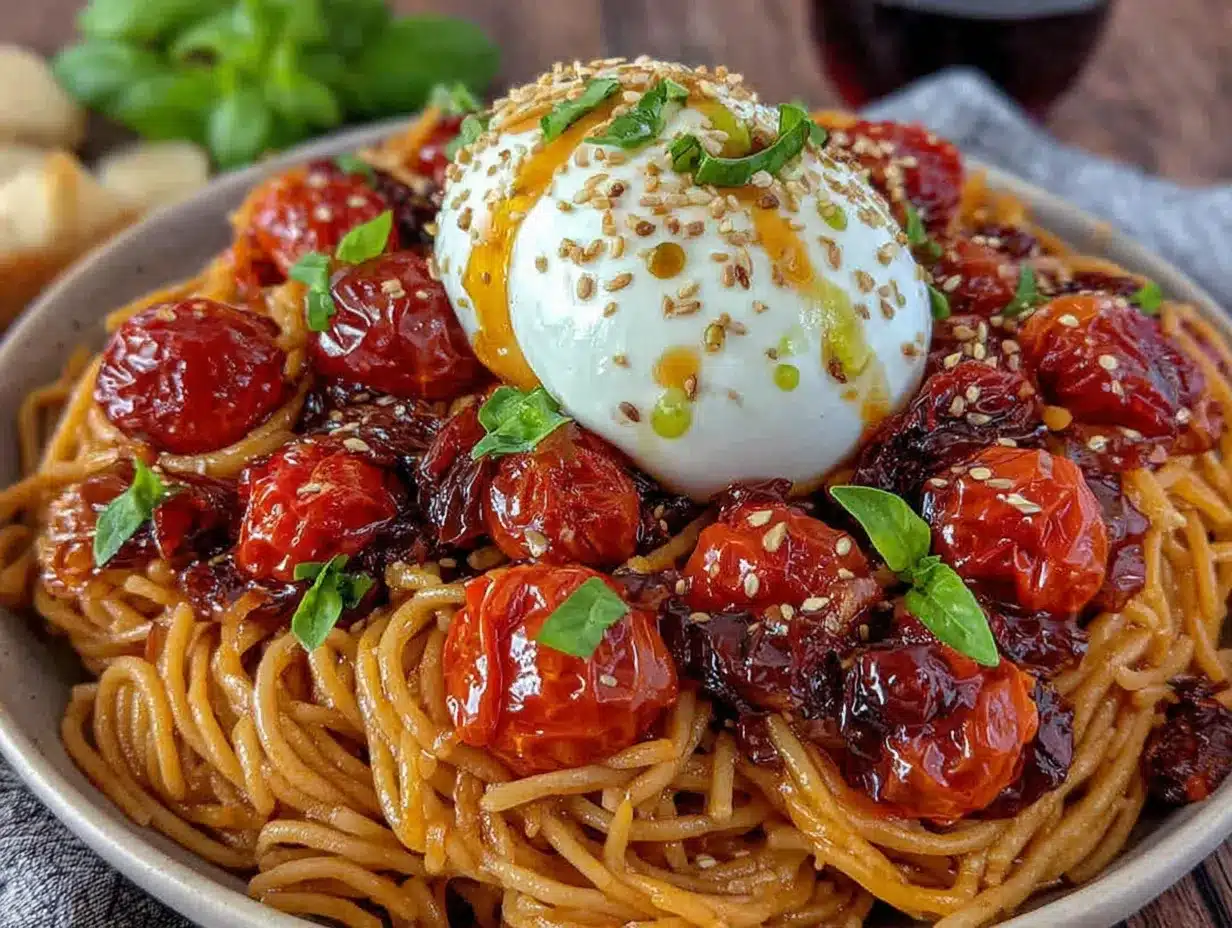
- Start the tomatoes (5 minutes): Place your large skillet over medium-low heat. Add the 1/2 cup of olive oil and the 4-5 smashed garlic cloves. Let them sizzle gently for about 2 minutes until the garlic is fragrant but not browned—you want it to perfume the oil, not burn in it. If the garlic starts to color too quickly, turn the heat down.
- Add the tomatoes (15 minutes): Carefully add the 2 pints of cherry tomatoes to the warm oil. They should sizzle gently. Add a pinch of salt, the red pepper flakes if using, and a few basil leaves. Stir everything gently to coat. Now, here’s the important part: let them cook undisturbed for about 10-12 minutes. You’re not trying to stir them constantly. You want the tomatoes to soften and release their juices, creating that gorgeous confit. The oil should be gently bubbling, not violently boiling. If it’s too hot, the tomatoes will burst and turn mushy. If it’s too cool, they won’t soften. You’re looking for that lazy simmer—the oil should be moving but not splattering.
- Cook the pasta (10 minutes): While the tomatoes are confiting, bring a large pot of generously salted water to a rolling boil. Add your 1 pound of pasta and cook according to package directions until al dente. Reserve about 1 cup of pasta water before draining. This starchy water is liquid gold—it helps the sauce cling to the pasta.
- Check the tomatoes: After about 12 minutes, the tomatoes should be soft and wrinkled, swimming in a beautiful reddish-gold oil. Some will have burst open, which is perfect. Use the back of your wooden spoon to gently press down on a few of them—they should crush easily. If they’re still firm, give them another 2-3 minutes.
- Combine (2 minutes): Remove the garlic cloves and basil leaves from the oil (they’ve done their job). Add the drained pasta directly to the skillet with the tomatoes and oil. Toss everything together with tongs, adding splashes of reserved pasta water as needed to create a silky sauce that coats each strand. You’ll likely need about 1/4 to 1/2 cup of pasta water. The sauce should look glossy and emulsified, not oily.
- Add the burrata (1 minute): Remove the skillet from the heat. Tear the burrata balls into rough pieces and distribute them over the hot pasta. Let it sit for about 30 seconds to start melting, then gently toss again. You want the burrata to create creamy ribbons throughout the pasta, not disappear completely. Some people like to leave a few larger chunks intact for dramatic effect at the table.
- Finish and serve: Taste and adjust seasoning with salt and pepper. The burrata adds richness, so don’t oversalt. Top with fresh basil leaves and a final drizzle of olive oil if you’re feeling fancy. Serve immediately—this pasta waits for no one.
Cooking Tips & Techniques
I’ve made this pasta enough times to learn a few hard lessons. Let me save you the trouble.
Don’t rush the confit. The biggest mistake I made the first time was cranking the heat to speed things up. Low and slow is the name of the game here. If you rush it, the tomatoes will burn on the outside while staying raw on the inside, and the garlic will turn bitter. Trust the process—that 15 minutes of gentle cooking is what transforms simple tomatoes into something magical.
Reserve more pasta water than you think you need. I cannot stress this enough. I once forgot to save the water and ended up with a dry, clumpy pasta that was frankly depressing. The starch in the pasta water is what binds the oil and tomato juices into a cohesive sauce. Without it, you just have oily pasta with tomatoes floating around. Save a full cup—you might not use it all, but you’ll be grateful for the extra.
Room temperature burrata is non-negotiable. Cold burrata straight from the fridge won’t melt properly. It will just sit there in sad, rubbery lumps. Take it out of the fridge about 30 minutes before you start cooking. If you forget, you can speed things up by placing the sealed container in a bowl of warm water for 5 minutes.
Use good olive oil. I learned this one the hard way when I used a cheap bottle and the whole dish tasted flat. Since the oil is a major flavor component here, you want one that you actually enjoy drinking. A fruity, peppery extra-virgin olive oil makes a noticeable difference.
Trust your senses. Recipes are guidelines, not laws. The tomatoes will tell you when they’re ready—they’ll look wrinkled and smell intensely sweet. The pasta will tell you when it’s done—taste it! The sauce will tell you when it’s right—it should coat the pasta like a glossy blanket. Cooking is about paying attention, not just following instructions.
Variations & Adaptations
This recipe is wonderfully flexible. Here are a few ways I’ve adapted it over the years:
Protein Additions: Sometimes I add grilled chicken or shrimp for a heartier meal. Simply cook your protein separately and toss it in with the pasta at the end. Crispy pancetta or bacon bits are also incredible—the salty crunch contrasts beautifully with the creamy burrata.
Vegetable Variations: In summer, I’ll add roasted zucchini or eggplant along with the tomatoes. In fall, roasted butternut squash cubes are a surprisingly delicious addition. Just make sure any added vegetables are cooked before you combine them with the pasta.
Herb Swaps: While basil is classic, I’ve made this with fresh thyme and rosemary in the oil for a more savory profile. A handful of fresh arugula stirred in at the end adds a peppery kick that cuts through the richness beautifully.
Dietary Adaptations: For a gluten-free version, use your favorite gluten-free pasta. I’ve had good luck with chickpea pasta or brown rice spaghetti. For a dairy-free version, you can substitute the burrata with a good-quality cashew-based cheese or simply omit it and add extra olive oil and toasted pine nuts for richness.
Spice It Up: If you like heat, add a whole dried chili to the oil while confiting the tomatoes, or stir in a spoonful of Calabrian chili paste at the end. The spicy kick plays beautifully with the sweet tomatoes and creamy cheese.
Serving & Storage Suggestions
This pasta is best served immediately, while the burrata is still warm and creamy and the tomatoes are glossy. I like to serve it in wide, shallow bowls with an extra drizzle of olive oil and a few fresh basil leaves on top. A side of crusty bread is essential for sopping up any remaining oil and tomato juices at the bottom of the bowl—trust me, you won’t want to waste a drop.
For a complete meal, pair it with a simple green salad dressed with lemon and olive oil, and a glass of crisp Pinot Grigio or a light Chianti. The acidity in the wine cuts through the richness of the burrata beautifully.
Storage: If you have leftovers (unlikely, but possible), store them in an airtight container in the refrigerator for up to 2 days. The pasta will absorb some of the oil, so it won’t be as glossy the next day, but it will still be delicious.
Reheating: The best way to reheat this pasta is in a skillet over medium-low heat with a splash of water or olive oil to loosen it up. Microwave reheating tends to make the burrata rubbery, so I avoid it when possible. If you’re in a rush, the microwave works, just add a tablespoon of water and cover the bowl.
Flavor Development: Honestly, the flavors meld together beautifully overnight. The tomatoes continue to infuse the oil, and the pasta soaks up all that goodness. Cold leftovers, straight from the fridge, make a surprisingly good lunch the next day—almost like a pasta salad.
Nutritional Information & Benefits
This dish is indulgent, but it also has some surprising nutritional perks. Here’s an approximate breakdown per serving (based on 6 servings):
- Calories: ~520
- Protein: 18g
- Fat: 28g
- Carbohydrates: 52g
- Fiber: 4g
- Sugar: 6g
Health Highlights: Cherry tomatoes are packed with lycopene, a powerful antioxidant that’s actually more bioavailable when cooked (which is great news for this confit method). The olive oil provides heart-healthy monounsaturated fats, and the burrata offers a good dose of calcium and protein. The garlic has anti-inflammatory properties, and the basil is rich in vitamin K.
Dietary Considerations: This recipe is vegetarian. To make it gluten-free, use gluten-free pasta. To reduce calories, you can use less olive oil (about 1/4 cup) and add more pasta water to compensate. The burrata is the main source of dairy, so for a dairy-free version, omit it and add extra olive oil and nutritional yeast for a cheesy flavor.
Potential Allergens: This recipe contains dairy (burrata) and gluten (pasta). It is nut-free and egg-free.
Conclusion
This Creamy Burrata Cherry Tomato Confit Pasta is proof that the best recipes often come from happy accidents. It’s the kind of dish that feels special enough for a celebration but simple enough for a Tuesday night. The sweet, jammy tomatoes, the fragrant garlic oil, and the luscious, melty burrata come together in a way that’s honestly greater than the sum of its parts.
I love this recipe because it reminds me that perfection isn’t always the goal. Sometimes the best thing you can do in the kitchen is relax, let things happen, and trust your instincts. This pasta is forgiving, adaptable, and absolutely delicious. It’s become my go-to for impressing guests, comforting myself after a long day, and reminding myself why I love cooking in the first place.
I’d love to hear how yours turns out! Did you add any twists? Did you use a different pasta shape? Drop a comment below and let me know. And if you loved this recipe as much as I do, share it with a friend who needs a little comfort food in their life. Happy cooking!
Frequently Asked Questions
Can I use regular mozzarella instead of burrata?
Yes, you can substitute fresh mozzarella, but the texture will be different. Burrata has a creamy center that melts into the pasta, while mozzarella is firmer and won’t create that same luscious sauce. If using mozzarella, tear it into small pieces and let it warm up in the pasta for a few minutes before serving.
How do I know when the tomatoes are properly confited?
They should look wrinkled and slightly collapsed, swimming in a pool of reddish-gold oil. When you press one gently with a spoon, it should crush easily. The oil should smell intensely sweet and garlicky. This usually takes about 12-15 minutes over medium-low heat.
Can I make this recipe ahead of time?
This pasta is best served immediately, but you can prepare the confit tomatoes up to 2 days in advance. Simply cook the tomatoes in the oil, let them cool, and store them in an airtight container in the refrigerator. When you’re ready to serve, reheat the tomatoes gently in a skillet while you cook the pasta, then proceed with the recipe.
What’s the best pasta shape for this recipe?
I prefer long, twirlable shapes like spaghetti, bucatini, or pappardelle because they catch the oil and small tomato pieces beautifully. However, short shapes like orecchiette or fusilli work well too. The key is to choose a shape with nooks and crannies that can hold onto the sauce.
Can I use canned tomatoes instead of fresh cherry tomatoes?
I don’t recommend it for this specific recipe. The confit technique relies on the cherry tomatoes holding their shape and slowly releasing their juices. Canned tomatoes are too soft and will turn into a mushy sauce. If you only have canned tomatoes, try a different recipe—this one really needs fresh cherry tomatoes to shine.
Pin This Recipe!
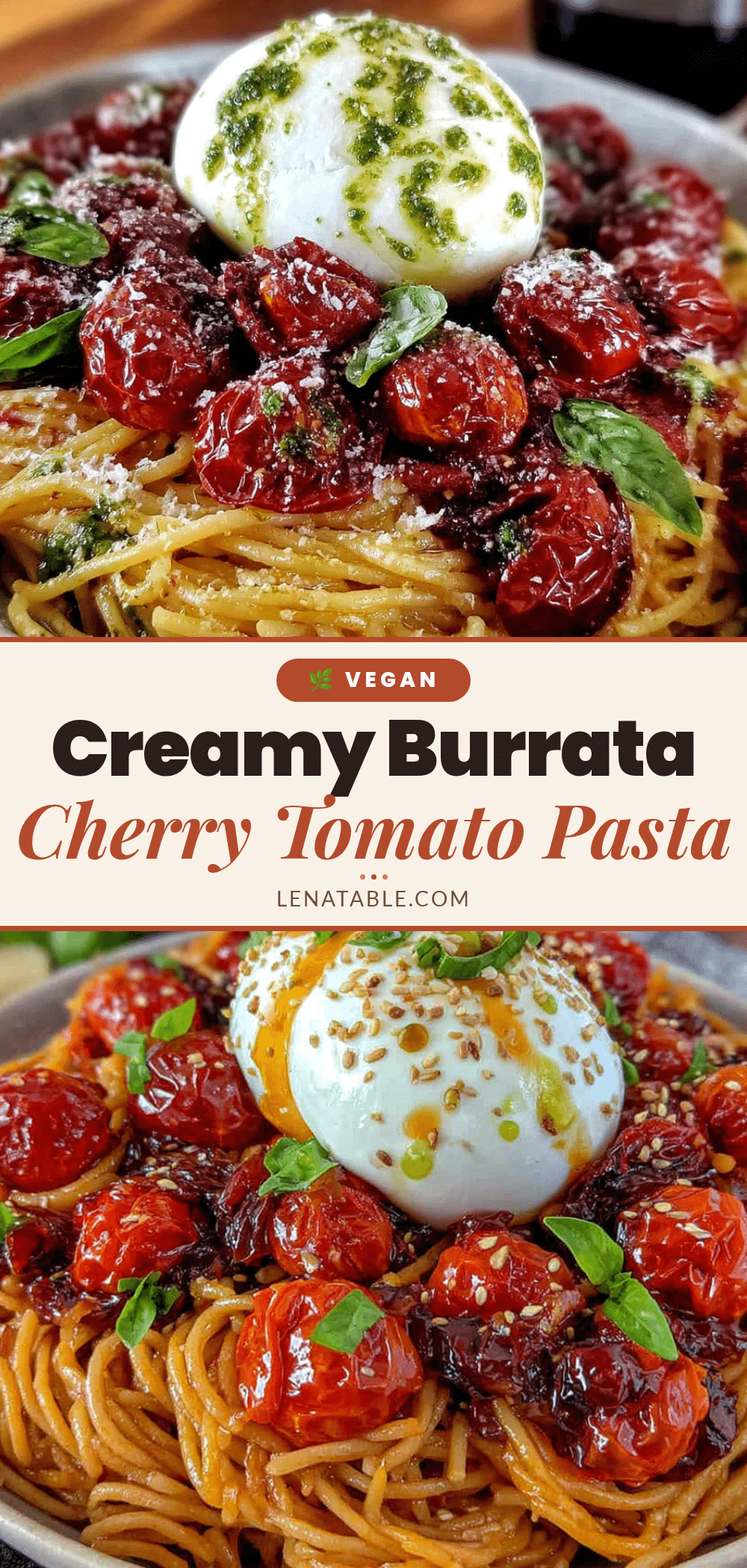
Creamy Burrata Cherry Tomato Confit Pasta – Easy 20-Min Recipe
A quick and indulgent pasta dish featuring sweet, jammy confit cherry tomatoes and creamy burrata cheese, all tossed together in a garlic-infused olive oil sauce. Perfect for a weeknight dinner that feels special.
- Prep Time: 5 minutes
- Cook Time: 15 minutes
- Total Time: 20 minutes
- Yield: 6 servings 1x
- Category: Main Course
- Cuisine: Italian
Ingredients
- 2 pints (about 600g) cherry tomatoes
- 1/2 cup (120ml) extra-virgin olive oil
- 4–5 cloves garlic, smashed
- A handful fresh basil leaves
- 1 pound (450g) dried pasta (spaghetti, bucatini, or pappardelle recommended)
- 2 balls (about 8 ounces or 225g total) burrata cheese, at room temperature
- 1/2 teaspoon red pepper flakes (optional)
- Salt and black pepper to taste
Instructions
- Place a large skillet over medium-low heat. Add the olive oil and smashed garlic cloves. Let them sizzle gently for about 2 minutes until fragrant but not browned.
- Add the cherry tomatoes to the warm oil. Add a pinch of salt, red pepper flakes (if using), and a few basil leaves. Stir gently to coat. Let cook undisturbed for 10-12 minutes, until tomatoes are soft and wrinkled, swimming in reddish-gold oil. The oil should be gently bubbling, not boiling.
- While tomatoes confit, bring a large pot of generously salted water to a rolling boil. Cook pasta according to package directions until al dente. Reserve about 1 cup of pasta water before draining.
- After about 12 minutes, check the tomatoes: they should crush easily when pressed with a spoon. If still firm, cook another 2-3 minutes.
- Remove the garlic cloves and basil leaves from the oil. Add the drained pasta directly to the skillet with the tomatoes and oil. Toss with tongs, adding splashes of reserved pasta water as needed (about 1/4 to 1/2 cup) to create a silky, emulsified sauce.
- Remove the skillet from heat. Tear the burrata into rough pieces and distribute over the hot pasta. Let sit for 30 seconds, then gently toss again to create creamy ribbons. Leave some larger chunks if desired.
- Taste and adjust seasoning with salt and pepper. Top with fresh basil leaves and a final drizzle of olive oil. Serve immediately.
Notes
Don’t rush the confit; low and slow is key. Reserve more pasta water than you think you need. Use room temperature burrata for best melting. Good quality olive oil makes a noticeable difference. Trust your senses—the tomatoes will tell you when they’re ready.
Nutrition
- Serving Size: 1 serving (based on
- Calories: 520
- Sugar: 6
- Sodium: 350
- Fat: 28
- Saturated Fat: 8
- Carbohydrates: 52
- Fiber: 4
- Protein: 18
Keywords: burrata pasta, cherry tomato confit, quick pasta, easy dinner, creamy pasta, 20-minute meal, vegetarian pasta