Love this? Save it for later!
Share the inspiration with your friends
My neighbor Greta watched me wrestling with a sticky, wet dough that was clinging to everything but my counter, and she didn’t say anything at first. Then she just shook her head with this knowing smile, walked over to her side of the fence, and came back holding a worn-out recipe card with oil stains on every corner. “Stop fighting it,” she said. “The dough wants to be lazy. Let it.” That was my first introduction to no-knead bread, and honestly, it changed everything about how I bake.
Greta grew up in a tiny village outside Genoa, and she told me that the best focaccia she ever ate came from a bakery where the baker barely touched the dough. He let time do the work. For years, I thought I needed to knead and punch and wrestle my bread into submission. But this perfect rosemary sea salt no-knead sourdough focaccia taught me otherwise. The dough is wet, almost shaggy, and it rises slowly over many hours. You just fold it a few times, let it rest, and trust the process.
I messed up my first batch pretty badly. I used cold water, rushed the bulk fermentation, and ended up with a dense, sad pancake. But Greta just laughed and said, “You can’t hurry bread.” She was right. The second time, I let the sourdough starter lead the way, and that golden, pillowy focaccia with crispy edges came out of my oven smelling like heaven. Maybe you have been there — staring at a recipe wondering if skipping the kneading is really going to work. Trust me, it does.
This recipe stayed with me because it is the kind of bread that makes you slow down. It asks for patience, but it gives back so much more than you put in. Every time I make it, I think of Greta standing by the fence, flour on her apron, sharing something that was never really about the bread at all.
Why You’ll Love This Recipe
I have tested this perfect rosemary sea salt no-knead sourdough focaccia at least a dozen times, tweaking hydration levels, fermentation times, and folding techniques. It is the version I turn to again and again, and here is why it will become your go-to as well.
- No Kneading Required : You do not need a stand mixer or strong arms. The dough does all the work while you go about your day.
- Simple Ingredients : Flour, water, sourdough starter, olive oil, salt, rosemary, and sea salt flakes. That is it. No fancy grocery trips.
- Perfect for Beginners : If you are new to sourdough, this is the most forgiving recipe you will find. The high hydration dough is nearly impossible to overwork.
- Crowd-Pleaser : I have brought this to potlucks, dinner parties, and casual family gatherings. It disappears every single time.
- Unbelievably Delicious : The contrast between the crispy, golden bottom and the soft, airy crumb with fragrant rosemary and crunchy sea salt is pure comfort food magic.
What makes this recipe different from others is the technique. Instead of a complicated stretch-and-fold routine, I use a simple coil fold method that builds strength without deflating the dough. The long, cold fermentation in the fridge develops deep sourdough flavor that you just cannot rush. This is not just another focaccia recipe — it is the one that makes you close your eyes after the first bite. It is comfort food reimagined: healthier because of the natural fermentation, faster because there is no kneading, but with the same soul-soothing satisfaction. Perfect for impressing guests without stress, or turning a simple Wednesday dinner into something memorable.
What Ingredients You Will Need
This recipe uses simple, wholesome ingredients to deliver bold flavor and satisfying texture without the fuss. Most of these are pantry staples, especially if you already maintain a sourdough starter.
- Bread flour : 500 grams (about 4 cups). I prefer King Arthur or Bob’s Red Mill for consistent protein content. Bread flour gives the focaccia its chewy, airy structure. All-purpose flour works in a pinch, but the crumb will be slightly less open.
- Water : 400 grams (about 1 2/3 cups), lukewarm. The temperature matters — too hot will kill the natural yeast, too cold will slow fermentation. Aim for around 80°F (27°C).
- Active sourdough starter : 100 grams (about 1/2 cup), bubbly and fed within the last 4-6 hours. A ripe starter is key for good rise and flavor. If your starter is sluggish, this focaccia will be dense.
- Extra-virgin olive oil : 1/4 cup (60 ml) for the dough, plus more for the pan and drizzling. Use a good quality oil here — it is a major flavor component. I like California Olive Ranch for everyday baking.
- Fine sea salt : 10 grams (about 1 3/4 teaspoons). This goes into the dough for even seasoning.
- Fresh rosemary : 2 tablespoons, finely chopped. Dried rosemary works too, but use half the amount. Fresh gives a brighter, more aromatic flavor.
- Flaky sea salt : 1 teaspoon, for topping. Maldon is my go-to for that satisfying crunch.
Substitution Guidance : If you do not have bread flour, use all-purpose flour and expect a slightly softer, less chewy crumb. For a gluten-free version, I have tested this with a 1:1 gluten-free flour blend, but the texture is denser. You can swap the fresh rosemary with thyme, oregano, or even dried herbs like za’atar for a different flavor profile. If you are dairy-free, no worries — this recipe is naturally dairy-free.
Equipment Needed
You do not need a lot of fancy tools for this recipe, which is part of its charm.
- Large mixing bowl : A wide bowl makes it easier to mix and fold the dough. I use a ceramic bowl because it retains heat well.
- Digital kitchen scale : Honestly, this is non-negotiable for consistent results. Measuring flour by volume is too inconsistent. A $15 scale will change your baking life.
- Bench scraper : Great for folding the dough and scraping it out of the bowl. A plastic dough scraper is cheap and works beautifully.
- 9×13-inch baking pan : A metal pan gives the best crispy bottom. Glass or ceramic works, but the bottom will be less golden. I use a USA Pan for even heating.
- Plastic wrap or a shower cap : To cover the dough during bulk fermentation. A reusable shower cap is genius — it fits right over the bowl.
- Cooling rack : Essential for letting the focaccia cool without getting soggy on the bottom.
Budget-Friendly Options : Skip the fancy banneton — you do not need one for focaccia. A regular bowl lined with a floured kitchen towel works perfectly. If you do not have a bench scraper, use a stiff spatula or even a butter knife.
Preparation Method
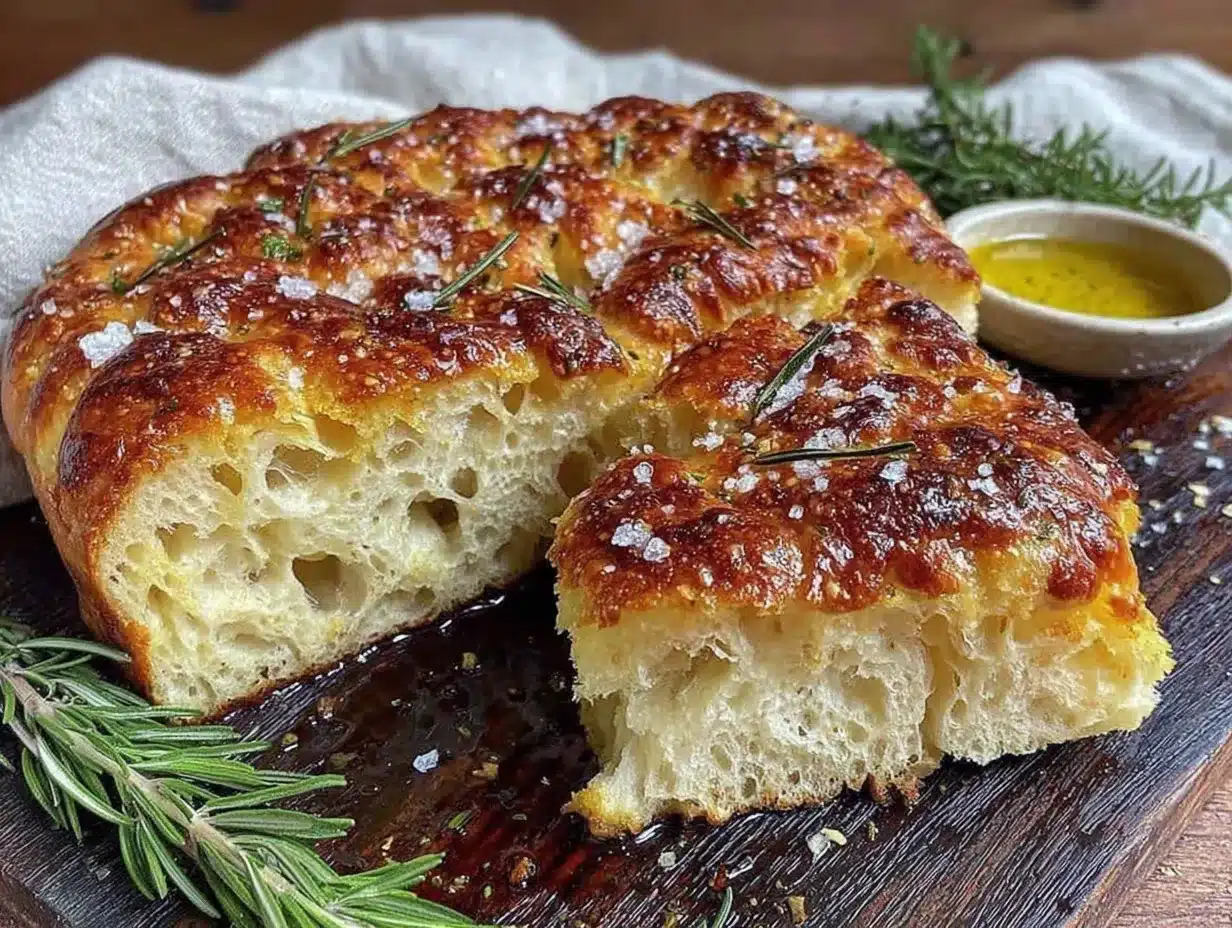
This method takes about 24 hours from start to finish, but most of that is hands-off fermentation. Plan ahead, and you will be rewarded with the best focaccia of your life.
- Mix the dough (Day 1, morning) : In a large bowl, combine 500 grams bread flour and 10 grams fine sea salt. Whisk together. In a separate container, mix 400 grams lukewarm water with 100 grams active sourdough starter until the starter dissolves. Pour the wet ingredients into the dry and mix with a spatula or your hand until no dry flour remains. The dough will be shaggy and very sticky. Cover the bowl with plastic wrap and let it rest for 30 minutes. This autolyse step lets the flour absorb water and makes the dough easier to handle.
- Perform coil folds (Day 1, every 30 minutes for 2 hours) : After the rest, wet your hands slightly to prevent sticking. Reach under one side of the dough, lift it up, and fold it over the top. Rotate the bowl 90 degrees and repeat. Do this 4 times total for one round of folds. Cover and rest 30 minutes. Repeat this coil fold process 3 more times, for a total of 4 sets over 2 hours. You will feel the dough tighten and become smoother with each fold. By the last fold, it should feel elastic and pillowy.
- Bulk fermentation (Day 1, 6-8 hours at room temperature) : After the folds, cover the bowl and let the dough rise at room temperature (around 72-75°F or 22-24°C). It should roughly double in size and look bubbly and jiggly. This takes about 6-8 hours depending on your starter strength and room temperature. If your kitchen is cold, it may take longer. Look for visual cues rather than sticking to a strict timer.
- Cold retard (Day 1, overnight in the fridge) : Gently scrape the dough onto a lightly floured surface. Do not deflate it completely. Fold it into a rough rectangle, then transfer it to a well-oiled 9×13-inch baking pan. Cover tightly with plastic wrap and refrigerate for 12-18 hours. This cold fermentation develops deep sourdough flavor and makes the dough easier to handle.
- Warm up and dimple (Day 2, 2-3 hours before baking) : Remove the pan from the fridge and let it sit at room temperature for 2-3 hours. The dough will relax and spread to fill the pan. If it is stubborn, gently coax it with oiled hands. Once it is fully relaxed, drizzle 2 tablespoons of olive oil over the top. Dip your fingers in oil and press deep dimples all over the dough — go all the way to the bottom of the pan. Sprinkle the chopped fresh rosemary and flaky sea salt evenly over the top.
- Preheat and bake (Day 2) : About 30 minutes before baking, place your oven rack in the middle position and preheat to 450°F (230°C). If you have a baking stone or steel, place it on the rack below. Bake the focaccia for 25-30 minutes, rotating the pan halfway through. The top should be deep golden brown, and the bottom should be crispy and sound hollow when tapped. If the top is browning too fast, tent loosely with foil for the last 10 minutes.
- Cool and serve : Remove the pan from the oven and let the focaccia cool in the pan for 5 minutes. Then transfer it to a cooling rack. Do not skip this step — the bottom will get soggy if it sits in the pan. Let it cool for at least 20 minutes before slicing. The texture is best when slightly warm, but it is also incredible at room temperature.
Troubleshooting Tip : If your dough does not spread in the pan after the cold retard, it may be under-fermented. Let it sit at room temperature longer. If it is too sticky to dimple, add a little more oil to your fingers. If the bottom is pale, try baking directly on a preheated baking stone next time.
Cooking Tips & Techniques
I have made this perfect rosemary sea salt no-knead sourdough focaccia more times than I can count, and I have learned a few things the hard way.
The hydration is your friend. This dough is very wet — around 80% hydration. Do not be tempted to add more flour. The wet dough is what creates those big, airy pockets. Trust the process and use oiled hands when handling it.
Cold fermentation is a game-changer. I used to skip the overnight fridge rest and bake the same day. The flavor was flat. That long, cold fermentation develops complex, tangy notes that make this focaccia special. Do not rush it.
Dimple with confidence. The first time I made focaccia, I barely pressed the dough, afraid I would deflate it. You want deep dimples — all the way to the bottom. Those pockets catch the olive oil and create crispy, golden edges. Press firmly and evenly.
Watch the color, not the clock. Ovens vary wildly. My old oven took 28 minutes; my new one takes 22. Look for a deep amber color on top and listen for a hollow sound when you tap the bottom. That is how you know it is done.
A common mistake I made : I once used cold water straight from the tap. The fermentation took forever, and the dough never really rose. Always use lukewarm water to give your starter a happy environment.
Timing strategy : I mix the dough in the morning, do the folds before lunch, let it bulk ferment during the day, shape it in the evening, and bake it the next afternoon. It fits neatly into a normal schedule without feeling overwhelming.
Variations & Adaptations
This recipe is incredibly flexible, and I have played around with it quite a bit.
- Herb and garlic variation : Add 3 finely minced garlic cloves to the olive oil before dimpling. Swap the rosemary for a mix of thyme, oregano, and basil. The garlic infuses the oil and creates a savory, aromatic focaccia that pairs beautifully with soups.
- Cheese and onion variation : After dimpling, scatter 1/2 cup of grated Parmesan or pecorino over the top, along with thinly sliced red onion. The cheese melts into crispy, salty clusters that are absolutely addictive. I made this for a Super Bowl party, and it was gone in ten minutes.
- Sun-dried tomato and olive variation : Press 1/2 cup of chopped sun-dried tomatoes and 1/3 cup of pitted Kalamata olives into the dough before the final proof. The briny, tangy flavors balance perfectly with the olive oil and sea salt.
- Gluten-free adaptation : Use a high-quality 1:1 gluten-free flour blend that contains xanthan gum. The dough will be more like a thick batter. Bake in a smaller pan (8×8-inch) and expect a denser, cake-like crumb. It is still delicious, just different.
- Whole wheat version : Replace half the bread flour with whole wheat flour. You will need to add an extra 2 tablespoons of water, as whole wheat absorbs more liquid. The flavor is nuttier and more rustic.
Personal variation I love : I sometimes add a tablespoon of za’atar to the olive oil before dimpling. The sesame, sumac, and thyme create a Middle Eastern-inspired focaccia that I serve alongside hummus and grilled vegetables. It is a crowd favorite every time.
Serving & Storage Suggestions
This focaccia is best served slightly warm or at room temperature. The texture is at its peak within a few hours of baking, but it stays good for days if stored properly.
Serving temperature and presentation : Slice the focaccia into squares or long strips and arrange on a wooden board. Drizzle with a little more olive oil and a pinch of flaky salt right before serving. It is stunning as a centerpiece for a casual dinner or antipasto platter.
Complementary dishes : This focaccia is incredible dipped in balsamic vinegar and olive oil, served alongside a hearty minestrone soup, or used for sandwiches stuffed with roasted vegetables and fresh mozzarella. It also pairs beautifully with a simple green salad dressed with lemon vinaigrette. For drinks, a crisp Pinot Grigio or a light Italian beer like Peroni works wonderfully.
Storage instructions : Store leftover focaccia in an airtight container or wrapped tightly in foil at room temperature for up to 3 days. Do not refrigerate — the fridge dries out bread and makes it stale faster. If you need to keep it longer, freeze it.
Freezing and reheating : Slice the focaccia and wrap individual pieces in plastic wrap, then place them in a freezer bag. Freeze for up to 3 months. To reheat, pop a frozen slice directly into a 350°F (175°C) oven for 8-10 minutes, or until warmed through and crispy on the edges. The microwave works in a pinch but will make it soft, not crispy.
How flavors develop : Honestly, this focaccia is even better the next day. The rosemary and olive oil meld together overnight, and the crust softens slightly while the inside stays tender. I often bake it a day ahead for gatherings.
Nutritional Information & Benefits
Here is an approximate nutritional breakdown for one serving (1/8 of the recipe):
- Calories: 290
- Total Fat: 12g
- Saturated Fat: 2g
- Carbohydrates: 38g
- Fiber: 2g
- Protein: 7g
- Sodium: 480mg
Health benefits : Because this focaccia uses a sourdough starter, the long fermentation breaks down phytic acid in the flour, making the nutrients more bioavailable. Sourdough also has a lower glycemic index compared to bread made with commercial yeast, which means it causes a slower, steadier rise in blood sugar. The olive oil provides heart-healthy monounsaturated fats, and rosemary is rich in antioxidants and anti-inflammatory compounds.
Dietary considerations : This recipe is naturally dairy-free and vegan. For a gluten-free version, use the adaptation mentioned above. It is also low in added sugar — there is none — making it a wholesome choice for a balanced diet.
Personal wellness perspective : I love that this bread feels indulgent but is made with simple, whole ingredients. It is the kind of food that nourishes both body and soul, especially when shared with people you care about.
Conclusion
This perfect rosemary sea salt no-knead sourdough focaccia is more than just a recipe — it is a lesson in patience and trust. It asks you to slow down, let time do the work, and believe that something incredible can come from a sticky, unassuming lump of dough. Every time I pull that golden, fragrant pan out of the oven, I am reminded that the best things in life are worth waiting for.
I hope you give this recipe a try and make it your own. Add your favorite toppings, experiment with different herbs, or keep it simple with just rosemary and salt. There is no wrong way to enjoy it. When you do make it, I would love to hear how it turned out. Drop a comment below, share a photo, or tell me about your own focaccia story. Happy baking, my friend — you have got this.
Frequently Asked Questions
Can I use active dry yeast instead of sourdough starter?
Yes, you can. Use 1 teaspoon of active dry yeast dissolved in the lukewarm water with a pinch of sugar. Let it sit for 5-10 minutes until frothy, then proceed with the recipe. The flavor will be milder and less tangy, but the texture will still be lovely. You can skip the overnight cold retard if using commercial yeast, though a shorter cold fermentation (4-6 hours) still adds flavor.
Why is my focaccia dense and not airy?
Dense focaccia usually means the dough was under-fermented. The bulk fermentation needs to be long enough for the dough to double in size and look bubbly. Also, make sure your sourdough starter is active and bubbly before using it. A weak starter will not produce enough gas to create an open crumb. Finally, be gentle when handling the dough — rough handling deflates the air pockets.
Can I make this focaccia in a different size pan?
Absolutely. A 9×13-inch pan is standard, but you can use a 10-inch cast iron skillet for a round focaccia, or two 8×8-inch pans for smaller batches. Adjust the baking time slightly — smaller pans may need 2-3 minutes less, while a larger, thinner focaccia may need a few minutes more. Keep an eye on the color and listen for that hollow sound.
How do I know when my sourdough starter is ready to use?
Your starter is ready when it has roughly doubled in size within 4-6 hours of feeding, is full of bubbles, and has a pleasant, tangy smell. It should pass the “float test” — drop a small spoonful into a glass of water, and if it floats, it is ready. If it sinks, give it another feeding and wait a few more hours.
Can I freeze the dough instead of baking it right away?
Yes, you can freeze the dough after the cold retard. Shape it in the pan, cover tightly, and freeze for up to 1 month. When ready to bake, thaw it in the refrigerator overnight, then let it come to room temperature for 2-3 hours before dimpling and baking. The texture may be slightly less airy, but it is still delicious and convenient.
Pin This Recipe!

Perfect Rosemary Sea Salt No-Knead Sourdough Focaccia (Easy Recipe)

This no-knead sourdough focaccia is a forgiving, beginner-friendly recipe that delivers a golden, pillowy bread with crispy edges, fragrant rosemary, and crunchy sea salt. The long, cold fermentation develops deep sourdough flavor without any kneading required.
- Prep Time: 30 minutes
- Cook Time: 25-30 minutes
- Total Time: 24 hours (including fermentation and cold retard)
- Yield: 8 servings 1x
- Category: Bread
- Cuisine: Italian
Ingredients
- 500 grams bread flour (about 4 cups)
- 400 grams lukewarm water (about 1 2/3 cups)
- 100 grams active sourdough starter (about 1/2 cup)
- 1/4 cup extra-virgin olive oil (60 ml), plus more for pan and drizzling
- 10 grams fine sea salt (about 1 3/4 teaspoons)
- 2 tablespoons fresh rosemary, finely chopped
- 1 teaspoon flaky sea salt (for topping)
Instructions
- Mix the dough (Day 1, morning): In a large bowl, combine 500 grams bread flour and 10 grams fine sea salt. Whisk together. In a separate container, mix 400 grams lukewarm water with 100 grams active sourdough starter until the starter dissolves. Pour the wet ingredients into the dry and mix with a spatula or your hand until no dry flour remains. The dough will be shaggy and very sticky. Cover the bowl with plastic wrap and let it rest for 30 minutes.
- Perform coil folds (Day 1, every 30 minutes for 2 hours): After the rest, wet your hands slightly to prevent sticking. Reach under one side of the dough, lift it up, and fold it over the top. Rotate the bowl 90 degrees and repeat. Do this 4 times total for one round of folds. Cover and rest 30 minutes. Repeat this coil fold process 3 more times, for a total of 4 sets over 2 hours.
- Bulk fermentation (Day 1, 6-8 hours at room temperature): After the folds, cover the bowl and let the dough rise at room temperature (around 72-75°F or 22-24°C). It should roughly double in size and look bubbly and jiggly. This takes about 6-8 hours depending on your starter strength and room temperature.
- Cold retard (Day 1, overnight in the fridge): Gently scrape the dough onto a lightly floured surface. Do not deflate it completely. Fold it into a rough rectangle, then transfer it to a well-oiled 9×13-inch baking pan. Cover tightly with plastic wrap and refrigerate for 12-18 hours.
- Warm up and dimple (Day 2, 2-3 hours before baking): Remove the pan from the fridge and let it sit at room temperature for 2-3 hours. The dough will relax and spread to fill the pan. If it is stubborn, gently coax it with oiled hands. Once it is fully relaxed, drizzle 2 tablespoons of olive oil over the top. Dip your fingers in oil and press deep dimples all over the dough — go all the way to the bottom of the pan. Sprinkle the chopped fresh rosemary and flaky sea salt evenly over the top.
- Preheat and bake (Day 2): About 30 minutes before baking, place your oven rack in the middle position and preheat to 450°F (230°C). If you have a baking stone or steel, place it on the rack below. Bake the focaccia for 25-30 minutes, rotating the pan halfway through. The top should be deep golden brown, and the bottom should be crispy and sound hollow when tapped. If the top is browning too fast, tent loosely with foil for the last 10 minutes.
- Cool and serve: Remove the pan from the oven and let the focaccia cool in the pan for 5 minutes. Then transfer it to a cooling rack. Let it cool for at least 20 minutes before slicing.
Notes
The dough is very wet (around 80% hydration). Do not add more flour. Use lukewarm water (around 80°F/27°C) for best fermentation. Cold fermentation overnight is essential for flavor development. Dimple the dough deeply to catch olive oil. Bake until deep golden brown and hollow-sounding when tapped.
Nutrition
- Serving Size: 1/8 of recipe
- Calories: 290
- Sodium: 480
- Fat: 12
- Saturated Fat: 2
- Carbohydrates: 38
- Fiber: 2
- Protein: 7
Keywords: sourdough focaccia, no-knead bread, rosemary focaccia, easy focaccia recipe, sourdough bread, Italian bread, homemade focaccia