Love this? Save it for later!
Share the inspiration with your friends
My sister-in-law, Claire, had claimed to hate apple desserts for as long as I’d known her. Fifteen years. She’d push aside apple pies at Thanksgiving, wrinkle her nose at apple crisps, and politely decline any apple cake I offered. “It’s the texture,” she’d explain. “Cooked apples get all mushy, and the spices are too heavy.” I stopped trying to convert her years ago—honestly, it just wasn’t worth the hassle.
Then last October, on a rainy Tuesday afternoon, I was testing this apple cider cake recipe for the blog. The house smelled like a fall candle factory—cinnamon, nutmeg, and that sweet-tart scent of reduced apple cider filling every corner. Claire stopped by unannounced, soaked from the drizzle, and walked straight into the kitchen without saying a word. I turned around to find her standing over the cooling rack, a piece of cake already in her hand, cream cheese glaze smeared on her upper lip. She froze, caught in the act.
“This doesn’t count,” she mumbled through a mouthful. “This is different.”
And she was right. This apple cider cake is different. The secret is reducing the cider until it’s almost syrupy, concentrating all that apple flavor into something deep and almost caramel-like. The texture stays tender and moist—not mushy in the slightest. And that cinnamon cream cheese glaze? Let me tell you, it’s the kind of thing you want to put on absolutely everything. Maybe you’ve been there, watching someone you love prove themselves wrong about a food you adore. It’s a quiet kind of victory, isn’t it?
I keep making this cake because it changed someone’s mind. And honestly, it might change yours too.
Why You’ll Love This Recipe
I’ve tested this apple cider cake more times than I care to count, tweaking the ratios, adjusting the spice blend, and perfecting that glaze consistency. What I landed on is a recipe that delivers every single time—and here’s why you’ll feel the same way.
- Rich, Concentrated Apple Flavor : By reducing apple cider before adding it to the batter, you get an intense apple taste without extra liquid making the cake soggy. It’s a game-changer.
- Perfectly Tender Crumb : The combination of oil and butter gives this cake a texture that’s moist but not greasy, with a tender crumb that holds up beautifully to the thick glaze.
- Simple Pantry Ingredients : Nothing fancy here—you probably have most of these items in your kitchen right now. No hunting down specialty stores.
- Make-Ahead Friendly : This cake actually gets better after a day or two. The flavors meld together, and the glaze sets into a gorgeous, creamy layer.
- Fall Baking Perfection : This is the cake you want for apple picking season, Thanksgiving brunch, or a cozy Sunday afternoon when the leaves are turning.
- Crowd-Pleasing Appeal : Even self-proclaimed apple dessert haters (like Claire) have been known to eat three slices in one sitting. I’ve seen it happen.
What makes this recipe different from other apple cakes is that reduced cider technique. Most recipes just dump in regular apple cider, which makes the batter too thin and the cake dense. By simmering it down first, you’re building flavor without compromising structure. It’s a small step that makes a massive difference—and once you try it, you won’t go back.
This is the kind of cake that makes people close their eyes after the first bite. It’s comfort food at its finest—simple, honest, and absolutely unforgettable.
What Ingredients You Will Need
This recipe uses straightforward ingredients that work together to create something truly special. Here’s what you’ll need and why each one matters.
For the Cake
- Apple Cider, 2 cups (480 ml) : Use fresh, unfiltered apple cider if you can find it. The cloudy kind has more apple solids and deeper flavor. I prefer Martinelli’s or a local orchard brand when available.
- All-Purpose Flour, 2 ½ cups (312 g) : Spoon and level your flour—don’t scoop directly from the bag or you’ll end up with a dry cake. For a lighter texture, you can substitute ½ cup with whole wheat pastry flour.
- Granulated Sugar, 1 cup (200 g) : Regular white sugar works perfectly here. It adds sweetness without overpowering the apple flavor.
- Light Brown Sugar, ½ cup (100 g), packed : This adds molasses notes that complement the cider beautifully. Dark brown sugar works too but will give a deeper, almost gingerbread-like flavor.
- Vegetable Oil, ½ cup (120 ml) : A neutral oil like canola or grapeseed keeps the cake moist. I’ve also used melted coconut oil with great results.
- Unsalted Butter, 4 tablespoons (56 g), melted : The butter adds richness and flavor that oil alone can’t provide. If you only have salted butter, reduce the added salt by ¼ teaspoon.
- Large Eggs, 3 : Room temperature eggs incorporate more evenly into the batter. Take them out of the fridge about 30 minutes before you start baking.
- Vanilla Extract, 2 teaspoons : Pure vanilla extract makes a difference here—skip the imitation stuff for this recipe.
- Baking Powder, 1 ½ teaspoons : Make sure your baking powder isn’t expired. Test it by dropping a bit into hot water—if it fizzes, it’s good.
- Baking Soda, ½ teaspoon
- Salt, ½ teaspoon : Fine sea salt or table salt. Kosher salt will need a bit more—about ¾ teaspoon.
- Ground Cinnamon, 1 ½ teaspoons : This is the backbone spice. I use Vietnamese cinnamon for its intense, sweet heat.
- Ground Nutmeg, ½ teaspoon : Freshly grated nutmeg is worth the extra effort. It has a warmth that pre-ground nutmeg just can’t match.
- Ground Ginger, ¼ teaspoon : Just a hint adds complexity without screaming “gingerbread.”
- Ground Cloves, ⅛ teaspoon : Go easy here—cloves are potent and can overwhelm the other flavors quickly.
For the Cinnamon Cream Cheese Glaze
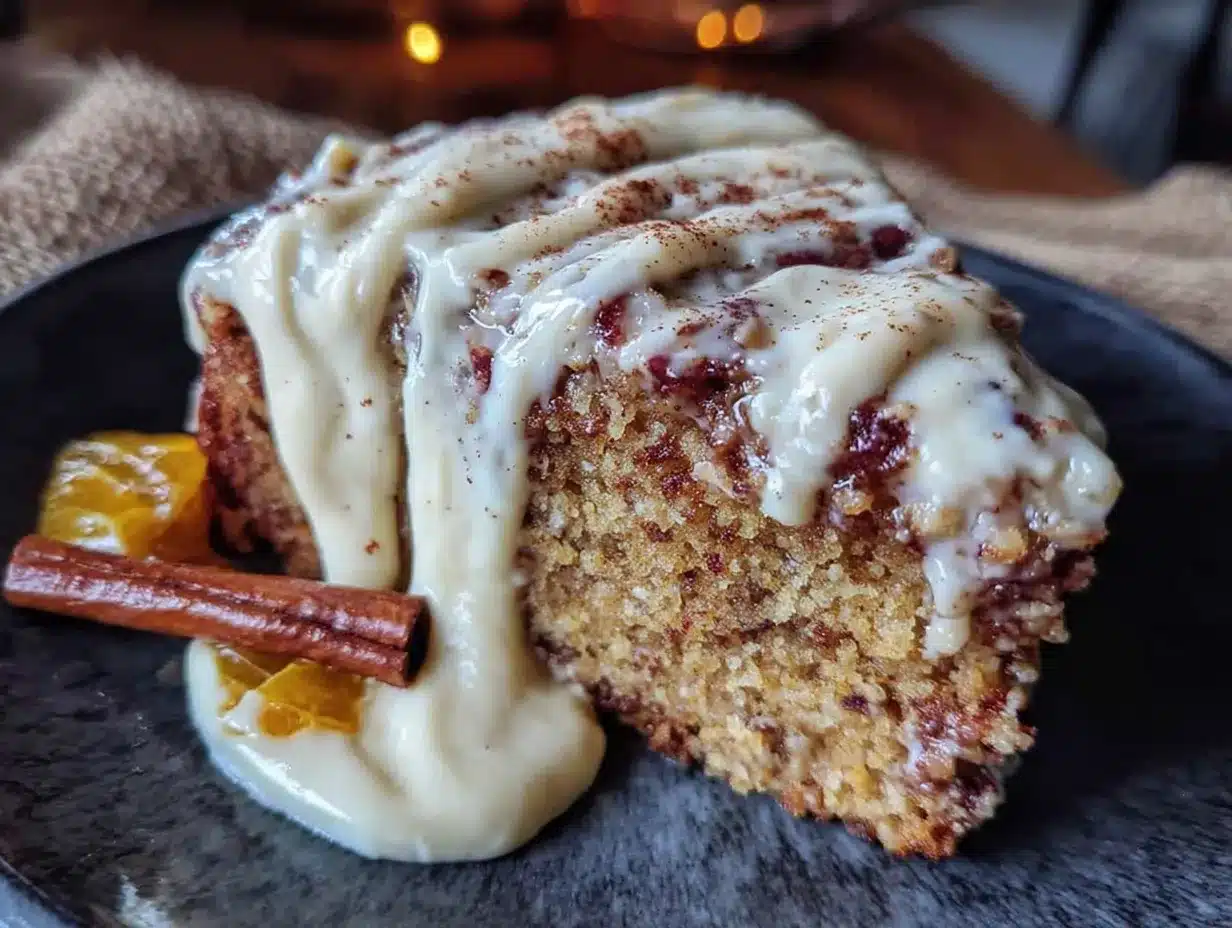
- Cream Cheese, 4 ounces (113 g), softened : Full-fat cream cheese gives the best texture and tang. Let it sit out for at least an hour to soften properly.
- Unsalted Butter, 2 tablespoons (28 g), softened
- Powdered Sugar, 1 cup (120 g), sifted : Sifting removes lumps and ensures a silky smooth glaze. Trust me on this one.
- Vanilla Extract, 1 teaspoon
- Ground Cinnamon, ½ teaspoon
- Milk, 2-3 tablespoons (30-45 ml) : Whole milk or 2% works best. Start with 2 tablespoons and add more until you reach your desired consistency.
Substitution Notes
For a gluten-free version, use a 1:1 gluten-free baking flour blend that contains xanthan gum. I’ve had good luck with King Arthur’s Measure for Measure. For a dairy-free option, swap the butter with a plant-based butter stick and use a dairy-free cream cheese alternative like Miyoko’s. The texture will be slightly different, but still delicious.
Equipment Needed
You don’t need a professional bakery setup for this cake—just a few reliable tools that make the process smooth and enjoyable.
- 9-inch Bundt Pan (10-15 cup capacity) : This is my go-to pan for this recipe. The fluted edges catch the glaze beautifully. If you don’t have a Bundt pan, a 9×13 inch baking dish works too—just reduce the baking time by about 10 minutes.
- Medium Saucepan : For reducing the apple cider. A 2-quart saucepan with a heavy bottom prevents scorching.
- Large Mixing Bowls (2) : One for dry ingredients, one for wet. I prefer glass or stainless steel—plastic can retain odors.
- Whisk : For combining dry ingredients and smoothing out the batter.
- Hand Mixer or Stand Mixer : A hand mixer works perfectly here. I’ve made this cake with a whisk and some elbow grease too—it’s doable, just more work.
- Rubber Spatula : For scraping down the bowl and folding in the dry ingredients. A silicone one won’t scratch your pans.
- Cooling Rack : Essential for even cooling. If you don’t have one, you can use the inverted Bundt pan to let the cake cool slightly.
- Small Offset Spatula : For spreading the glaze. A butter knife works in a pinch, but the offset spatula makes it look professional.
I picked up my favorite Bundt pan at a thrift store for three dollars—it’s a vintage Nordic Ware that’s been seasoned to perfection. Keep an eye out at garage sales; sometimes the best baking tools have a little history behind them.
Preparation Method
Let’s get baking. I’ll walk you through each step so you feel confident from start to finish.
- Reduce the Apple Cider : Pour the 2 cups of apple cider into your medium saucepan. Bring it to a boil over medium-high heat, then reduce to a simmer. Let it bubble away, stirring occasionally, until it’s reduced to about ½ cup (120 ml). This takes roughly 15-20 minutes. You’re looking for a syrupy consistency that coats the back of a spoon. Watch it carefully toward the end—it can go from perfect to burnt in seconds. Remove from heat and let it cool completely. I sometimes set the pan in a bowl of cold water to speed this up.
- Preheat and Prep : Preheat your oven to 350°F (175°C). Generously grease your Bundt pan with butter or baking spray that contains flour. Don’t skimp here—Bundt pans have a reputation for sticking. I use a pastry brush to get into every nook and cranny.
- Mix Dry Ingredients : In a large bowl, whisk together the flour, baking powder, baking soda, salt, cinnamon, nutmeg, ginger, and cloves. Set this aside while you work on the wet ingredients.
- Combine Wet Ingredients : In another large bowl, beat the granulated sugar, brown sugar, vegetable oil, and melted butter together until smooth. Add the eggs one at a time, beating well after each addition. Stir in the vanilla extract and the cooled reduced cider. The mixture should look glossy and smell amazing.
- Fold Together : Gradually add the dry ingredients to the wet mixture, folding gently with a rubber spatula. Mix just until no streaks of flour remain—overmixing will make the cake tough. A few small lumps are perfectly fine.
- Bake : Pour the batter into your prepared Bundt pan and smooth the top. Bake for 40-45 minutes, or until a toothpick inserted near the center comes out clean or with just a few moist crumbs. The top should be golden brown and spring back when lightly touched. My oven runs hot, so I start checking at 38 minutes.
- Cool : Let the cake cool in the pan for 15 minutes. Then invert it onto a cooling rack and let it cool completely—this is crucial. If you add the glaze while the cake is still warm, it’ll slide right off and pool at the bottom. Patience, my friend.
- Make the Glaze : While the cake cools, beat the softened cream cheese and butter together until smooth and fluffy. Add the sifted powdered sugar, vanilla extract, and cinnamon, and beat until combined. Add milk one tablespoon at a time, beating after each addition, until the glaze is thick but pourable. It should fall in a ribbon from the spatula.
- Glaze and Serve : Once the cake is completely cool, pour the glaze over the top, letting it drip down the sides. Use your offset spatula to encourage it into the crevices. Let the glaze set for about 15 minutes before slicing—if you can wait that long.
Cooking Tips & Techniques
I’ve made this apple cider cake at least a dozen times, and I’ve learned a few things the hard way. Here’s what I wish someone had told me.
Don’t Rush the Cider Reduction : The first time I made this, I cranked the heat to high to speed things up. Big mistake. The cider scorched on the bottom of the pan, and my whole kitchen smelled like burnt sugar for days. Keep it at a gentle simmer and stir every few minutes. Low and slow is the way to go.
Room Temperature Ingredients Matter : I know, I know—every recipe says this. But with this cake, it genuinely makes a difference. Cold eggs and cold cream cheese will give you a lumpy batter and a lumpy glaze. Set everything out an hour before you start. Your future self will thank you.
Test for Doneness Properly : A toothpick test is reliable, but make sure you’re inserting it into the thickest part of the cake—usually near the center tube of the Bundt pan. I also look for the cake pulling away slightly from the edges of the pan. If the top is browning too quickly, tent it loosely with foil for the last 10 minutes of baking.
Glaze Consistency is Key : The perfect glaze should be thick enough to coat the back of a spoon but thin enough to drip lazily down the sides of the cake. If it’s too thick, add milk a teaspoon at a time. If it’s too thin, add more sifted powdered sugar. I’ve ruined a few glazes by adding too much milk at once—learn from my mistakes.
Let the Cake Cool Completely : This is non-negotiable. Warm cake + cream cheese glaze = a melty mess. I once got impatient and glazed a slightly warm cake, and the entire thing slid off into a puddle on the plate. It still tasted good, but it looked like a crime scene.
Variations & Adaptations
This apple cider cake is wonderfully adaptable. Here are a few ways to make it your own.
Add Fresh Apples : Fold 1 cup of finely diced fresh apples (like Honeycrisp or Granny Smith) into the batter just before baking. Toss them in a tablespoon of flour first to prevent them from sinking to the bottom. This adds little pockets of tender fruit throughout the cake.
Make it a Layer Cake : Divide the batter between two 9-inch round cake pans and bake for 25-30 minutes. Double the glaze recipe and spread it between the layers and over the top. It makes a stunning presentation for fall birthdays or Thanksgiving.
Go Gluten-Free : Substitute the all-purpose flour with a high-quality 1:1 gluten-free baking blend. I’ve tested this with King Arthur’s Measure for Measure and Cup4Cup, and both worked beautifully. Add ¼ teaspoon of xanthan gum if your blend doesn’t already include it.
Try a Maple Variation : Replace the brown sugar with maple sugar, and add 2 tablespoons of pure maple syrup to the glaze instead of the vanilla extract. The maple flavor pairs gorgeously with the apple cider.
Add a Streusel Topping : For extra texture, sprinkle a streusel topping (½ cup flour, ¼ cup brown sugar, 3 tablespoons cold butter, ½ teaspoon cinnamon) over the batter before baking. It creates a crunchy, buttery crust that’s absolutely divine.
My personal favorite variation is adding a handful of toasted pecans to the batter. The nuttiness balances the sweet apple flavor perfectly—and it’s how I made the cake that finally converted Claire.
Serving & Storage Suggestions
This cake is versatile enough for any occasion. Here’s how to serve and store it like a pro.
Serving Temperature : Serve the cake at room temperature for the best texture and flavor. If you’ve refrigerated it, let it sit on the counter for about 30 minutes before slicing. The glaze softens slightly and the crumb becomes tender again.
Presentation Ideas : Place the cake on a beautiful cake stand and dust the top with a light sprinkle of cinnamon or a few fresh apple slices arranged around the base. For a rustic touch, serve it on a wooden board with small bowls of whipped cream and extra glaze for dipping.
Perfect Pairings : A cup of hot apple cider or a chai latte is the ideal companion. For a brunch spread, serve slices alongside scrambled eggs and bacon. For dessert, a scoop of vanilla bean ice cream or a dollop of lightly sweetened whipped cream takes it over the top.
Storage Instructions : Store the cake in an airtight container in the refrigerator for up to 5 days. The glaze will firm up, but that’s part of its charm. I actually prefer the cake on day two—the flavors have had time to meld and deepen.
Freezing Tips : You can freeze the unglazed cake for up to 3 months. Wrap it tightly in plastic wrap, then a layer of foil. When you’re ready to serve, thaw it overnight in the refrigerator, bring it to room temperature, and then glaze it fresh. The glaze does not freeze well, so always add it after thawing.
Reheating : For that just-baked warmth, microwave individual slices for 15-20 seconds. Or place slices on a baking sheet and warm them in a 300°F (150°C) oven for about 5 minutes. The glaze will get slightly melty and glorious.
Nutritional Information & Benefits
While this is definitely a treat, it has a few redeeming qualities worth mentioning.
Estimated Values Per Slice (based on 12 servings) : Calories: 420, Total Fat: 18g, Saturated Fat: 7g, Cholesterol: 65mg, Sodium: 280mg, Total Carbohydrates: 62g, Dietary Fiber: 1g, Sugars: 42g, Protein: 5g.
Health Highlights : Apple cider contains antioxidants called polyphenols, which may help reduce inflammation and support heart health. Cinnamon is known for its anti-inflammatory properties and can help regulate blood sugar levels. The eggs provide high-quality protein and essential vitamins like B12 and D.
Dietary Considerations : This recipe contains gluten, dairy, and eggs. For a gluten-free version, see the variations section above. For a dairy-free version, substitute the butter with plant-based butter and use a dairy-free cream cheese alternative. The cake is nut-free as written, making it safe for school events and nut-free households.
Allergen Warning : Please be aware that this recipe contains common allergens including wheat, milk, and eggs. If you’re serving guests with allergies, always double-check your ingredient labels and consider the variations provided.
I believe in balance—life is too short to skip dessert, but it’s also worth knowing what’s in your food. This cake is a celebration, not an everyday breakfast. Enjoy it mindfully and without guilt.
Conclusion
This apple cider cake with cinnamon cream cheese glaze is more than just a recipe—it’s the kind of thing that changes minds and creates memories. It’s the cake I bring to fall gatherings, the one that disappears fastest at bake sales, and the one that finally convinced my sister-in-law that apple desserts deserve a second chance.
The magic is in the details: the concentrated cider that packs a punch of apple flavor, the warm spice blend that smells like autumn in a bowl, and that luscious glaze that ties everything together. It’s simple enough for a Tuesday night but impressive enough for a holiday table.
I’d love to hear how this cake turns out for you. Did you try any of the variations? Did you serve it at a special occasion? Drop a comment below and let me know—your stories are what make this community so wonderful. And if you snap a photo, tag me so I can see your beautiful creation.
Go ahead, preheat that oven. Your cozy apple cider cake is waiting.
Frequently Asked Questions
Can I use apple juice instead of apple cider?
You can, but the flavor won’t be as rich. Apple juice is thinner and less concentrated than cider, so you’ll end up with a milder apple taste. If you’re in a pinch, add an extra ¼ teaspoon of cinnamon to compensate. I’d recommend sticking with cider if possible—it really makes a difference.
Why did my cake stick to the Bundt pan?
This happens to the best of us. Make sure you’re greasing every crevice thoroughly with butter or a baking spray that contains flour. Let the cake cool in the pan for exactly 15 minutes—no more, no less. If it’s still sticking, gently run a thin knife around the edges and the center tube before inverting.
Can I make this cake ahead of time?
Absolutely. In fact, I often make it a day ahead. Bake and cool the cake completely, then wrap it tightly and store it at room temperature. Make the glaze fresh on the day you plan to serve it. The flavors actually improve after a day or two.
How do I know when the apple cider is reduced enough?
You’re looking for about ½ cup of syrupy liquid. It should coat the back of a spoon and have a consistency similar to maple syrup. If you tilt the pan, it should move slowly. Keep a close eye on it in the last few minutes—it can go from perfect to burnt very quickly.
Can I skip the glaze?
You can, but I wouldn’t recommend it. The cinnamon cream cheese glaze is what takes this cake from good to unforgettable. If you’re short on time or ingredients, a simple dusting of powdered sugar and cinnamon works in a pinch. But honestly, the glaze is worth every second of effort.
Pin This Recipe!
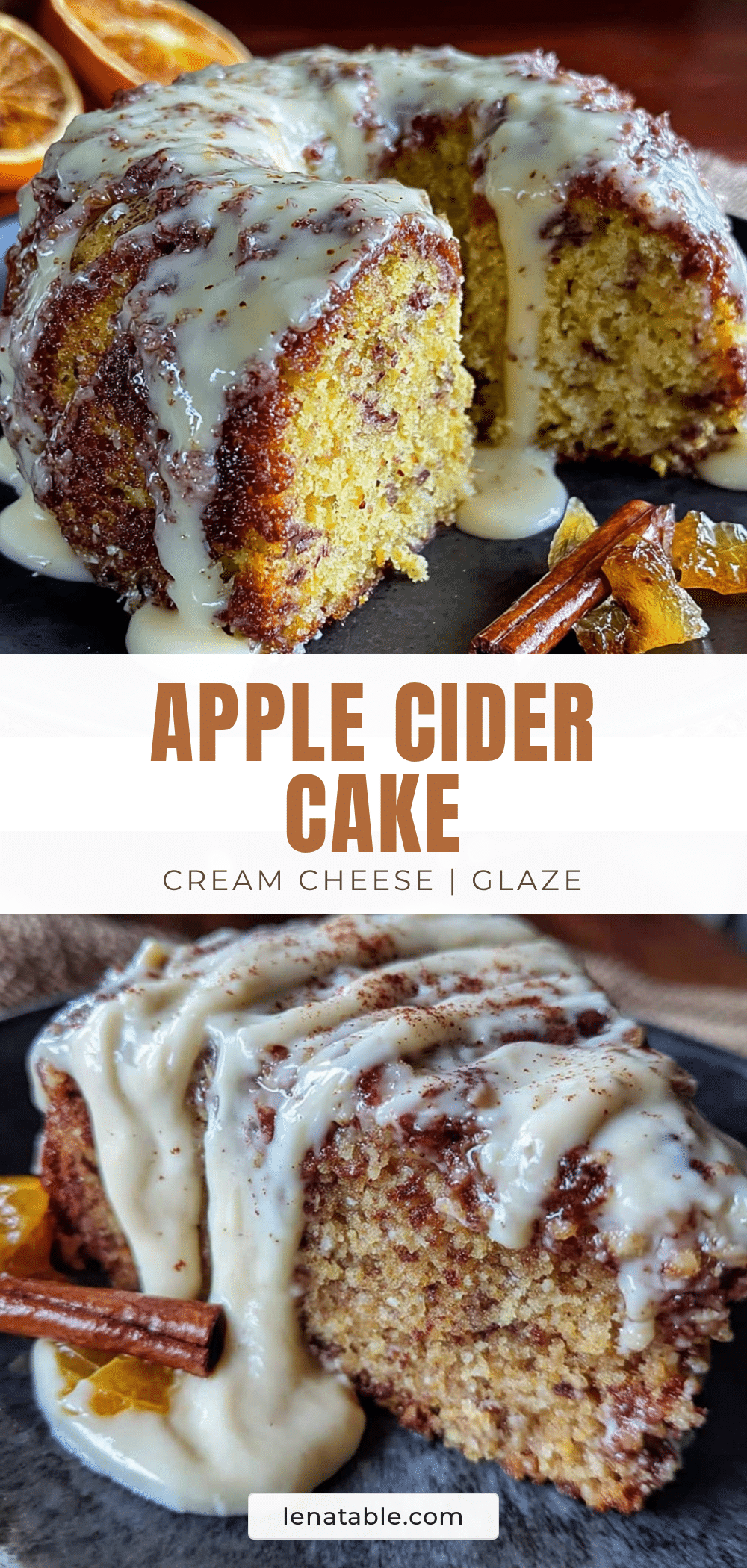
Cozy Apple Cider Cake with Easy Cinnamon Cream Cheese Glaze
This apple cider cake features concentrated apple flavor from reduced cider, a tender crumb, and a luscious cinnamon cream cheese glaze. It’s a fall baking staple that even self-proclaimed apple dessert haters will love.
- Prep Time: 20 minutes
- Cook Time: 45 minutes
- Total Time: 1 hour 5 minutes
- Yield: 12 servings 1x
- Category: Dessert
- Cuisine: American
Ingredients
- 2 cups (480 ml) apple cider
- 2 ½ cups (312 g) all-purpose flour
- 1 cup (200 g) granulated sugar
- ½ cup (100 g) light brown sugar, packed
- ½ cup (120 ml) vegetable oil
- 4 tablespoons (56 g) unsalted butter, melted
- 3 large eggs, room temperature
- 2 teaspoons vanilla extract
- 1 ½ teaspoons baking powder
- ½ teaspoon baking soda
- ½ teaspoon salt
- 1 ½ teaspoons ground cinnamon
- ½ teaspoon ground nutmeg
- ¼ teaspoon ground ginger
- ⅛ teaspoon ground cloves
- 4 ounces (113 g) cream cheese, softened
- 2 tablespoons (28 g) unsalted butter, softened
- 1 cup (120 g) powdered sugar, sifted
- 1 teaspoon vanilla extract
- ½ teaspoon ground cinnamon
- 2–3 tablespoons (30–45 ml) milk
Instructions
- Reduce the apple cider: Pour 2 cups of apple cider into a medium saucepan. Bring to a boil over medium-high heat, then reduce to a simmer. Cook, stirring occasionally, until reduced to about ½ cup (120 ml), roughly 15-20 minutes. Remove from heat and let cool completely.
- Preheat oven to 350°F (175°C). Generously grease a 9-inch Bundt pan (10-15 cup capacity) with butter or baking spray.
- In a large bowl, whisk together flour, baking powder, baking soda, salt, cinnamon, nutmeg, ginger, and cloves. Set aside.
- In another large bowl, beat granulated sugar, brown sugar, vegetable oil, and melted butter until smooth. Add eggs one at a time, beating well after each. Stir in vanilla extract and cooled reduced cider.
- Gradually add dry ingredients to wet mixture, folding gently with a rubber spatula until just combined. Do not overmix.
- Pour batter into prepared Bundt pan and smooth the top. Bake for 40-45 minutes, or until a toothpick inserted near the center comes out clean or with a few moist crumbs.
- Let cake cool in pan for 15 minutes, then invert onto a cooling rack and cool completely.
- Make the glaze: Beat softened cream cheese and butter together until smooth and fluffy. Add sifted powdered sugar, vanilla extract, and cinnamon, and beat until combined. Add milk one tablespoon at a time until glaze is thick but pourable.
- Once cake is completely cool, pour glaze over the top, letting it drip down the sides. Let glaze set for about 15 minutes before slicing.
Notes
Don’t rush the cider reduction; keep at a gentle simmer to avoid scorching. Room temperature ingredients are crucial for a smooth batter and glaze. Let cake cool completely before glazing to prevent the glaze from sliding off. The cake can be made a day ahead; store unglazed at room temperature and glaze fresh.
Nutrition
- Serving Size: 1 slice
- Calories: 420
- Sugar: 42
- Sodium: 280
- Fat: 18
- Saturated Fat: 7
- Carbohydrates: 62
- Fiber: 1
- Protein: 5
Keywords: apple cider cake, cinnamon cream cheese glaze, fall baking, bundt cake, apple dessert