Love this? Save it for later!
Share the inspiration with your friends
This was supposed to be a simple butternut squash soup. I had the squash roasted, the broth simmering, and I was feeling pretty good about myself for getting a head start on dinner. Then my phone rang, I got distracted, and I completely forgot about the vegetable stock I was reducing. By the time I turned back around, the pan was nearly dry, and what I had was a thick, sweet, orange mess that was absolutely nothing like soup. Honestly, I was ready to scrap the whole thing and order pizza. But I had a box of pasta staring at me from the pantry, and a block of cheddar that needed using up. So, I did what any tired cook would do: I threw the squash puree into a pot with some milk, stirred in the cheese, and dumped it over some boiled macaroni. I wasn’t expecting much. I mean, I was bracing for a weird, grainy, “I guess this is edible” kind of dinner. But that first bite? It was creamy, it was savory, it had this subtle sweetness that just worked. It was better than the soup would have ever been. Maybe you’ve been there—the moment a kitchen blunder turns into something you actually want to write down. This is that recipe. It’s the one that stuck.
Why You’ll Love This Recipe
Let me tell you why this particular mac and cheese has earned a permanent spot in my weeknight rotation. It’s not just another pasta dish; it’s a solution.
- Quick & Easy: From start to finish, this comes together in about 30 minutes. The oven does the hard work of roasting the squash, and the stovetop sauce comes together in the time it takes to boil water. Perfect for those nights when you’re staring at the fridge wondering what to make.
- Simple Ingredients: You likely already have most of this in your kitchen. A butternut squash, some pasta, milk, cheese, and a few pantry spices. No trips to a specialty store required.
- Perfect for Weeknights: This is the definition of a low-effort, high-reward meal. It’s comforting, filling, and doesn’t require you to babysit a complicated sauce. It’s the kind of meal you can make while helping with homework or unloading the dishwasher.
- Crowd-Pleaser: I’ve served this to picky kids and skeptical adults, and it gets cleaned out every single time. The squash blends in so smoothly that even the vegetable-avoiders don’t notice it.
- Unbelievably Delicious: The roasted squash gives the sauce a velvety texture and a natural sweetness that pairs perfectly with sharp cheddar. It’s comfort food that feels a little bit fancy, but without any of the fuss.
What makes this different from every other mac and cheese recipe out there? It’s the roasted squash. It’s not a gimmick—it genuinely makes the sauce creamier and adds a layer of flavor that a plain cheese sauce just can’t touch. You get a rich, satisfying dish without needing a whole block of cream cheese or a quart of heavy cream. It’s comfort food reimagined for a busy Tuesday night.
What Ingredients You Will Need
This recipe uses simple, wholesome ingredients that work together to create a surprisingly complex flavor. The star of the show is, of course, the butternut squash, which gets roasted to bring out its natural sugars.
- Butternut Squash (1 medium, about 2-3 pounds, peeled and cubed): This is the foundation of our creamy sauce. Roasting it is non-negotiable here—it concentrates the sweetness and gives the sauce a much deeper flavor than boiling would. I look for a squash that feels heavy for its size, which means it’s fresh and moist inside.
- Olive Oil (2 tablespoons): For roasting the squash. A good quality extra virgin olive oil will add a nice fruity note, but a standard one works perfectly fine.
- Garlic (3 cloves, whole): I toss these in with the squash to roast. They become soft, sweet, and almost nutty. They get blended right into the sauce for a subtle savory backbone.
- Elbow Macaroni (1 pound): The classic shape for a reason—those little curves hold onto the sauce beautifully. You could use shells, rotini, or even penne in a pinch. I prefer a good bronze-die pasta for its texture.
- Unsalted Butter (3 tablespoons): For the roux. Using unsalted lets you control the overall saltiness of the dish.
- All-Purpose Flour (3 tablespoons): This thickens the milk and cheese into a proper sauce. Don’t skip it, or you’ll end up with a soupy mess.
- Whole Milk (2 cups): Whole milk gives the sauce a richer, creamier result than skim or 2%. If you need a dairy-free option, unsweetened oat milk works surprisingly well here.
- Chicken or Vegetable Broth (1 cup): This adds a savory depth that water just can’t match. I usually use a low-sodium variety so I can control the salt.
- Sharp Cheddar Cheese (2 cups, shredded): This is the main cheese. Sharp cheddar provides a strong, tangy flavor that cuts through the sweetness of the squash. I recommend shredding it yourself from a block—the pre-shredded bags have anti-caking agents that can make the sauce grainy. I’ve learned this the hard way.
- Gruyère or Monterey Jack (1 cup, shredded): This is your melting cheese. Gruyère is nutty and fantastic, but Monterey Jack is more budget-friendly and melts like a dream. Both add incredible creaminess.
- Dijon Mustard (1 teaspoon): Don’t skip this. A tiny bit of mustard powder or prepared Dijon brightens up the whole sauce and makes the cheese taste cheesier. It’s a little secret I picked up from an old cookbook.
- Salt and Black Pepper (to taste): Essential for balancing the flavors.
- Pinch of Nutmeg (optional but recommended): A tiny grating of fresh nutmeg is a classic pairing with butternut squash and cheese. It adds a warm, aromatic note that ties everything together.
- Breadcrumbs (1/2 cup, optional for topping): If you want a crunchy topping, panko breadcrumbs tossed with a little melted butter are perfect. I usually skip this on a weeknight because I’m too hungry to wait for the broiler.
Equipment Needed
You don’t need a professional kitchen to pull this off. Here’s what you’ll need:
- Baking Sheet: A rimmed baking sheet is ideal for roasting the squash. It keeps the juices from spilling over. I use a half-sheet pan, which fits a whole squash perfectly.
- Large Pot: For boiling the pasta. A 5- to 6-quart pot is perfect.
- Medium Saucepan or Dutch Oven: For making the cheese sauce. A heavy-bottomed pot is best to prevent the sauce from scorching.
- Colander: For draining the pasta.
- Blender or Food Processor: This is essential for pureeing the roasted squash into a smooth sauce. An immersion blender works too, but you’ll need to transfer everything to a tall cup first.
- Wooden Spoon or Whisk: For stirring the roux and the sauce. A whisk is great for getting out lumps.
- Box Grater or Food Processor with Grating Disc: For shredding your cheese. It takes an extra minute, but the texture difference is real.
- Measuring Cups and Spoons: Standard kitchen tools.
I use my old, slightly warped baking sheet for this—it’s been through a dozen roasts and has that seasoned non-stick quality you can’t buy.
Preparation Method
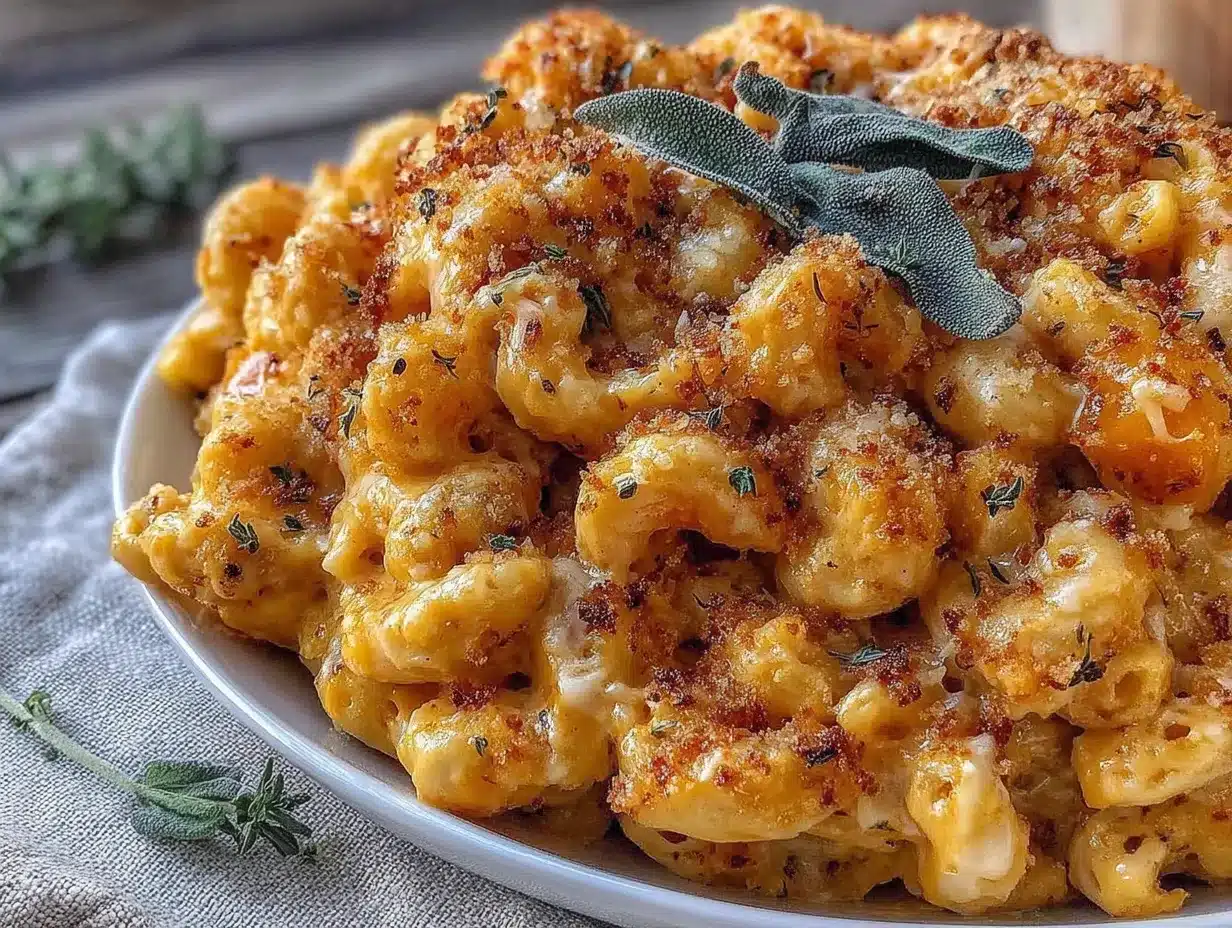
Let’s get cooking. This whole process is designed to be efficient, so you’re not standing around waiting.
- Preheat and Prep (5 minutes): Preheat your oven to 400°F (200°C). While it’s heating up, peel and cube your butternut squash. Aim for 1-inch cubes—they’ll cook evenly. Toss the cubes and the whole garlic cloves on your baking sheet with the olive oil, a good pinch of salt, and a few cracks of black pepper. Spread them into a single layer.
- Roast the Squash (25-30 minutes): Roast the squash for 20-25 minutes, flipping halfway through, until it’s tender and the edges are starting to caramelize. You’ll know it’s done when a fork slides in easily. It should smell sweet and nutty. While this is in the oven, you can move on to the next steps.
- Boil the Pasta (10 minutes): Fill your large pot with water, salt it generously (it should taste like the sea), and bring it to a rolling boil. Add your macaroni and cook according to the package directions until al dente. I usually set a timer for 1 minute less than the package says—I’d rather have it a little firm than mushy. Drain the pasta and set it aside. Don’t rinse it; you want that starch to help the sauce cling.
- Make the Roux (5 minutes): In your medium saucepan, melt the butter over medium heat. Once it’s foaming, whisk in the flour. Keep whisking for about 1-2 minutes. You’re looking for a paste that smells a little like toasted pie crust. Don’t let it brown—just cook the raw flour taste out.
- Build the Sauce (5 minutes): Slowly pour in the milk and the broth while you keep whisking. Whisk constantly to prevent lumps from forming. Bring this to a gentle simmer—you’ll see it start to bubble and thicken. This takes about 3-4 minutes. It should be thick enough to coat the back of a spoon.
- Puree the Squash (5 minutes): By now, your squash should be done. Let it cool for just a minute, then transfer the roasted squash and garlic cloves to your blender. Add about 1 cup of the hot milk sauce from the pot. Blend until completely smooth. It should look like a thick, velvety orange puree.
- Combine and Melt (5 minutes): Pour the squash puree back into the pot with the rest of the milk sauce. Stir to combine. Turn the heat down to low. Add your shredded cheddar and gruyère (or Monterey jack), a handful at a time, stirring until each addition is fully melted before adding the next. Stir in the Dijon mustard and a tiny pinch of nutmeg. Taste it. This is the moment. Adjust the salt and pepper as needed.
- Finish the Dish (2 minutes): Add the drained pasta to the pot with the cheese sauce. Stir gently until every piece of macaroni is coated in that beautiful, creamy sauce. If it seems too thick, splash in a little more warm milk or pasta water to loosen it up. Serve immediately.
A quick note: if you want a bubbly, golden-brown top, transfer the mac and cheese to a baking dish, sprinkle with the breadcrumbs, and broil for 2-3 minutes. But honestly, on a weeknight, I’m eating it straight from the pot.
Cooking Tips & Techniques
Over the years, I’ve made this recipe more times than I can count, and I’ve picked up a few things along the way.
Don’t skip the roasting step. I know it’s tempting to steam or boil the squash to save time, but roasting is where the magic happens. It concentrates the sugars and adds a caramelized flavor that you just can’t get any other way. It’s the difference between a good sauce and a great one.
Low and slow for the cheese. This is a mistake I made a dozen times. If you add the cheese to a sauce that’s too hot, or you crank up the heat, the proteins will seize up and you’ll end up with a grainy, separated mess. Keep the heat on low, and be patient. Your sauce will be silky smooth.
Shred your own cheese. I know, it’s an extra step and it makes a mess of your fingers. But the pre-shredded bags are coated in potato starch and cellulose to keep them from clumping, and that coating prevents them from melting smoothly. You’ll get a much creamier result from a block of cheese.
Salt your pasta water. This is your only chance to season the pasta itself. The water should taste like the ocean. It makes a huge difference in the final dish.
Reserve some pasta water. Before you drain the pasta, scoop out a cup of that starchy water. If your sauce is too thick after you add the pasta, a splash of this will loosen it up and help it cling to the noodles better than plain water ever could.
Variations & Adaptations
This recipe is a great base to play with. Here are a few ways I’ve changed it up.
- Add Some Greens: I’ll sometimes stir in a couple of handfuls of fresh spinach or chopped kale right at the end. The residual heat wilts it perfectly, and it adds a nice pop of color and nutrients. It’s a great way to use up that half-bag of spinach in the fridge.
- Make it Meaty: For a heartier version, I’ll cook up some crumbled Italian sausage or chopped bacon and stir it in with the pasta. The smoky, salty flavor pairs beautifully with the sweet squash and sharp cheddar. It turns a side dish into a full meal.
- Go Dairy-Free: I’ve made this for friends with dairy sensitivities. Use a good quality unsweetened oat milk or full-fat canned coconut milk (the savory kind, not the sweetened one). Use a dairy-free butter substitute and a vegan cheddar-style shred. The squash does a lot of the heavy lifting for creaminess, so it works better than you’d think.
- Swap the Squash: No butternut squash? No problem. Roasted sweet potato, pumpkin, or even carrot puree will work in a pinch. The flavor will change slightly, but the creamy texture will be the same.
- Spice it Up: I sometimes add a pinch of cayenne pepper or a dash of smoked paprika to the sauce for a little warmth. It doesn’t make it spicy, just more complex.
Serving & Storage Suggestions
This mac and cheese is best served immediately, while it’s hot, creamy, and the cheese is still stretchy. I like to scoop it into bowls and top it with a little extra black pepper and a sprinkle of fresh chives or parsley if I have them.
It pairs beautifully with a simple green salad dressed with a tangy vinaigrette—the acidity cuts through the richness of the cheese. A side of roasted broccoli or steamed green beans also works wonderfully. For a heartier meal, serve it alongside some grilled chicken or a simple pork chop.
Storing Leftovers: If you have any left (which is rare in my house), let it cool completely, then transfer it to an airtight container. It will keep in the fridge for 3-4 days. The sauce will thicken as it sits, so don’t be alarmed.
Reheating: The best way to reheat this is on the stovetop. Add a splash of milk or broth to the pot, and warm it over medium-low heat, stirring gently until it’s hot and creamy again. The microwave works in a pinch, but it can make the pasta a bit mushy. If you’re reheating a large batch, you can also pop it in a 350°F (175°C) oven for about 15-20 minutes, covered with foil.
Freezing: This mac and cheese freezes surprisingly well. Assemble the dish but don’t bake it (if using a breadcrumb topping). Let it cool, wrap it tightly in foil, and freeze for up to 3 months. To bake from frozen, add about 20 minutes to the cooking time. The texture is best if you use a slightly higher milk-to-squash ratio when making it for the freezer.
Nutritional Information & Benefits
This recipe makes about 6 generous servings. The nutritional values are estimates and will vary based on the specific ingredients you use.
| Nutrient | Amount per Serving |
|---|---|
| Calories | ~580 kcal |
| Protein | 22g |
| Fat | 28g |
| Carbohydrates | 62g |
| Fiber | 6g |
| Sugar | 10g |
The real win here is the butternut squash. It’s packed with Vitamin A (great for your eyes and immune system), Vitamin C, and fiber. By using it as a base for the sauce, you’re getting a serving of vegetables in a dish that feels completely indulgent. It’s a sneaky way to eat a little healthier without feeling like you’re sacrificing flavor. Plus, the cheese provides a good amount of calcium and protein. This is comfort food that actually has some nutritional merit.
Conclusion
This quick roasted butternut squash mac and cheese is proof that a happy accident can sometimes lead to the best recipes. It’s the kind of meal that solves the “what’s for dinner?” problem in under 30 minutes, using ingredients you probably already have. It’s creamy, it’s cheesy, it’s got a little something extra that makes it feel special, but it’s never fussy. I love this recipe because it respects my time and my energy levels on a busy weeknight, and it never fails to make everyone at the table happy.
I’d love to hear how yours turns out. Did you add any fun mix-ins? Did you go for the crunchy breadcrumb topping? Let me know in the comments below, and don’t forget to pin this recipe for later. Happy cooking, friends!
Frequently Asked Questions
Can I use frozen butternut squash instead of fresh?
Yes, you absolutely can. Frozen cubed squash is a great time-saver. Roast it straight from frozen, but add about 5-10 minutes to the roasting time. You might need to drain off a little excess water after it roasts, as frozen squash tends to release more moisture.
My sauce turned out grainy. What went wrong?
This usually happens when the heat was too high when you added the cheese, or you used pre-shredded cheese. Make sure your heat is on low when you add the cheese, and always shred it from a block. Also, be sure the squash is blended until completely smooth—any lumps can affect the texture.
Can I make this gluten-free?
Yes! Use a gluten-free pasta blend (I like ones made from brown rice and quinoa). For the roux, substitute the all-purpose flour with a 1:1 gluten-free all-purpose flour blend or cornstarch. If using cornstarch, mix 1.5 tablespoons with a little cold water to make a slurry, and stir it into the milk and broth mixture.
How do I make this recipe vegan?
To make it vegan, use a high-quality unsweetened oat milk or full-fat coconut milk. Use a vegan butter substitute and a good vegan cheddar shred. Nutritional yeast can also be added for a cheesy flavor. The squash will still provide plenty of creaminess.
Can I prepare this dish ahead of time?
Yes, this is a great make-ahead meal. Prepare the mac and cheese fully, but don’t add the breadcrumb topping. Let it cool, then cover and refrigerate for up to 2 days. When you’re ready to eat, add the topping and bake at 375°F (190°C) for 20-25 minutes, or until hot and bubbly. You may need to add a splash of milk before baking to rehydrate the sauce.
Pin This Recipe!
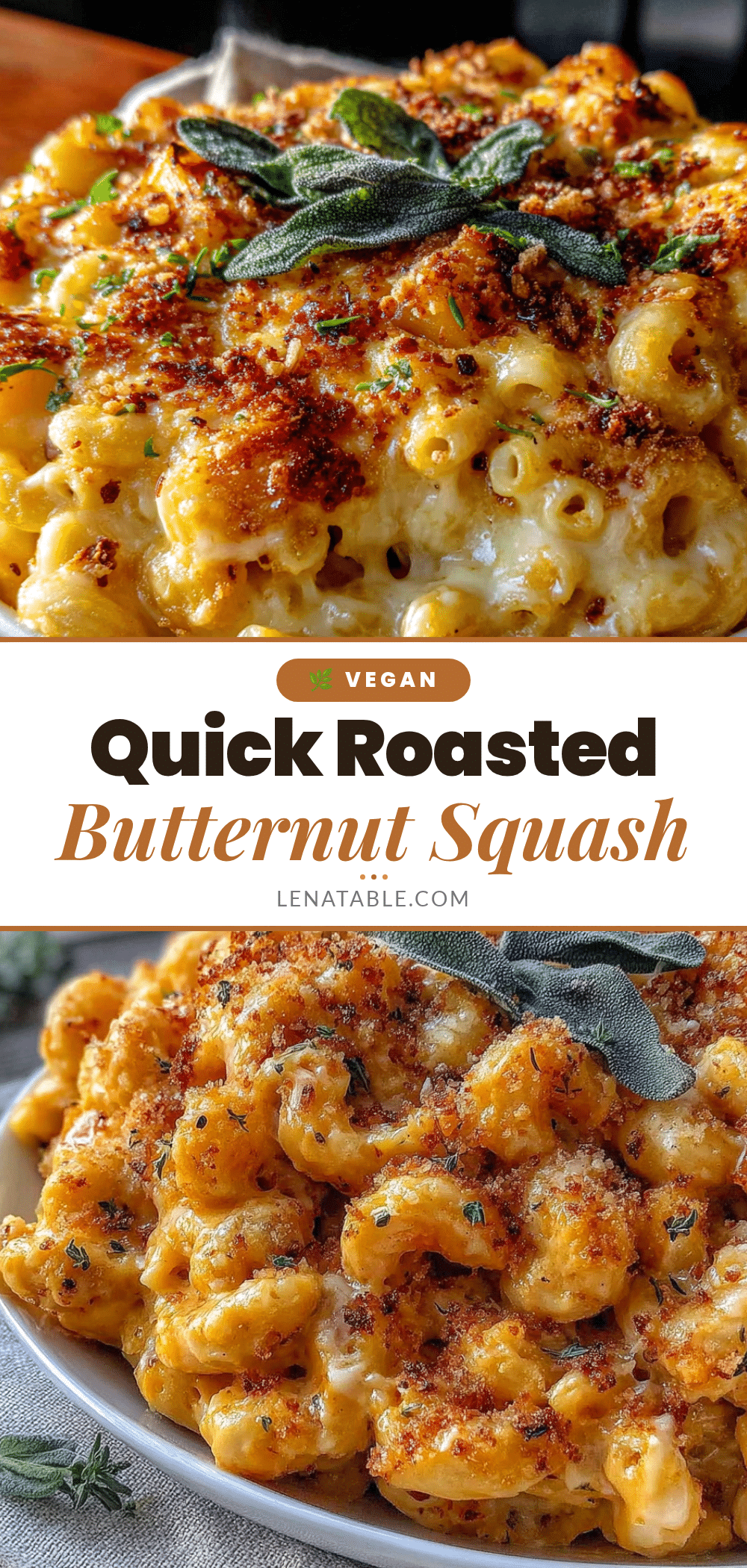
Quick Roasted Butternut Squash Mac and Cheese

A creamy, savory mac and cheese with a subtle sweetness from roasted butternut squash. This quick and easy weeknight dinner comes together in about 30 minutes and is a crowd-pleaser that even vegetable-avoiders will love.
- Prep Time: 10 minutes
- Cook Time: 30 minutes
- Total Time: 40 minutes
- Yield: 6 servings 1x
- Category: Main Course
- Cuisine: American
Ingredients
- 1 medium butternut squash (about 2–3 pounds), peeled and cubed
- 2 tablespoons olive oil
- 3 cloves garlic, whole
- 1 pound elbow macaroni
- 3 tablespoons unsalted butter
- 3 tablespoons all-purpose flour
- 2 cups whole milk
- 1 cup chicken or vegetable broth (low-sodium recommended)
- 2 cups sharp cheddar cheese, shredded
- 1 cup Gruyère or Monterey Jack cheese, shredded
- 1 teaspoon Dijon mustard
- Salt and black pepper to taste
- Pinch of nutmeg (optional but recommended)
- 1/2 cup panko breadcrumbs (optional for topping)
Instructions
- Preheat oven to 400°F (200°C). Peel and cube butternut squash into 1-inch cubes. Toss squash cubes and whole garlic cloves on a baking sheet with olive oil, salt, and pepper. Spread in a single layer.
- Roast squash for 25-30 minutes, flipping halfway, until tender and edges are caramelized. A fork should slide in easily.
- While squash roasts, bring a large pot of generously salted water to a boil. Cook macaroni according to package directions until al dente. Drain and set aside (do not rinse).
- In a medium saucepan, melt butter over medium heat. Whisk in flour and cook for 1-2 minutes until it smells like toasted pie crust (do not brown).
- Slowly whisk in milk and broth. Bring to a gentle simmer, whisking constantly, until thickened (about 3-4 minutes). Sauce should coat the back of a spoon.
- Transfer roasted squash and garlic to a blender. Add 1 cup of the hot milk sauce. Blend until completely smooth and velvety.
- Pour squash puree back into the saucepan with the remaining milk sauce. Stir to combine. Reduce heat to low. Add shredded cheddar and Gruyère (or Monterey Jack) a handful at a time, stirring until each addition is fully melted. Stir in Dijon mustard and nutmeg. Season with salt and pepper to taste.
- Add drained pasta to the cheese sauce. Stir gently until all pasta is coated. If too thick, add a splash of warm milk or reserved pasta water. Serve immediately. For a crunchy topping, transfer to a baking dish, sprinkle with breadcrumbs, and broil for 2-3 minutes.
Notes
Don’t skip roasting the squash—it concentrates the sweetness and adds depth. Always shred cheese from a block for a smoother sauce. Keep heat low when adding cheese to prevent graininess. Reserve pasta water to adjust sauce consistency. For a dairy-free version, use unsweetened oat milk or full-fat coconut milk, dairy-free butter, and vegan cheese shreds.
Nutrition
- Serving Size: 1 serving (about 1.5
- Calories: 580
- Sugar: 10
- Sodium: 680
- Fat: 28
- Saturated Fat: 16
- Carbohydrates: 62
- Fiber: 6
- Protein: 22
Keywords: butternut squash mac and cheese, quick mac and cheese, roasted squash mac and cheese, weeknight dinner, comfort food, creamy mac and cheese