Love this? Save it for later!
Share the inspiration with your friends
The school bake sale was in six hours and I’d completely forgotten. Not a bake sale, actually—it was the “Healthy Parent Potluck” that the PTA had sprung on us at drop-off. Everyone else would be bringing their quinoa salads and homemade kale chips. I had a half-empty jar of maple syrup from pancake Sunday, a bottle of Dijon mustard that was collecting dust, and two pounds of salmon I’d bought on sale three days ago. Honestly, I almost just brought a veggie tray from the gas station.
But my seven-year-old, Leo, looked at me with those big eyes and said, “Mom, you always make the best stuff.” No pressure, right? So I threw together this maple Dijon glaze, poured it over the salmon, and prayed it wouldn’t be a disaster. I didn’t even have time to taste it before I walked out the door. The pan was still warm when I set it down next to a tray of sad-looking celery sticks.
Here’s the part I still laugh about: that salmon disappeared in fifteen minutes. A dad I’d never met asked for the recipe. The PTA president—who once critiqued my store-bought hummus—sent me an email titled “Salmon Queen.” And Leo? He told me it was “better than chicken nuggets.” Coming from a kid who treats broccoli like a personal enemy, that’s basically a Michelin star. Maybe you’ve been there—scrambling to bring something decent to an event, convinced you’re about to fail. This recipe is your backup plan. It’s the one that makes you look like you planned it all along.
Why You’ll Love This Recipe
Let me tell you why this maple Dijon salmon has become my go-to for everything from Tuesday night dinners to last-minute gatherings. I’ve tested it at least a dozen times, tweaking the glaze ratio until it hit that sweet spot between fancy and foolproof. Here’s what makes it stand out:
- Quick & Easy: From fridge to table in under 25 minutes. No marinating, no complicated steps—just mix, brush, and bake. Perfect for those evenings when you’re staring at the clock wondering how dinner will happen.
- Simple Ingredients: You probably have maple syrup and Dijon mustard in your fridge right now. No trips to specialty stores, no hunting for obscure spices. Just pantry staples that come together beautifully.
- Perfect for Family Dinners: This is the salmon that converts picky eaters. The sweet maple balances the tangy mustard, creating a flavor that kids actually crave. My niece, who once declared fish “gross,” now asks for seconds.
- Crowd-Pleaser: Every time I bring this somewhere, someone asks for the recipe. It’s fancy enough for guests but simple enough for a Wednesday. The glaze caramelizes into this gorgeous, sticky coating that looks restaurant-quality.
- Unbelievably Delicious: The combination of sweet and tangy, with that slightly crispy edge from the broiler—it’s comfort food that happens to be healthy. You get the satisfaction of something indulgent without the guilt.
What makes this different from other salmon recipes is the balance. Most glazes are either too sweet or too sharp. This one hits that perfect middle ground where the maple doesn’t overpower and the mustard doesn’t bite back. I spent three versions getting the ratio right—trust me, this is the one. It’s the kind of meal that makes you close your eyes after the first bite, then look around the table and smile because everyone’s actually eating without complaint.
What Ingredients You Will Need
This recipe uses simple, wholesome ingredients to deliver bold flavor without the fuss. Most of these are probably already in your kitchen, which is exactly how I like to cook. Here’s what you’ll need:
- For the Salmon:
- 4 salmon fillets (6 oz each), skin-on or skinless (I prefer skin-on for extra moisture)
- 1 tablespoon olive oil (for brushing the pan)
- Salt and black pepper, to taste
- For the Maple Dijon Glaze:
- 3 tablespoons pure maple syrup (not pancake syrup—the real stuff makes a difference here)
- 2 tablespoons Dijon mustard (I like Grey Poupon for its smooth texture, but any brand works)
- 1 tablespoon whole-grain mustard (adds nice texture and little pops of flavor)
- 1 clove garlic, minced (or ½ teaspoon garlic powder in a pinch)
- 1 teaspoon soy sauce (or tamari for gluten-free)
- ½ teaspoon smoked paprika (optional, but adds a lovely depth)
- Optional Garnishes:
- Fresh dill or parsley, chopped
- Lemon wedges, for squeezing
- Sesame seeds (my kids love the crunch)
A few notes from my kitchen to yours: Look for salmon fillets that are similar in thickness so they cook evenly. If you’re using frozen salmon, thaw it completely in the fridge overnight and pat it very dry with paper towels—excess moisture will steam the fish instead of letting it caramelize. For the maple syrup, I’ve tried this with honey in a pinch, and it works, but the flavor is different. Maple has this woodsy sweetness that plays perfectly with the mustard’s tang.
If you’re feeding a crowd, this recipe doubles beautifully. Just use a larger baking dish and add a few minutes to the cooking time. I’ve also made this with arctic char and trout with great results—the glaze works on any firm, fatty fish. For a dairy-free version, you’re already good to go since there’s no butter or cream involved. And if you’re watching your sugar intake, you can reduce the maple syrup to 2 tablespoons and add a splash of orange juice for sweetness.
Equipment Needed
You don’t need a fancy kitchen to make this salmon shine. Here’s what you’ll need:
- Baking Sheet or Shallow Baking Dish: Line it with parchment paper or aluminum foil for easy cleanup. Trust me, the caramelized glaze can be stubborn.
- Small Bowl: For whisking together the glaze ingredients. Any small mixing bowl works.
- Whisk or Fork: To combine the glaze until smooth. A fork works in a pinch—I’ve done it plenty of times.
- Pastry Brush or Spoon: For spreading the glaze over the salmon. A silicone brush is ideal, but you can use the back of a spoon.
- Instant-Read Thermometer: Optional but highly recommended. Salmon is perfectly cooked at 125°F to 130°F in the center. This takes the guesswork out and prevents dry fish.
- Broiler-Safe Pan: If you’re planning to broil the salmon at the end for that caramelized top, make sure your pan can handle high heat. Metal or ceramic works fine.
If you don’t have a pastry brush, don’t stress. I’ve used a clean basting brush, a folded paper towel, or just spooned the glaze over the fillets. The key is getting that glaze evenly coated. As for the thermometer, it’s a game-changer for anyone who’s ever overcooked salmon. I picked up a basic one for eight bucks at the grocery store, and it’s saved more dinners than I can count.
Preparation Method
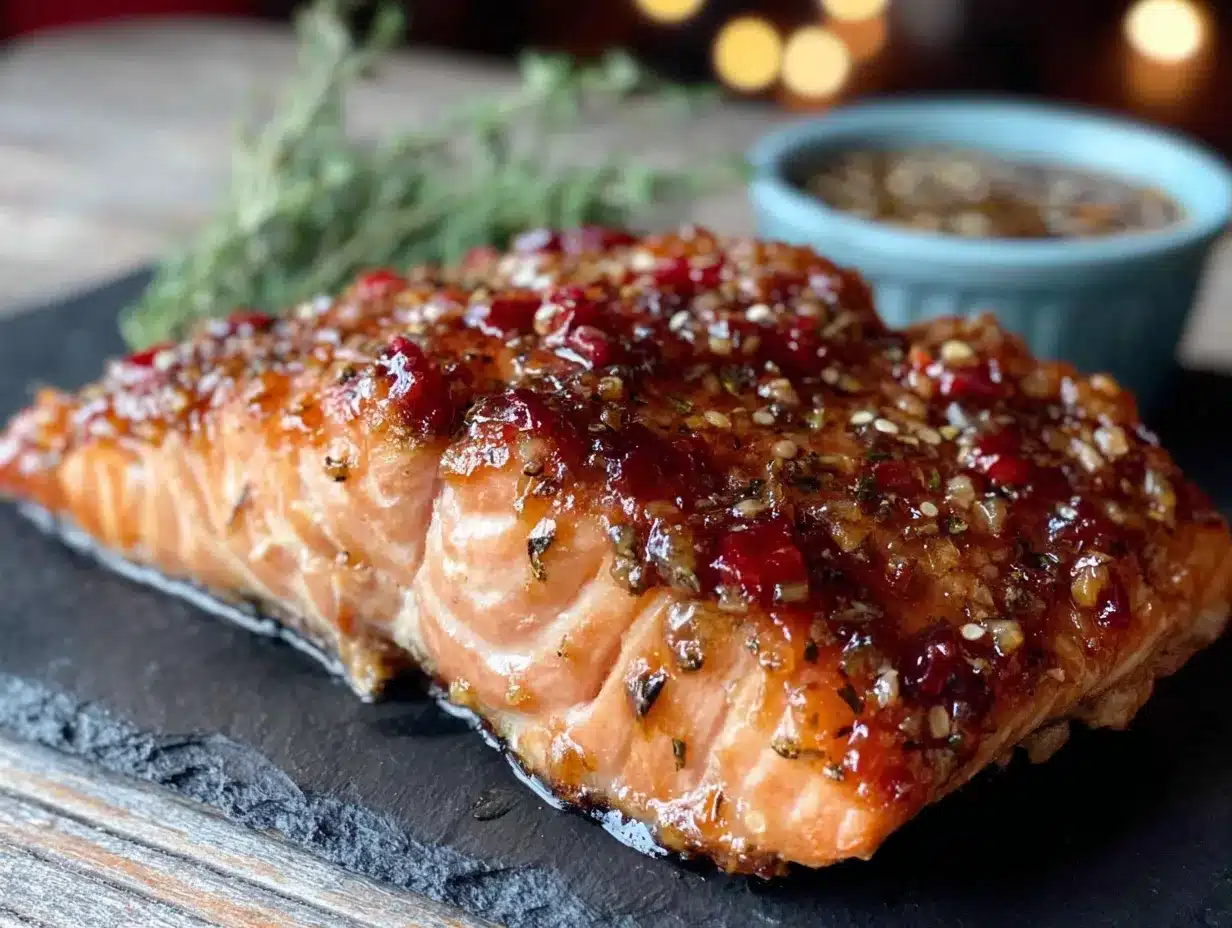
Let’s get cooking. This whole process takes about 20 minutes from start to finish, so preheat your oven first and work through the steps as it heats up.
- Preheat your oven to 400°F (200°C). Position the rack in the middle of the oven. While it’s heating, line a baking sheet with parchment paper or foil for easy cleanup.
- Make the glaze. In a small bowl, whisk together 3 tablespoons maple syrup, 2 tablespoons Dijon mustard, 1 tablespoon whole-grain mustard, 1 minced garlic clove, 1 teaspoon soy sauce, and ½ teaspoon smoked paprika. Whisk until smooth and well combined. Taste it—it should be sweet with a tangy kick. If it’s too sharp for your liking, add another teaspoon of maple syrup.
- Prepare the salmon. Pat your salmon fillets dry with paper towels. This step is crucial—wet salmon won’t get that nice caramelized crust. Place the fillets on the prepared baking sheet, skin-side down if they have skin. Brush each fillet lightly with olive oil, then season with salt and pepper. Don’t go heavy on the salt since the soy sauce in the glaze adds saltiness.
- Apply the glaze. Using a pastry brush or the back of a spoon, spread a generous layer of the maple Dijon glaze over each fillet. Reserve about a third of the glaze for later—you’ll brush it on halfway through cooking. Make sure the tops and sides are evenly coated. Don’t worry if some drips onto the pan; it will caramelize and become delicious.
- Bake the salmon. Place the baking sheet in the preheated oven and bake for 8 minutes. The salmon should be starting to flake at the edges but still translucent in the center. Remove the pan from the oven and brush the remaining glaze over the fillets. Return to the oven and bake for another 4-6 minutes, depending on thickness. The salmon is done when it flakes easily with a fork and the internal temperature reaches 125°F to 130°F (52°C to 54°C) for medium.
- Optional broil for caramelization. If you want that beautiful, slightly charred top, switch your oven to broil for the last 1-2 minutes. Watch it carefully—broilers are unpredictable, and you don’t want burnt salmon. The glaze should bubble and darken slightly. This step is worth it for the texture alone.
- Rest and serve. Remove the salmon from the oven and let it rest on the pan for 2-3 minutes. This allows the juices to redistribute and the glaze to set. Transfer to a serving platter, garnish with fresh dill or parsley, and squeeze a lemon wedge over the top. Serve immediately with your favorite sides.
A few sensory cues to watch for: The salmon should smell sweet and savory as it bakes, not fishy. The glaze will bubble and darken around the edges—that’s the caramelization happening. When you flake it with a fork, the flesh should separate easily but still look moist and opaque. If it looks dry or flakes too easily, it might be slightly overcooked, but don’t worry—the glaze adds moisture back.
Cooking Tips & Techniques
After making this salmon more times than I can count, I’ve picked up a few tricks that make a real difference. Let me share what I’ve learned—including the mistakes I’ve made so you don’t have to.
Don’t skip drying the salmon. This was my biggest lesson. The first time I made this, I rinsed the salmon and threw it straight into the pan. The glaze slid right off, and I ended up with steamed fish instead of that beautiful caramelized coating. Pat those fillets dry like your dinner depends on it—because it kind of does.
Watch your cooking time. Salmon thickness varies wildly. A thin fillet might be done in 10 minutes total, while a thick center-cut piece could need 15. I check mine at the 10-minute mark by inserting a fork into the thickest part. If it flakes easily but still looks slightly translucent in the center, it’s perfect. Remember, it continues cooking after you pull it out of the oven.
Double the glaze if you love sauce. I always make extra glaze and simmer it on the stovetop for a few minutes until it thickens. Then I drizzle it over the finished salmon and rice or vegetables. It’s like having a secret weapon for leftovers.
Room temperature salmon cooks more evenly. If you have time, let the salmon sit on the counter for 10-15 minutes before cooking. Cold salmon straight from the fridge can cook unevenly, with the outside overcooking before the center is done. I learned this after one too many dry edges.
Line your pan with foil. The glaze gets sticky and caramelized, which is delicious on the salmon but a nightmare to scrub off your baking sheet. Foil or parchment paper saves you ten minutes of scrubbing. You’re welcome.
Don’t overcrowd the pan. Give each fillet a little space so the heat circulates evenly. If they’re touching, they’ll steam instead of roast, and you’ll lose that lovely caramelization. Use two pans if you’re cooking for a crowd.
Variations & Adaptations
This recipe is incredibly flexible. Here are some ways I’ve adapted it for different diets, seasons, and cravings:
- Gluten-Free Version: Simply swap the soy sauce for tamari or coconut aminos. Everything else is naturally gluten-free. I’ve made this for my friend Sarah, who has celiac disease, and she couldn’t tell the difference.
- Spicy Maple Dijon Salmon: Add ½ teaspoon of red pepper flakes or a squirt of sriracha to the glaze. The heat cuts through the sweetness beautifully. My husband loves this version—he says it wakes up the salmon.
- Herb-Crusted Variation: After brushing on the glaze, press a mixture of fresh dill, parsley, and chives onto the top of each fillet before baking. The herbs toast slightly in the oven and add a fresh, garden flavor. I do this in summer when my herb garden is overflowing.
- Air Fryer Method: Preheat your air fryer to 375°F (190°C). Place the glazed salmon fillets in the basket in a single layer. Cook for 8-10 minutes, checking at the 7-minute mark. The air fryer gives you that crispy edge without turning on the oven. Perfect for hot summer days.
- Citrus Twist: Add 1 tablespoon of orange juice and ½ teaspoon of orange zest to the glaze. The citrus brightens everything up and pairs wonderfully with the maple. I tried this on a whim when I had an orange about to go bad, and it’s become a regular rotation.
- Kid-Friendly Adjustments: If your kids are extra sensitive to mustard flavor, reduce the Dijon to 1 tablespoon and add an extra tablespoon of maple syrup. You’ll still get that tangy-sweet balance, but it leans more toward sweet. My nephew, who’s notoriously picky, eats this version without complaint.
I’ve also tried this with a honey-soy glaze variation when I ran out of maple syrup. It was good, but honestly, the maple version wins every time. There’s something about that woodsy sweetness that feels cozy and special.
Serving & Storage Suggestions
This salmon is versatile enough to pair with almost anything. Here’s how I like to serve it and keep it for later:
Serving Temperature and Presentation: Serve the salmon warm, right after it rests. Arrange the fillets on a platter with lemon wedges and fresh herbs scattered around. If you’re feeling fancy, drizzle a little extra glaze over the top. The caramelized edges are the star here—let them shine.
Perfect Pairings: This salmon loves simple sides that let it take center stage. I usually serve it with:
- Steamed rice or quinoa to soak up the extra glaze
- Roasted asparagus or green beans (toss them in olive oil and salt, roast alongside the salmon)
- A simple green salad with lemon vinaigrette
- Mashed potatoes or roasted sweet potatoes for something heartier
- For a complete meal, try this alongside my garlic butter green beans—the crunch pairs perfectly with the tender salmon.
Storage Instructions: Leftover salmon keeps in an airtight container in the refrigerator for up to 3 days. The glaze will continue to flavor the fish, making leftovers almost better than the first serving. I don’t recommend freezing cooked salmon—the texture changes and becomes mushy when thawed.
Reheating Tips: The best way to reheat salmon is in a low oven. Place the fillets on a baking sheet, cover loosely with foil, and warm at 275°F (135°C) for about 10 minutes. This gentle heat prevents the fish from drying out. You can also reheat it in a skillet over medium-low heat with a splash of water or extra glaze, covered, for 3-4 minutes. Avoid the microwave—it turns salmon rubbery and sad.
How Flavors Develop: Here’s a little secret—this salmon tastes even better the next day. The glaze seeps into the fish overnight, creating this deeper, more complex flavor. I often make extra just for cold leftovers over a salad for lunch. The cold salmon with the sweet-tangy glaze is surprisingly addictive.
Nutritional Information & Benefits
This recipe isn’t just delicious—it’s packed with nutrients that make you feel good about serving it to your family. Here’s the breakdown per serving (one 6-ounce fillet with glaze):
| Nutrient | Amount per Serving |
|---|---|
| Calories | 380 |
| Protein | 34g |
| Fat | 18g |
| Saturated Fat | 3g |
| Carbohydrates | 16g |
| Sugar | 13g |
| Sodium | 520mg |
| Omega-3 Fatty Acids | 2.5g |
Salmon is one of the best sources of omega-3 fatty acids, which support brain health, reduce inflammation, and keep your heart happy. The maple syrup provides quick energy, and the mustard seeds offer trace minerals like selenium and magnesium. This meal is naturally gluten-free and dairy-free, making it friendly for many dietary needs. If you’re watching your sodium, you can reduce the soy sauce or use a low-sodium version.
I love that I can serve this to my family knowing it’s both nutritious and something they’ll actually eat. It’s rare to find a meal that checks both boxes, and this one does it without any fuss.
Conclusion
This maple Dijon salmon has saved me more times than I can count. From frantic weeknights when I forgot to defrost anything to potlucks where I needed something impressive with zero effort, it’s never let me down. The glaze is simple enough to memorize, the cooking time is short enough to fit into any schedule, and the flavor is complex enough to feel special.
I love that this recipe doesn’t require any special skills or fancy ingredients. It’s proof that you don’t need to spend hours in the kitchen or hunt down obscure items to make something memorable. Just good salmon, a simple glaze, and a little bit of confidence. The first time I made it, I was convinced it would be a disaster. Now it’s the recipe I turn to again and again.
I’d love to hear how this works for your family. Did your kids go back for seconds? Did you try a variation that became your new favorite? Drop a comment below and let me know—I read every single one. And if you snap a photo, tag me so I can see your beautiful creation. Happy cooking, friend. You’ve got this.
Frequently Asked Questions
Can I use frozen salmon for this recipe?
Yes, absolutely. Just thaw the salmon completely in the refrigerator overnight, then pat it very dry with paper towels before glazing. Frozen salmon tends to release more water as it cooks, so drying it well is extra important to get that caramelized coating.
How do I know when the salmon is fully cooked?
The easiest way is to use an instant-read thermometer—125°F to 130°F (52°C to 54°C) in the thickest part is perfect for medium. Without a thermometer, look for the salmon to flake easily with a fork and turn opaque throughout. The center should still look slightly translucent when you pull it out, as it continues cooking from residual heat.
Can I make the glaze ahead of time?
Definitely. You can whisk the glaze together up to 3 days in advance and store it in an airtight container in the refrigerator. Give it a good stir before using, as the ingredients may separate slightly. This makes weeknight dinners even faster.
What can I substitute for maple syrup?
Honey is the best substitute, though it will change the flavor slightly. You can also use agave nectar or brown sugar dissolved in a tablespoon of warm water. For a sugar-free version, try a sugar-free maple syrup alternative, though the texture may be slightly thinner.
How do I prevent the salmon from sticking to the pan?
Line your baking sheet with parchment paper or aluminum foil, and brush it lightly with olive oil before placing the salmon on top. The glaze will caramelize and may stick to unlined pans, making cleanup a hassle. Foil or parchment makes it effortless.
Pin This Recipe!
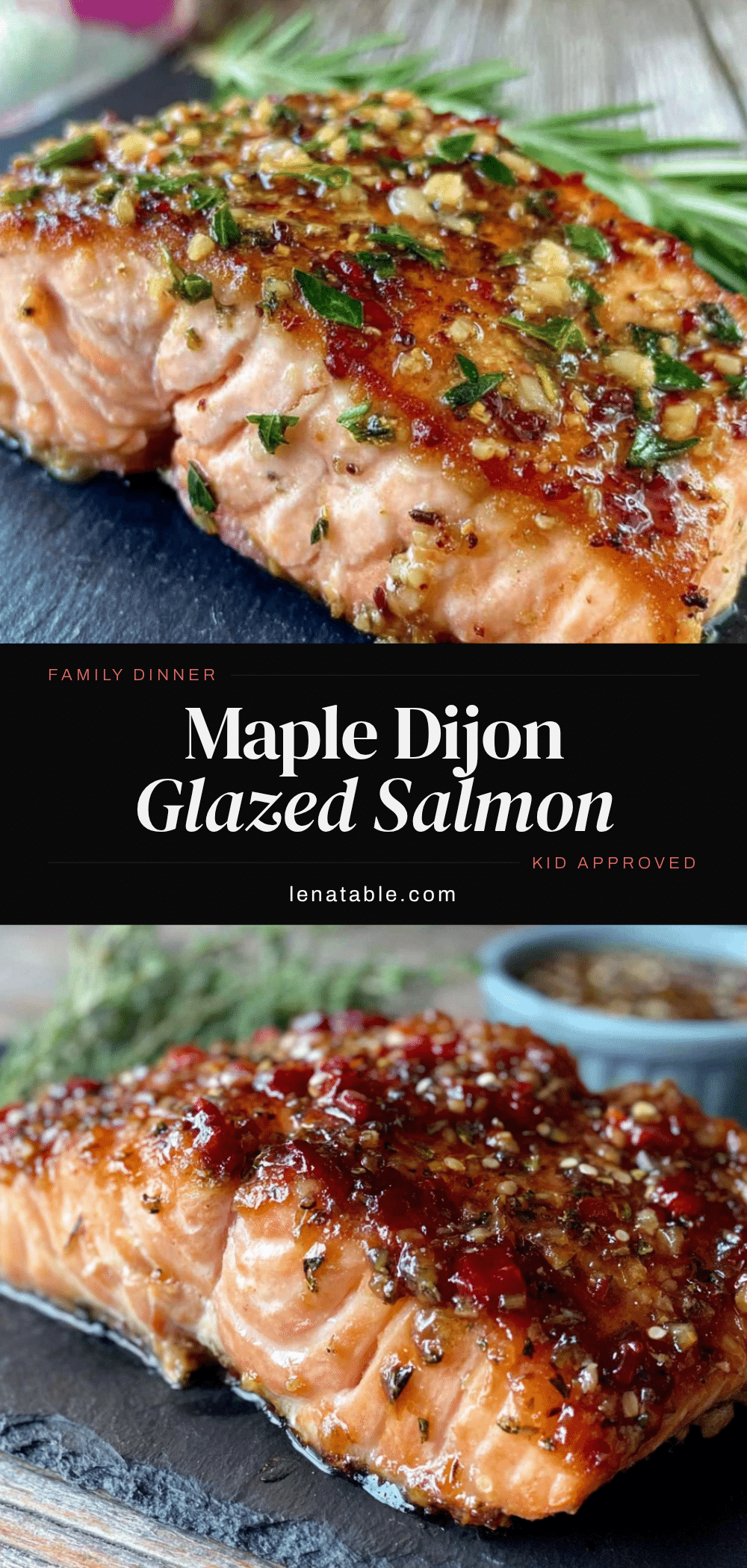
Kid-Approved Maple Dijon Salmon

A quick and easy salmon recipe with a sweet and tangy maple Dijon glaze that’s perfect for busy weeknights and last-minute gatherings. This crowd-pleaser converts picky eaters and looks restaurant-quality with minimal effort.
- Prep Time: 5 minutes
- Cook Time: 12-14 minutes
- Total Time: 20 minutes
- Yield: 4 servings 1x
- Category: Main Course
- Cuisine: American
Ingredients
- 4 salmon fillets (6 oz each), skin-on or skinless
- 1 tablespoon olive oil
- Salt and black pepper, to taste
- 3 tablespoons pure maple syrup
- 2 tablespoons Dijon mustard
- 1 tablespoon whole-grain mustard
- 1 clove garlic, minced
- 1 teaspoon soy sauce
- ½ teaspoon smoked paprika (optional)
- Fresh dill or parsley, chopped (optional garnish)
- Lemon wedges (optional garnish)
- Sesame seeds (optional garnish)
Instructions
- Preheat your oven to 400°F (200°C). Position the rack in the middle of the oven. Line a baking sheet with parchment paper or foil.
- In a small bowl, whisk together 3 tablespoons maple syrup, 2 tablespoons Dijon mustard, 1 tablespoon whole-grain mustard, 1 minced garlic clove, 1 teaspoon soy sauce, and ½ teaspoon smoked paprika until smooth.
- Pat salmon fillets dry with paper towels. Place on the prepared baking sheet, skin-side down if they have skin. Brush each fillet lightly with olive oil, then season with salt and pepper.
- Using a pastry brush or the back of a spoon, spread a generous layer of the glaze over each fillet. Reserve about a third of the glaze for later.
- Bake for 8 minutes. Remove from the oven and brush the remaining glaze over the fillets. Return to the oven and bake for another 4-6 minutes, until the salmon flakes easily and reaches an internal temperature of 125°F to 130°F (52°C to 54°C) for medium.
- Optional: Switch the oven to broil for the last 1-2 minutes to caramelize the top. Watch carefully to avoid burning.
- Remove from the oven and let rest for 2-3 minutes. Garnish with fresh dill or parsley and lemon wedges. Serve immediately.
Notes
Pat salmon dry for best caramelization. For thicker fillets, increase cooking time. Double the glaze if you like extra sauce. Leftovers keep in the refrigerator for up to 3 days. Reheat gently in a low oven or skillet to avoid drying out.
Nutrition
- Serving Size: 1 fillet (6 oz) with
- Calories: 380
- Sugar: 13
- Sodium: 520
- Fat: 18
- Saturated Fat: 3
- Carbohydrates: 16
- Protein: 34
Keywords: maple Dijon salmon, easy salmon recipe, kid-friendly salmon, quick salmon dinner, healthy salmon recipe, gluten-free salmon, dairy-free salmon