Love this? Save it for later!
Share the inspiration with your friends
I was standing in the parking lot of a grocery store last November when the smell of sage hit me. Someone was loading bags into their car a few spaces over, and that earthy, almost piney scent cut through the cold air like a time machine. Suddenly I was seven years old, standing on a step stool in my Aunt Maggie’s tiny kitchen, watching her rub dried sage into a stick of butter so soft it was practically melting through her fingers. She was humming something I can’t remember, and I was supposed to be setting the table, but I couldn’t stop staring at the way the green flecks swirled into the yellow. I didn’t know it then, but I was watching the secret to her legendary stuffing being born. She passed away about five years ago, and honestly, I haven’t had a Thanksgiving since that didn’t feel like something was missing.
I’ve tried every stuffing recipe under the sun trying to get back to that moment. Boxed mixes, cornbread versions, wild rice numbers with too many mushrooms. They were all fine. But fine isn’t what I was chasing. I wanted the one that made people close their eyes at the table. The one where someone inevitably says, “Who made the stuffing?” and the room goes quiet because everyone knows it’s the star. Maybe you’ve been there, trying to recreate a dish that feels more like a memory than a recipe. It’s frustrating, isn’t it? You follow the instructions perfectly, but something is off. The texture is wrong. The flavor is flat.
The answer, I finally realized, wasn’t about the stuffing at all. It was about the bread. Aunt Maggie used day-old sourdough from the bakery downtown, and she’d tear it into pieces with her hands, never using a knife. And that sage butter? It wasn’t just rubbed in. It was slathered, layered, almost disrespectful in its abundance. I burned my hand on the oven rack the first time I tried to replicate it, and I forgot the celery entirely. But the second time? I got close. The third time, I had it. And now, I make this Crowd-Pleasing Sourdough Focaccia Stuffing with Sage Butter every year, not just for Thanksgiving, but for any dinner party where I want to hear that quiet silence that means everyone is too busy eating to talk. This is the one that stays with you.
Why You’ll Love This Recipe
Let me be straight with you. I have made and failed at more stuffing recipes than I care to admit. I’ve ended up with soggy, sad bricks of bread and flavorless mush that tasted more like cardboard than comfort. This Crowd-Pleasing Sourdough Focaccia Stuffing with Sage Butter is the result of all those failures. It is the version I finally got right, and it’s the only one I make now when I’m hosting. Here is why it works so well for a crowd.
- Unbeatable Texture : Using sourdough focaccia instead of regular bread gives you a chewy, crispy edge that holds up to the broth without turning into paste. The crust stays firm, the inside stays tender. It’s the textural Goldilocks of stuffing.
- That Sage Butter Magic : This isn’t just melted butter poured over bread. You are making a compound butter infused with fresh sage that gets browned slightly in the pan. It creates a nutty, herbaceous base that soaks into every single crumb. Trust me, you’ll want to make extra just to spread on a roll.
- Perfect for Hosting : This is a dish you can fully prepare the day before. Assemble it, cover it, and pop it in the fridge. When your guests arrive and you’re juggling a turkey and three side dishes, all you have to do is bake it. No stress, no last-minute scrambling, just a perfect side that looks like you spent hours on it.
- Scales Like a Dream : Need to feed eight? Double it. Feeding twenty? Triple it. The recipe is incredibly forgiving and the ratios stay perfect no matter how much you make. I’ve brought this to potlucks in a disposable aluminum pan and it vanished every single time.
- It Steals the Show : I am not exaggerating when I say I’ve had guests ask for the recipe before they even finished their first helping. The combination of the tangy sourdough, the rich sage butter, and the subtle sweetness from caramelized onions is next-level. It makes the kind of stuffing that people fight over the crispy corner pieces.
This recipe isn’t just good. It is the kind that makes you close your eyes after the first bite. It’s comfort food reimagined—richer, more flavorful, and with the same soul-soothing satisfaction you remember from the best holiday meals of your childhood.
What Ingredients You Will Need
This recipe uses mostly pantry staples and a few fresh ingredients to deliver that deep, savory flavor everyone will rave about. The quality of your butter and your bread really matters here, so don’t skimp if you can help it.
For the Sage Butter
- 1 cup (2 sticks) unsalted butter – I prefer using a high-fat European-style butter like Kerrygold or Plugrà. The extra fat content makes the sauce richer and helps the bread get perfectly crispy.
- 1/4 cup fresh sage leaves, finely chopped – Do not use dried sage here if you can avoid it. Fresh sage has a softer, more aromatic flavor that melds into the butter beautifully. Roll the leaves together and chiffonade them for even pieces.
- 3 cloves garlic, minced – Fresh garlic is non-negotiable. It adds a pungent warmth that cuts through the richness.
- 1 teaspoon kosher salt – Use coarse salt for this. It dissolves slower and seasons more evenly.
- 1/2 teaspoon black pepper – Freshly cracked is best.
For the Focaccia Base

- 1 large (about 1.5 lbs) loaf sourdough focaccia – This is the star of the show. Look for a focaccia that is thick, with a good crust and plenty of air pockets. I usually grab one from a local bakery or the bakery section of my grocery store. Avoid pre-sliced sandwich bread or soft dinner rolls. The sourdough tang is what makes this different.
- 2 large yellow onions, diced – Yellow onions are sweet and mild when cooked, which is perfect here. You want them to caramelize slightly, not burn.
- 3 stalks celery, diced – Celery adds that classic crunch and freshness that balances the rich butter.
- 2 cups low-sodium chicken or vegetable broth – Low-sodium is key so you can control the salt level. The focaccia and butter already add plenty of salt.
- 2 large eggs, lightly beaten – The eggs act as a binder, helping the stuffing hold its shape when you slice it. If you are vegan, you can use a flax egg (1 tablespoon flaxseed meal mixed with 3 tablespoons water, let sit for 5 minutes).
- 1/2 cup fresh parsley, chopped – For a pop of color and freshness at the end. Flat-leaf parsley has more flavor than curly.
Optional Add-Ins for Extra Flavor
- 1/2 cup dried cranberries – Adds a sweet-tart pop that plays beautifully with the sage. I add these when I’m serving this for a holiday dinner.
- 1/2 cup toasted pecans or walnuts – For crunch. Toast them in a dry pan for 3-4 minutes until fragrant before adding.
- 1 cup cooked and crumbled Italian sausage – If you want to turn this into a main dish, brown some spicy or sweet sausage and fold it in. It’s incredible.
Equipment Needed
You don’t need a lot of fancy tools for this recipe, which is part of why I love it for hosting. A few basics will get the job done perfectly.
- Large skillet or sauté pan – You need a pan big enough to melt the butter and cook the onions and celery. A 12-inch skillet is perfect.
- 9×13-inch baking dish – This is the standard size for a single batch. If you are doubling, use two dishes or one large roasting pan. I prefer glass or ceramic dishes for even heat distribution.
- Large mixing bowl – Big enough to toss the bread cubes with the butter mixture without spilling everything on your counter.
- Chef’s knife and cutting board – For chopping the onions, celery, sage, and parsley. A sharp knife makes this part so much faster.
- Whisk – For beating the eggs into the broth.
- Spatula or wooden spoon – For stirring the butter and tossing the bread.
- Aluminum foil – You will cover the dish for the first part of baking to keep the stuffing moist, then uncover it to crisp the top.
If you don’t have a 9×13 dish, you can use a 10-inch cast iron skillet for a more rustic presentation. Just be careful, the handle will be hot. And if you are making this for a huge crowd, disposable aluminum pans work great and make cleanup a breeze. I’ve used them for years.
Preparation Method
This method is broken down into stages so you can prep ahead or work through it step by step. The total active time is about 30 minutes, plus 1 hour of baking. Let’s get started.
Step 1: Prepare the Focaccia
Cut your sourdough focaccia into 1-inch cubes. You want them bite-sized but not too small, or they will turn to mush. Spread the cubes out on a large baking sheet in a single layer. Leave them out on the counter uncovered for at least 4 hours, or overnight, to dry out. Stale bread is essential here. It soaks up the butter and broth without disintegrating. If you are in a hurry, you can toast them in a 300°F oven for 15-20 minutes, stirring halfway through, until they are dry and just starting to turn golden. Let them cool completely.
Step 2: Make the Sage Butter
In your large skillet, melt the 2 sticks of butter over medium heat. Once it’s fully melted, add the finely chopped fresh sage and the minced garlic. Stir constantly for about 2 minutes, until the garlic is fragrant and the sage has darkened slightly. You should smell the nutty aroma of the butter browning just a little. That’s the good stuff. Remove the pan from the heat and stir in the kosher salt and black pepper. Set it aside to cool for a minute.
Step 3: Sauté the Aromatics
In the same skillet (don’t wipe it clean, you want all that sage butter goodness), add the diced onions and celery. Turn the heat back to medium and cook, stirring occasionally, for about 8-10 minutes. You want the onions to become translucent and just start to caramelize around the edges. They should smell sweet and savory. If the pan looks dry, add a splash of the broth. Scrape up any browned bits from the bottom of the pan. Once done, remove from heat and let it cool slightly.
Step 4: Combine the Base
In your large mixing bowl, combine the dried focaccia cubes and the cooked onion-celery mixture. Pour the sage butter over the top. Use your hands or a large spatula to gently toss everything together until every cube is coated. This is a messy but satisfying step. Make sure there are no dry pockets of bread.
Step 5: Add the Liquid
In a separate small bowl or measuring cup, whisk together the 2 cups of low-sodium broth and the 2 lightly beaten eggs. Pour this mixture evenly over the bread mixture. Toss again gently until the liquid is absorbed. The bread should feel moist but not soggy. If it looks like soup, you’ve added too much liquid. Let it sit for 5 minutes so the bread can absorb everything.
Step 6: Assemble and Bake
Preheat your oven to 375°F (190°C). Transfer the stuffing to your greased 9×13-inch baking dish and spread it into an even layer. Cover the dish tightly with aluminum foil. Bake for 30 minutes. Then, remove the foil and bake for another 20-25 minutes, until the top is golden brown and crispy. The edges should be crunchy and the center should be hot and set. If you want extra crispy edges, you can broil it for the last 2 minutes, but watch it closely so it doesn’t burn.
Step 7: Rest and Serve
Let the stuffing rest for 5-10 minutes out of the oven. This allows it to set and makes it easier to serve in neat squares. Sprinkle the fresh chopped parsley over the top right before serving for a pop of color and freshness.
Cooking Tips & Techniques
I have made this stuffing at least a dozen times, and I’ve learned a few things the hard way. Here are my best tips to make sure yours comes out perfect every time.
Don’t skip drying the bread. I know it feels like an extra step, but trust me on this. Fresh bread will turn into a gluey, dense mess. Stale bread has structure. It can hold onto the butter and broth without collapsing. I once tried to rush this step with fresh focaccia and ended up with something that looked more like bread pudding than stuffing. It was edible, but not the star of the show.
Brown the butter just a little. You are not making a full brown butter here, but letting it get slightly nutty adds a whole new layer of flavor. Watch it carefully. Once the milk solids start to turn golden, pull it off the heat. If it turns black, you’ve gone too far and it will taste bitter. Start over if that happens. I’ve done it, and it’s not worth salvaging.
Use your hands to mix. A spatula is fine, but your hands are better. You can feel if the bread is evenly coated. You can also gently break up any large clumps of bread without crushing them. Just make sure your hands are clean and the butter mixture has cooled enough so you don’t burn yourself.
Timing is everything. If you are making this for a big meal, assemble it the day before and keep it covered in the fridge. Add about 10 extra minutes to the covered baking time since it will be cold going into the oven. This is a lifesaver on Thanksgiving day. You can also freeze the unbaked stuffing for up to a month. Thaw it in the fridge overnight before baking.
Watch the liquid. Different breads absorb liquid at different rates. If your focaccia is very airy and light, it might need a little less broth. If it’s dense, it might need a little more. The key is that the bread should be moist but not swimming. When you press a cube gently, it should release a tiny bit of liquid but not be dripping.
Variations & Adaptations
This recipe is a fantastic base, and I love playing around with it depending on the season or who I’m feeding. Here are a few of my favorite variations.
Vegetarian / Vegan Version
Swap the chicken broth for a good-quality vegetable broth. Use a flax egg (1 tablespoon flaxseed meal + 3 tablespoons water) instead of regular eggs. The rest of the recipe stays the same. The flavor is still incredibly rich from the sage butter. I served this to a vegan friend last year and she asked for seconds.
Gluten-Free Adaptation
Use a gluten-free sourdough focaccia or a sturdy gluten-free bread. The texture will be slightly different, but it works. Make sure your broth is certified gluten-free. I’ve found that gluten-free breads can be a bit drier, so you might need an extra 1/4 cup of broth. Add it slowly and check the consistency.
Add Some Meat
Brown 1 pound of Italian sausage (sweet or spicy) in the skillet before you cook the onions and celery. Remove the sausage, then proceed with the recipe. Fold the cooked sausage back in when you add the broth mixture. This turns the stuffing into a hearty main dish. I did this for a Friendsgiving and it was the first thing to disappear.
Sweet and Savory Twist
Add 1/2 cup of dried cranberries or chopped dried apricots along with the broth. The sweetness cuts through the rich sage butter and adds a beautiful color. I also like to add a tablespoon of fresh rosemary along with the sage for an even more aromatic flavor.
Make it Spicy
Add 1/2 teaspoon of red pepper flakes to the sage butter when you melt it. Or swap the black pepper for a pinch of cayenne. It doesn’t make the stuffing hot, just gives it a warm, lingering kick that pairs perfectly with the savory notes.
Serving & Storage Suggestions
This stuffing is best served warm, straight from the oven when the top is still crispy and the edges are golden. But it’s also incredibly forgiving if you need to hold it for a bit.
Serving Temperature and Presentation
Serve it directly from the baking dish for a rustic, family-style feel. If you want to be a little fancier, you can spoon it into a nice serving bowl and garnish with extra fresh sage leaves or parsley. I like to set it out alongside a roast turkey, a simple green salad with a lemon vinaigrette, and some roasted root vegetables. The acidity of the salad cuts through the richness of the stuffing perfectly.
What to Serve Alongside
This stuffing is a natural partner for roasted poultry, but it also works beautifully with a roast pork loin or even a simple roast chicken. For a vegetarian meal, serve it with a hearty mushroom gravy and some roasted Brussels sprouts. A glass of dry Riesling or a light Pinot Noir is a lovely pairing.
Storage Instructions
Leftover stuffing can be stored in an airtight container in the refrigerator for up to 4 days. The flavors actually meld together and get even better the next day. I often make a double batch just so I have leftovers for lunch. To reheat, place it in a 350°F oven covered with foil for 15-20 minutes, or until heated through. You can also reheat individual portions in the microwave, but the top won’t be as crispy.
Freezing Instructions
This stuffing freezes beautifully. Cool it completely, then transfer it to a freezer-safe container or a zip-top bag. It will keep for up to 3 months. Thaw it in the refrigerator overnight before reheating. I like to freeze individual portions for a quick side dish on busy weeknights.
How Flavors Develop
Honestly, this stuffing is even better on day two. The sage and garlic have time to fully meld with the bread, and the texture becomes almost creamy on the inside while the edges stay crisp. If you can resist eating it all on day one, you are in for a treat.
Nutritional Information & Benefits
While this is definitely a special occasion dish, it does have some redeeming qualities. Here is a rough estimate per serving, assuming the recipe serves 8 people.
- Calories : Approximately 380-420 per serving
- Fat : 24g (mostly from the butter, which is rich in vitamin A)
- Carbohydrates : 38g
- Protein : 8g
- Fiber : 3g
- Sodium : 680mg (can be reduced by using low-sodium broth and less salt)
Health Benefits of Key Ingredients
Sage is not just for flavor. It is packed with antioxidants and has anti-inflammatory properties. It’s also been used traditionally to aid digestion, which is a nice bonus after a heavy meal. Garlic is great for immune support, and onions are rich in prebiotics that feed your gut bacteria. The olive oil in the focaccia provides healthy monounsaturated fats.
Dietary Considerations
This recipe is vegetarian as written. It can easily be made vegan and gluten-free with the substitutions listed above. It contains dairy (butter) and gluten (focaccia), so it is not suitable for those with allergies to those ingredients. The eggs can be replaced with a flax egg for a vegan version.
My Personal Perspective
I don’t make this recipe every week. It’s a treat, and I think that’s okay. Food is about more than just fuel. It’s about connection, memory, and joy. A dish like this, made with real butter and love, is worth the splurge a few times a year. I balance it out with lighter meals the rest of the week, and I don’t feel guilty about it at all.
Conclusion
This Crowd-Pleasing Sourdough Focaccia Stuffing with Sage Butter is more than just a side dish. It is the dish that brings people together. It is the one that makes everyone at the table pause, take a bite, and look up with that expression that says, “Okay, this is the one.” It has become my signature recipe for every gathering, from Thanksgiving to casual dinner parties, and I have never had a single person ask for the recipe for a different stuffing after trying this one.
I love this recipe because it honors the memory of my Aunt Maggie while also being completely my own. It’s the perfect balance of tradition and innovation. The tangy sourdough, the nutty sage butter, the sweet caramelized onions—every bite is a little piece of comfort. And the best part? It’s forgiving. It’s flexible. You can make it your own. Add the cranberries. Throw in some sausage. Leave out the celery if you hate it. This recipe is built to work with you, not against you.
So go ahead. Make it for your next gathering. Watch the faces around your table light up. And when someone inevitably asks you for the recipe, you can tell them it’s a family secret. I won’t tell. Now, I’d love to hear from you. Are you going to try this for your next dinner party? Or do you have a favorite stuffing tradition of your own? Drop a comment below and let me know. And if you make this, tag me in your photos. I want to see your crispy, golden, beautiful creation!
Frequently Asked Questions
Can I make this stuffing ahead of time?
Absolutely. You can assemble the entire dish the day before, cover it tightly, and keep it in the refrigerator. When you are ready to bake, add about 10 extra minutes to the covered baking time since it will be cold. This is my favorite way to make it for Thanksgiving.
Can I use dried sage instead of fresh?
You can, but I really recommend using fresh sage if possible. Fresh sage has a much softer, more aromatic flavor that infuses the butter beautifully. Dried sage can be more intense and sometimes a bit dusty tasting. If you must use dried, use 1 tablespoon and crush it between your fingers before adding it to the butter.
My stuffing came out soggy. What did I do wrong?
The most common culprit is bread that wasn’t dry enough. Make sure your focaccia cubes are completely stale or toasted before you start. Another possibility is that you added too much broth. The bread should be moist but not swimming. Next time, add the broth in increments and let it absorb for a minute before deciding if you need more.
Can I freeze the leftovers?
Yes, this stuffing freezes very well. Cool it completely, then transfer it to a freezer-safe container. It will keep for up to 3 months. Thaw it in the refrigerator overnight and reheat it in a 350°F oven until warmed through. The texture will be slightly softer, but the flavor will still be fantastic.
What can I substitute for the eggs?
If you need an egg-free version, you can use a flax egg. Mix 1 tablespoon of flaxseed meal with 3 tablespoons of water and let it sit for 5 minutes until it becomes gel-like. This works perfectly as a binder. You can also use a commercial egg replacer if you prefer.
Pin This Recipe!
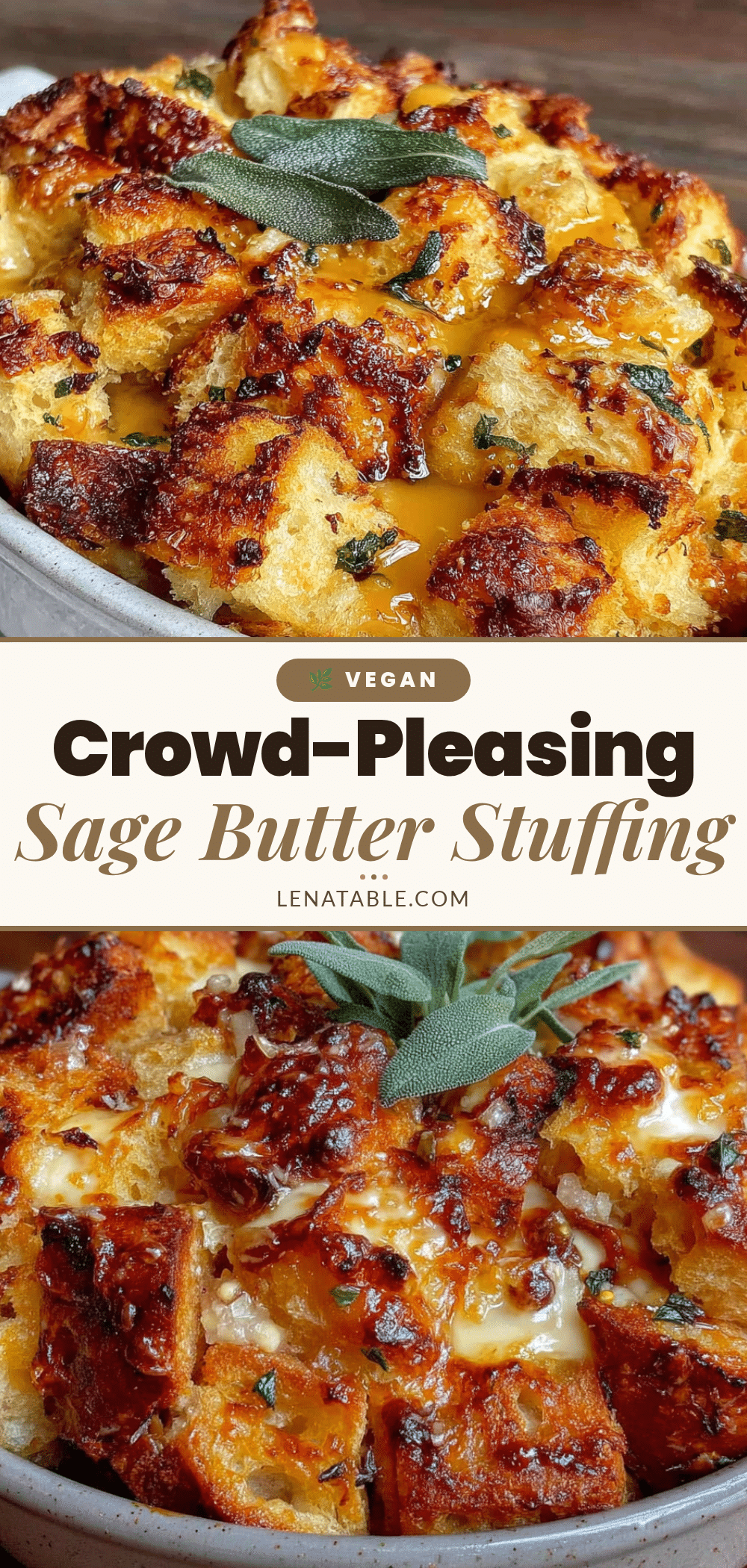
Crowd-Pleasing Sourdough Focaccia Stuffing with Sage Butter

This sourdough focaccia stuffing with sage butter is the ultimate holiday side dish. Tangy sourdough, nutty sage butter, and sweet caramelized onions create a rich, savory stuffing that will steal the show at any gathering.
- Prep Time: 30 minutes
- Cook Time: 55 minutes
- Total Time: 1 hour 25 minutes (plus 4 hours or overnight for drying bread)
- Yield: 8 servings 1x
- Category: Side Dish
- Cuisine: American
Ingredients
- 1 cup (2 sticks) unsalted butter (preferably European-style like Kerrygold or Plugrà)
- 1/4 cup fresh sage leaves, finely chopped
- 3 cloves garlic, minced
- 1 teaspoon kosher salt
- 1/2 teaspoon black pepper, freshly cracked
- 1 large (about 1.5 lbs) loaf sourdough focaccia, cut into 1-inch cubes
- 2 large yellow onions, diced
- 3 stalks celery, diced
- 2 cups low-sodium chicken or vegetable broth
- 2 large eggs, lightly beaten
- 1/2 cup fresh parsley, chopped
- 1/2 cup dried cranberries (optional)
- 1/2 cup toasted pecans or walnuts (optional)
- 1 cup cooked and crumbled Italian sausage (optional)
Instructions
- Prepare the focaccia: Cut sourdough focaccia into 1-inch cubes. Spread on a baking sheet in a single layer and leave uncovered at room temperature for at least 4 hours or overnight to dry out. Alternatively, toast in a 300°F oven for 15-20 minutes, stirring halfway, until dry and lightly golden. Let cool completely.
- Make the sage butter: In a large skillet, melt 2 sticks of butter over medium heat. Add finely chopped fresh sage and minced garlic. Stir constantly for about 2 minutes until garlic is fragrant and sage has darkened slightly. Remove from heat and stir in kosher salt and black pepper. Set aside to cool slightly.
- Sauté the aromatics: In the same skillet, add diced onions and celery. Cook over medium heat, stirring occasionally, for 8-10 minutes until onions are translucent and just starting to caramelize. Add a splash of broth if the pan looks dry, scraping up any browned bits. Remove from heat and let cool slightly.
- Combine the base: In a large mixing bowl, combine dried focaccia cubes and cooked onion-celery mixture. Pour sage butter over the top. Use your hands or a large spatula to gently toss until every cube is evenly coated.
- Add the liquid: In a small bowl, whisk together 2 cups low-sodium broth and 2 lightly beaten eggs. Pour evenly over the bread mixture and toss gently until liquid is absorbed. Let sit for 5 minutes so the bread can absorb the liquid.
- Assemble and bake: Preheat oven to 375°F (190°C). Transfer stuffing to a greased 9×13-inch baking dish and spread into an even layer. Cover tightly with aluminum foil. Bake for 30 minutes. Remove foil and bake for another 20-25 minutes until top is golden brown and crispy. For extra crispy edges, broil for the last 2 minutes, watching closely.
- Rest and serve: Let stuffing rest for 5-10 minutes out of the oven. Sprinkle fresh chopped parsley over the top before serving.
Notes
For best texture, use stale or dried bread. Fresh bread will turn gluey. The sage butter should be slightly browned but not burnt. Assemble the dish a day ahead for easier hosting. Add 10 extra minutes to covered baking time if baking from cold. Leftovers can be stored in the refrigerator for up to 4 days or frozen for up to 3 months.
Nutrition
- Serving Size: 1 serving (about 1 c
- Calories: 400
- Sugar: 5
- Sodium: 680
- Fat: 24
- Saturated Fat: 14
- Carbohydrates: 38
- Fiber: 3
- Protein: 8
Keywords: sourdough focaccia stuffing, sage butter stuffing, Thanksgiving stuffing, holiday stuffing, sourdough stuffing, sage butter, crowd-pleasing stuffing