Love this? Save it for later!
Share the inspiration with your friends
My neighbor Sarah asked why I couldn’t just throw the salmon in foil with the sauce instead of fussing with a hot skillet. I started to explain why that wouldn’t work—something about caramelization and proper searing. Then I stopped. Honestly, I had no good reason except that’s how I’d always done it. So I shrugged, grabbed a sheet pan, and let her have her way with the recipe. The power went out halfway through preheating my oven that evening—typical spring thunderstorm—and I had to finish dinner on the grill in the drizzle. Let me tell you, standing there in the rain with an umbrella in one hand and a spatula in the other felt ridiculous. But that honey garlic salmon in foil came out so tender, so perfectly glazed, I almost cried from the relief of it. The foil had trapped every bit of that sticky, savory sauce right against the fish. No drying out, no messy pan to scrub. Sarah texted me later: “Told you so.” And she was right. This easy honey garlic salmon in foil has become my go-to spring dinner, the one I make when I want something that feels fancy but takes almost zero effort. Maybe you’ve been there—stubborn about a cooking method for no real reason. Trust me, the foil method is the way to go.
Why You’ll Love This Recipe
This isn’t just another salmon recipe. After testing this dish about seven times over two weeks—yes, my family staged a gentle intervention—I can confidently say this version wins on every front. Here’s why you’ll come back to it again and again:
- Quick & Easy: From fridge to table in 20 minutes flat. Perfect for those spring evenings when you’d rather be outside than stuck in the kitchen.
- Simple Ingredients: You probably have honey, garlic, and soy sauce in your pantry right now. No fancy grocery store run required.
- Perfect for Spring: Light enough for warmer weather but still satisfying. Great for Easter brunch, Mother’s Day dinner, or a casual weeknight meal on the patio.
- Crowd-Pleaser: Even my kids, who usually poke at fish suspiciously, cleaned their plates. The sweet garlic glaze wins over even picky eaters.
- Unbelievably Delicious: The salmon stays incredibly moist from the foil packet method, and the honey garlic sauce reduces into this glossy, addictive coating.
What makes this recipe different from every other salmon recipe out there? It’s the foil packet technique combined with that perfect honey-to-garlic ratio. I spent a whole afternoon testing different proportions—too much honey and it was cloying, too much soy sauce and it was salty. This balance? It’s just right. The salmon steams gently in its own juices while the sauce caramelizes around the edges. You get tender, flaky fish with a sticky-sweet glaze that tastes like you fussed for an hour.
This is the kind of dinner that makes you close your eyes after the first bite. It’s comfort food reimagined for spring—lighter, brighter, but with that same soul-soothing satisfaction. Perfect for impressing guests without breaking a sweat, or turning a simple Tuesday into something memorable.
What Ingredients You Will Need
This recipe uses simple, wholesome ingredients to deliver bold flavor and satisfying texture without the fuss. Most of these are pantry staples, which makes this dish perfect for those nights when you need dinner on the table fast.
For the Salmon
- 4 salmon fillets (6 oz / 170g each), skin on or off—your preference. I like skin-on for extra moisture, but either works beautifully.
- Salt and black pepper, to taste. Don’t skimp here—a good seasoning makes everything pop.
- 1 tablespoon olive oil, for drizzling. A light, fruity olive oil works best.
For the Honey Garlic Sauce
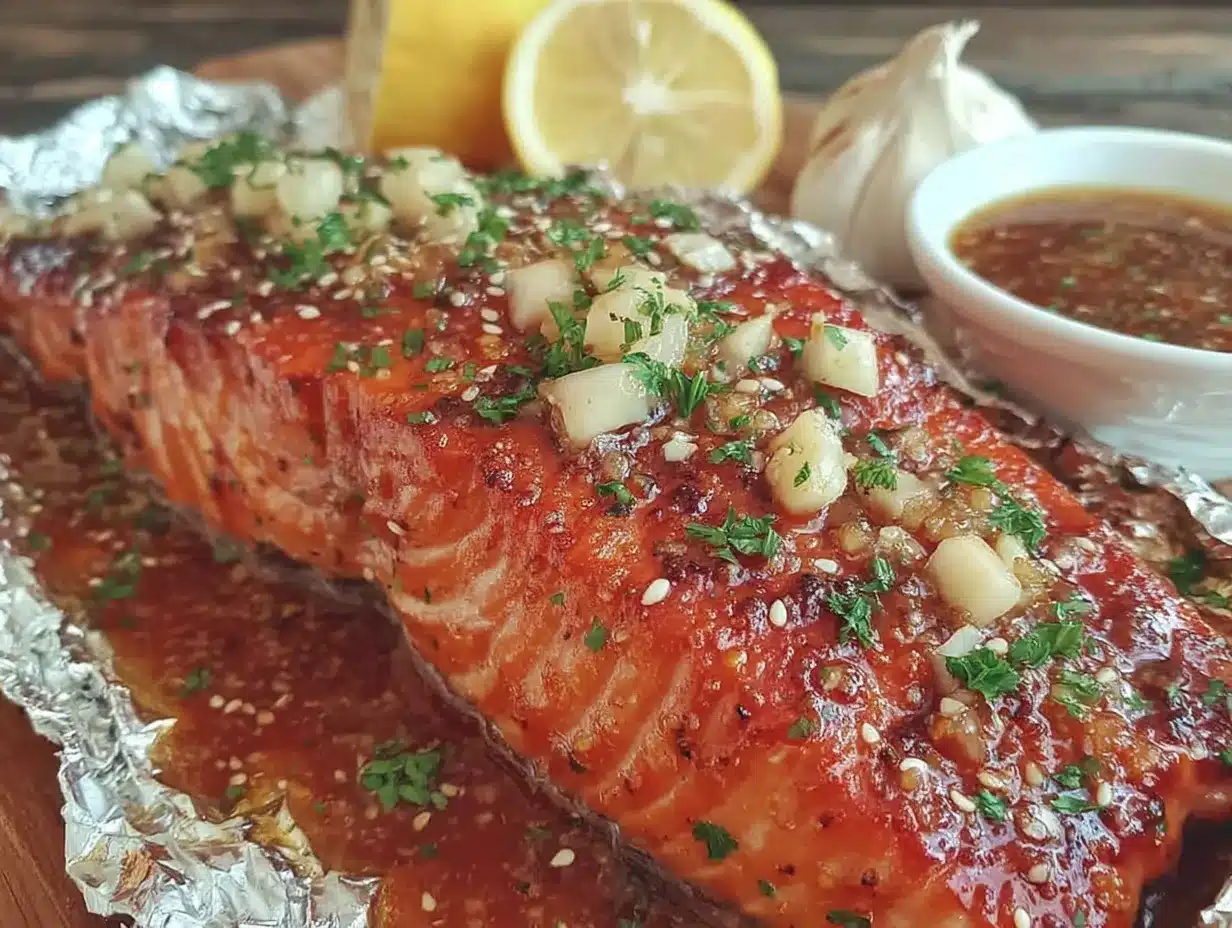
- 1/4 cup honey (85g). Use a runny, good-quality honey. I prefer local wildflower honey for its floral notes.
- 4 cloves garlic, minced finely. Fresh garlic is non-negotiable here—the jarred stuff just doesn’t deliver the same punch.
- 3 tablespoons soy sauce (45ml). Use low-sodium if you’re watching your salt intake. Tamari works great for a gluten-free option.
- 1 tablespoon rice vinegar (15ml). Adds a gentle acidity that balances the sweetness. Apple cider vinegar works in a pinch.
- 1 tablespoon sesame oil (15ml). This gives the sauce that nutty, toasty depth. Don’t skip it—it’s the secret weapon.
- 1 teaspoon grated fresh ginger (optional but recommended). Adds a warm, zesty kick that screams spring.
- 1/2 teaspoon red pepper flakes (optional). For a tiny bit of heat. My kids skip this, but I love the subtle warmth.
For Garnish (Optional but Pretty)
- Sesame seeds, for sprinkling.
- Chopped green onions, for freshness and color.
- Fresh lemon wedges, for squeezing over the top.
Ingredient Tips from My Kitchen: I’ve tested this with both farmed and wild salmon, and honestly, they both work beautifully. Wild salmon tends to cook a minute or two faster, so keep an eye on it. For the honey, avoid anything too crystallized—it won’t dissolve as smoothly into the sauce. I’ve made this with coconut aminos instead of soy sauce for a paleo-friendly version, and it was still delicious, just slightly less salty. If you’re out of rice vinegar, a squeeze of fresh lemon juice does the trick.
Equipment Needed
You don’t need a fancy kitchen to pull this off. Here’s what you’ll need:
- Baking sheet (half-sheet size works great). Any rimmed pan will do—the edges catch any stray drips.
- Aluminum foil. Heavy-duty foil is best—it’s less likely to tear. Regular foil works fine if you double it up.
- Small bowl, for whisking the sauce together.
- Chef’s knife and cutting board, for mincing garlic and ginger.
- Measuring spoons and cups. Accuracy matters here—the sauce ratio is key.
- Tongs, for handling the hot foil packets safely.
- Instant-read thermometer (optional but helpful). Salmon is perfectly cooked at 125°F to 130°F (52°C to 54°C) in the center.
If you don’t have a baking sheet, a cast iron skillet works surprisingly well—just shape the foil packets to fit inside. I’ve even made these foil packets on a gas grill with great results. The key is sealing them tightly so no steam escapes. Budget tip: skip the expensive parchment paper here—foil is actually better because it holds its shape and creates a tighter seal.
Preparation Method
Let’s get cooking. This comes together faster than you’d think, so read through the steps once before you start.
- Preheat your oven to 400°F (200°C). If you’re using a grill, preheat it to medium-high heat. Position the rack in the center of the oven.
- Make the honey garlic sauce. In a small bowl, whisk together the honey, minced garlic, soy sauce, rice vinegar, sesame oil, grated ginger (if using), and red pepper flakes (if using). Whisk until the honey is fully incorporated and the sauce looks smooth and glossy. Set aside. The smell at this point is intoxicating—sweet, savory, and a little bit spicy.
- Prepare the foil packets. Tear off four large sheets of aluminum foil, each about 12 inches (30 cm) long. Fold each sheet in half to create a double layer, then open it back up. This gives you extra strength and prevents leaks. Place one salmon fillet in the center of each foil sheet, skin-side down if using skin-on fillets.
- Season the salmon. Lightly sprinkle each fillet with salt and black pepper. Drizzle a tiny bit of olive oil over the top—this helps the sauce stick and adds richness. Don’t oversalt here because the soy sauce in the glaze adds plenty of sodium.
- Pour the sauce. Spoon the honey garlic sauce evenly over each salmon fillet. Use about 2 tablespoons of sauce per fillet. Reserve any extra sauce for drizzling after cooking if you like things extra saucy. The salmon should be nicely coated but not swimming in liquid.
- Seal the packets. Fold the foil over the salmon to create a packet. Crimp the edges tightly by folding them over twice—you want a tight seal so no steam escapes. Leave a little room inside the packet for air to circulate. The packets should look like little rectangular envelopes.
- Bake the salmon. Place the foil packets on the baking sheet in a single layer. Bake for 12 to 15 minutes, depending on the thickness of your fillets. For fillets that are about 1 inch (2.5 cm) thick, 13 minutes is usually perfect. The salmon should be opaque and flake easily with a fork when done. If you’re using an instant-read thermometer, aim for 125°F to 130°F (52°C to 54°C) in the thickest part.
- Rest and serve. Carefully open one end of each foil packet—watch out for the steam, it’s hot! Let the salmon rest in the foil for 2 minutes. This allows the juices to redistribute. Transfer the salmon to plates or a serving platter, spoon any remaining sauce from the foil over the top, and garnish with sesame seeds, green onions, and lemon wedges.
- Optional broil for extra glaze. If you want a slightly caramelized top, open the foil packets completely after baking and broil on high for 1 to 2 minutes. Watch closely—honey burns fast. This step is totally optional but adds a lovely sticky finish.
My Personal Efficiency Tip: While the salmon bakes, I steam some asparagus or toss a simple green salad. Everything finishes at the same time, and dinner feels complete without extra effort. The foil packets also make cleanup a breeze—just crumple and toss.
Cooking Tips & Techniques
After making this easy honey garlic salmon in foil more times than I care to count, I’ve collected a few hard-won lessons. Here are the ones that matter most:
Don’t overthink the foil seal. I used to worry about getting it perfect, but honestly, as long as the edges are folded over twice, you’re golden. One time I rushed and left a tiny gap—the sauce leaked out and burned on the pan. The salmon was still good, but I lost all that lovely sauce. Double-check your crimps.
Watch the cooking time closely. Salmon continues cooking after you take it out of the oven, so pull it when it’s just barely opaque in the center. Overcooked salmon turns dry and mealy, and that’s a tragedy with such beautiful ingredients. I learned this the hard way when I got distracted by a phone call and ended up with fish that flaked into sad little crumbs.
Room temperature salmon cooks more evenly. Take your fillets out of the fridge 10 to 15 minutes before cooking. Cold salmon straight from the fridge will cook unevenly—the outside may be done while the center is still cold. I once forgot this step and ended up with one end perfectly cooked and the other end raw. Not a great look for dinner guests.
Double the sauce if you like it saucy. The recipe above gives you just enough for a nice coating. If you’re like me and want extra sauce to drizzle over rice or vegetables, make one and a half times the sauce recipe. Just be careful not to drown the salmon—too much liquid will steam it rather than glaze it.
Use a thermometer for perfect results every time. I resisted buying an instant-read thermometer for years, thinking I could tell by touch. I was wrong. Now I use it for every piece of fish, and my salmon comes out perfect consistently. It’s a game-changer.
Variations & Adaptations
One of the best things about this recipe is how easily it adapts. Here are some variations I’ve tried and loved:
Lemon Herb Version: Replace the sesame oil with olive oil and add 2 tablespoons of fresh lemon juice and 1 teaspoon of dried thyme or oregano to the sauce. Omit the ginger and red pepper flakes. This version tastes bright and Mediterranean—perfect for a spring lunch on the patio.
Spicy Maple Glaze: Swap the honey for maple syrup and add an extra 1/2 teaspoon of red pepper flakes plus a pinch of cayenne. The maple adds a deeper, earthier sweetness that pairs beautifully with the heat. My husband requests this version constantly.
Low-Carb / Keto Adaptation: Replace the honey with 2 tablespoons of monk fruit sweetener or allulose syrup mixed with 1 tablespoon of water. The texture will be slightly less sticky, but the flavor is still fantastic. Serve with roasted broccoli or cauliflower rice.
Air Fryer Method: Place the sealed foil packets in the air fryer basket and cook at 375°F (190°C) for 10 to 12 minutes. The air fryer circulates heat beautifully and cooks the salmon evenly. This is my go-to method when I don’t want to heat up the whole oven.
Vegetable Addition: Add a handful of asparagus spears, green beans, or snap peas to each foil packet before sealing. They steam alongside the salmon and soak up the honey garlic sauce. It turns the dish into a complete meal in one packet—less cleanup and more flavor.
Serving & Storage Suggestions
This honey garlic salmon is versatile enough for any occasion. Here’s how to serve and store it:
Serving Temperature: Serve the salmon warm, straight from the foil packet. The sauce is at its best when it’s still glossy and warm. I like to spoon the extra sauce from the foil over the top just before serving—it’s like a final gift from the cooking process.
What to Serve With It: This salmon pairs beautifully with steamed jasmine rice or quinoa to soak up the sauce. For a lighter option, try a simple arugula salad with lemon vinaigrette or roasted asparagus with a squeeze of lemon. Garlic butter green beans are also a fantastic side—the flavors complement each other perfectly. A crisp white wine like Sauvignon Blanc or a dry Riesling is lovely if you’re serving adults.
Storage Instructions: Store leftover salmon in an airtight container in the refrigerator for up to 3 days. The flavors actually meld and deepen overnight—I’ve been known to eat cold leftovers straight from the fridge for lunch the next day. To freeze, wrap the cooked salmon tightly in plastic wrap and then foil, and freeze for up to 2 months. Thaw overnight in the refrigerator before reheating.
Reheating Methods: The best way to reheat this salmon is in a low oven (300°F / 150°C) for 5 to 7 minutes, covered with foil to prevent drying out. You can also microwave it on 50% power in 30-second bursts, but be careful—the honey can get rubbery if overheated. I avoid the microwave when possible because it tends to toughen the fish.
Flavor Development: The sauce continues to penetrate the salmon as it sits, so leftovers often taste even better the next day. The garlic mellows and the honey becomes more integrated. If you’re meal prepping, this is a fantastic recipe to make ahead for the week.
Nutritional Information & Benefits
This recipe isn’t just delicious—it’s packed with nutrients that make you feel good about eating it.
Estimated Nutritional Values (per serving, based on 4 servings):
- Calories: 380
- Protein: 35g
- Fat: 18g
- Carbohydrates: 20g
- Fiber: 0g
- Sugar: 18g
- Sodium: 620mg
Health Benefits: Salmon is rich in omega-3 fatty acids, which support heart and brain health. The garlic and ginger provide anti-inflammatory properties, while honey offers natural energy and antioxidants. This dish is naturally gluten-free (if using tamari) and can be made dairy-free with no modifications. It’s also relatively low in carbohydrates, making it suitable for many dietary patterns.
Dietary Considerations: This recipe contains soy (from the soy sauce) and fish. For a soy-free version, use coconut aminos. For a nut-free version, you’re already good to go—just check your sesame oil label if you have severe allergies. The recipe is naturally low in carbs and can be adapted for keto or paleo diets with the substitutions mentioned above.
My Wellness Perspective: I love that this recipe feels indulgent but is actually quite wholesome. It’s the kind of meal that satisfies a craving for something savory and sweet without relying on processed ingredients. When I serve this to my family, I feel good knowing they’re getting high-quality protein and healthy fats in a form they actually enjoy.
Conclusion
This easy honey garlic salmon in foil has honestly become a staple in my kitchen, and I think it deserves a spot in yours too. It’s the perfect spring dinner—light enough for warm evenings, quick enough for busy weeknights, and impressive enough for company. The foil packet method takes all the stress out of cooking fish, and that honey garlic sauce is genuinely addictive.
I hope you’ll try it and make it your own. Maybe add extra ginger, swap the honey for maple, or throw in some vegetables. The beauty of this recipe is how forgiving and adaptable it is. Don’t be afraid to experiment—that’s how the best recipes are born.
I’d love to hear how it turns out for you. Drop a comment below and let me know if you tried any variations, or share a photo of your beautiful salmon dinner. And if you loved this recipe, please share it with a friend who needs an easy, delicious weeknight win. Happy spring cooking!
Frequently Asked Questions
Can I use frozen salmon for this recipe?
Yes, you can use frozen salmon, but you’ll need to thaw it completely in the refrigerator first. Pat it very dry with paper towels before seasoning and saucing—frozen salmon releases more water as it cooks, which can dilute the glaze. You may also need to add 2 to 3 minutes to the cooking time.
Can I make this recipe on the grill?
Absolutely! Place the sealed foil packets on a preheated grill over medium-high heat (about 400°F / 200°C). Cook for 12 to 15 minutes, flipping the packets halfway through. The grill adds a subtle smoky flavor that’s lovely with the honey garlic sauce. Just make sure your foil packets are tightly sealed so no sauce leaks out.
How do I know when the salmon is fully cooked?
The easiest way is to use an instant-read thermometer—salmon is done at 125°F to 130°F (52°C to 54°C) in the thickest part. Without a thermometer, look for the salmon to turn from translucent to opaque and flake easily with a fork. The internal temperature will continue to rise a few degrees after you take it out of the oven.
Can I prep the foil packets ahead of time?
Yes, you can assemble the foil packets up to 4 hours in advance and store them in the refrigerator. This is great for meal prep or when you’re hosting. Just be aware that the salt in the soy sauce can start to cure the salmon if left too long, so don’t exceed 4 hours. When ready to cook, add about 2 minutes to the baking time since you’re starting from cold.
What can I use instead of soy sauce?
Coconut aminos are the best substitute—they have a similar flavor profile and work beautifully in this recipe. Tamari is another great option if you need gluten-free. For a lower-sodium version, use low-sodium soy sauce or diluted coconut aminos. Avoid using straight salt as a replacement—you need the liquid component for the sauce to work properly.
Pin This Recipe!
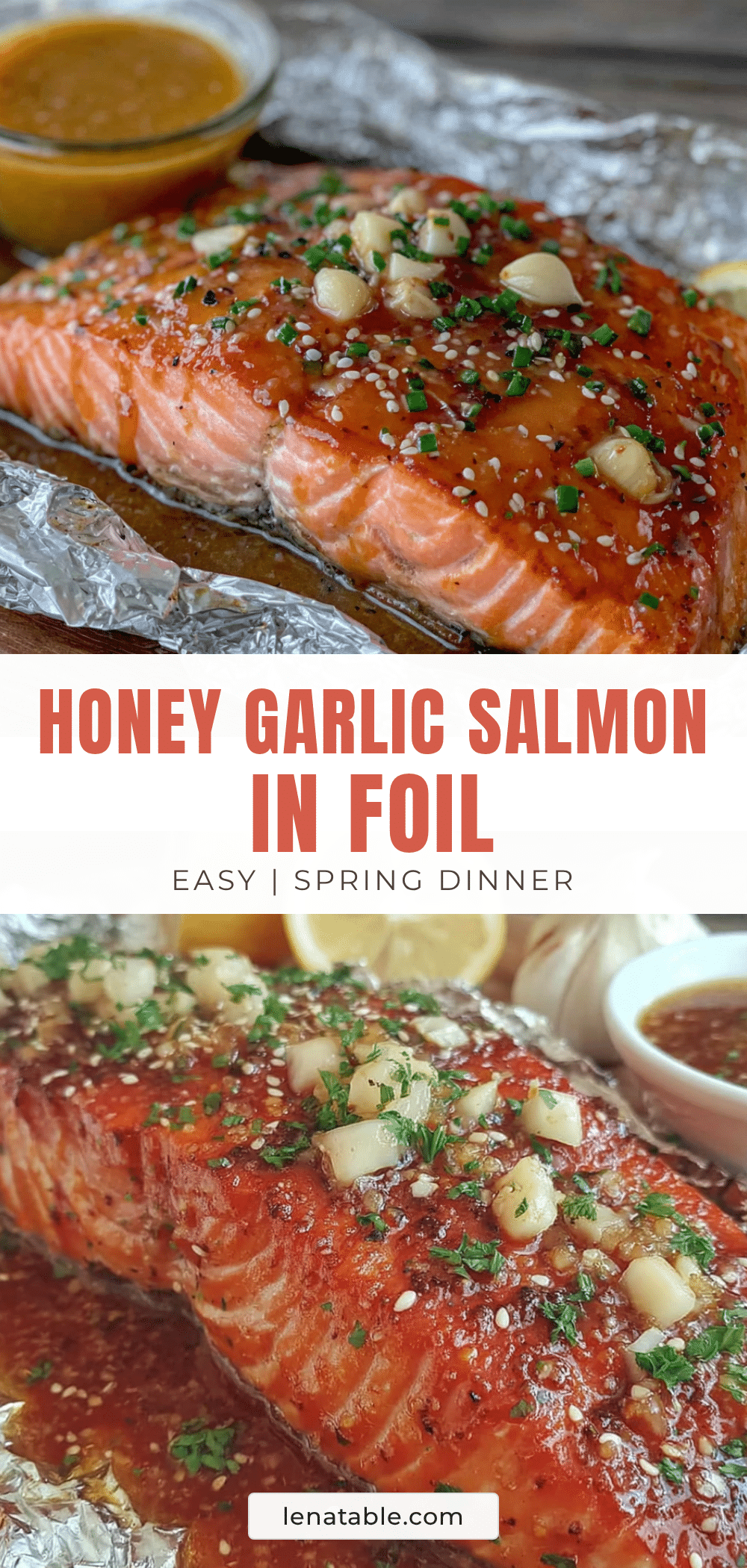
20-Minute Easy Honey Garlic Salmon in Foil
This easy honey garlic salmon in foil is a quick and delicious spring dinner, ready in just 20 minutes. The foil packet method keeps the salmon incredibly moist while the sweet and savory honey garlic glaze caramelizes to perfection.
- Prep Time: 5 minutes
- Cook Time: 15 minutes
- Total Time: 20 minutes
- Yield: 4 servings 1x
- Category: Main Course
- Cuisine: American
Ingredients
- 4 salmon fillets (6 oz / 170g each), skin on or off
- Salt and black pepper, to taste
- 1 tablespoon olive oil
- 1/4 cup honey (85g)
- 4 cloves garlic, minced finely
- 3 tablespoons soy sauce (45ml)
- 1 tablespoon rice vinegar (15ml)
- 1 tablespoon sesame oil (15ml)
- 1 teaspoon grated fresh ginger (optional)
- 1/2 teaspoon red pepper flakes (optional)
- Sesame seeds, for garnish (optional)
- Chopped green onions, for garnish (optional)
- Fresh lemon wedges, for serving (optional)
Instructions
- Preheat your oven to 400°F (200°C). If using a grill, preheat to medium-high heat.
- In a small bowl, whisk together honey, minced garlic, soy sauce, rice vinegar, sesame oil, grated ginger (if using), and red pepper flakes (if using) until smooth and glossy.
- Tear off four large sheets of aluminum foil, each about 12 inches (30 cm) long. Fold each sheet in half to create a double layer, then open back up.
- Place one salmon fillet in the center of each foil sheet, skin-side down if using skin-on fillets.
- Lightly sprinkle each fillet with salt and black pepper. Drizzle a tiny bit of olive oil over the top.
- Spoon the honey garlic sauce evenly over each salmon fillet, using about 2 tablespoons per fillet. Reserve any extra sauce for drizzling after cooking.
- Fold the foil over the salmon to create a packet. Crimp the edges tightly by folding them over twice to seal.
- Place the foil packets on a baking sheet in a single layer. Bake for 12 to 15 minutes, depending on thickness. For 1-inch thick fillets, 13 minutes is usually perfect. Salmon should be opaque and flake easily with a fork.
- Carefully open one end of each foil packet to release steam. Let rest for 2 minutes.
- Transfer salmon to plates or a serving platter, spoon any remaining sauce from the foil over the top, and garnish with sesame seeds, green onions, and lemon wedges.
- Optional: For a caramelized top, open foil packets completely after baking and broil on high for 1 to 2 minutes.
Notes
For best results, let salmon sit at room temperature for 10-15 minutes before cooking. Double the sauce if you like extra. Leftovers can be stored in an airtight container in the refrigerator for up to 3 days. Reheat in a low oven (300°F) covered with foil for 5-7 minutes.
Nutrition
- Serving Size: 1 fillet with sauce
- Calories: 380
- Sugar: 18
- Sodium: 620
- Fat: 18
- Saturated Fat: 3
- Carbohydrates: 20
- Protein: 35
Keywords: honey garlic salmon, salmon in foil, easy salmon recipe, quick salmon dinner, spring salmon, foil packet salmon