Love this? Save it for later!
Share the inspiration with your friends
I was standing in the frozen food aisle of a grocery store last November when a stranger opened a freezer door and the smell of sage and onions hit me from across the way. And suddenly I was seven years old, sitting on a wobbly stool in my neighbor Mrs. Kowalski’s kitchen, watching her pull a roasting pan from the oven. The steam fogged up her glasses, and she didn’t even wipe them off. She just smiled and said, “This is the part nobody writes down, sweetheart.” I didn’t understand what she meant then. I was too busy staring at the golden-brown top of her stuffing, the way the edges had gone crispy while the middle stayed pillowy and soft.
I never got her full recipe. She passed away a few years later, and her family didn’t cook much. So I’ve spent the last decade trying to recreate that exact moment—that first bite where the sausage is juicy, the herbs taste like they were picked that morning, and the bread has soaked up just enough broth without turning to mush. I’ve made some terrible batches along the way. I mean, truly sad, soggy disasters. One year I forgot the celery entirely and tried to pass it off as “rustic.” My brother called it “soup with bread in it.” He wasn’t wrong.
But this version right here? This is the one. It’s the stuffing I bring to every Friendsgiving, the one that gets scraped clean from the dish before the turkey even hits the table. Honestly, maybe you’ve been there too—standing in a grocery aisle, chasing a flavor you can almost remember but can’t quite name. That’s why I keep making this. Not because it’s fancy, but because it tastes like someone’s kitchen on a cold November afternoon.
Why You’ll Love This Recipe
Let me tell you why this sausage and herb stuffing is going to be the star of your holiday table. I’ve tested this recipe at least a dozen times across different ovens, different bread brands, and even different altitudes, and it delivers every single time.
- Perfect for Hosting: This recipe scales beautifully for a crowd. You can easily double it for a big gathering, and it holds up well in a chafing dish if you’re doing a potluck situation.
- Simple Ingredients: Nothing weird here. You probably have most of these in your pantry already. No specialty stores required.
- Make-Ahead Friendly: You can prep this entirely the day before and just pop it in the oven when guests arrive. That’s a game-changer for holiday hosting.
- Crowd-Pleaser: I’ve served this to kids, grandparents, and my picky uncle who “doesn’t do side dishes.” Everyone goes back for seconds.
- Unbelievably Delicious: The combination of savory sausage, fresh herbs, and perfectly toasted bread creates this texture and flavor that’s pure comfort food magic.
What makes this recipe different from all the others? It’s the method. Most stuffing recipes just dump everything together and hope for the best. I toast the bread first, which prevents that dreaded mushiness. I brown the sausage until it’s deeply caramelized, not just cooked through. And I use a mix of broth and egg to create a custard-like texture that’s rich without being heavy.
This isn’t just another stuffing recipe. It’s the kind that makes you close your eyes after the first bite. The kind your guests will ask for year after year. And the best part? It looks impressive on a serving platter, which is exactly what you want when you’re hosting and trying to make everything look effortless.
What Ingredients You Will Need
This recipe uses simple, wholesome ingredients to deliver bold flavor and satisfying texture without the fuss. Most of these are pantry staples you might already have on hand, especially during the holiday season.
For the Stuffing Base
- 1 large loaf (about 1 pound) day-old sourdough bread, cut into 1-inch cubes (I prefer a crusty artisan loaf from the bakery section—it holds up better than sandwich bread)
- 1 pound mild Italian sausage, casings removed (you can use hot Italian sausage for more kick, or turkey sausage for a lighter option)
- 4 tablespoons unsalted butter, divided (adds richness and helps brown the vegetables)
- 2 large yellow onions, diced (about 3 cups)
- 4 celery stalks, diced (about 1½ cups)
- 4 cloves garlic, minced (fresh is non-negotiable here—don’t use the jarred stuff)
- 2 cups low-sodium chicken broth (adds moisture without making it too salty; use vegetable broth for a vegetarian version)
- 2 large eggs, lightly beaten (this creates the custard-like texture that binds everything together)
- 1 teaspoon kosher salt, plus more to taste
- ½ teaspoon black pepper, freshly ground
For the Herb Mix

- ¼ cup fresh sage leaves, finely chopped (this is the star herb—don’t substitute dried if you can help it)
- 2 tablespoons fresh rosemary, finely chopped (adds that piney, aromatic note)
- 2 tablespoons fresh thyme leaves (stripped from stems)
- ¼ cup fresh parsley, chopped (for freshness and color at the end)
Ingredient Selection Tips: For the best texture, look for a sourdough loaf that’s at least two days old. Fresh bread will turn mushy. If your bread is fresh, cube it and spread it on a baking sheet in a 300°F oven for about 10 minutes to dry it out. I recommend Johnsonville or Al Fresco for pre-packaged sausage, but your local butcher’s fresh Italian sausage is even better. For the herbs, farmers’ markets often have the freshest bunches, and you can freeze any leftover sage and rosemary for later use.
Substitution Guidance: For a gluten-free version, use a good quality gluten-free bread. Just note that gluten-free bread tends to be more fragile, so handle it gently when mixing. You can swap the sausage with a plant-based version—I’ve used Beyond Meat Italian sausage with great results. For a dairy-free option, use olive oil instead of butter.
Equipment Needed
You don’t need a fancy kitchen to pull this off. Here’s what you’ll need:
- Large skillet or Dutch oven (for browning the sausage and sautéing vegetables)
- Large mixing bowl (for combining everything—I use my grandmother’s old ceramic one, but any large bowl works)
- 9×13-inch baking dish (or a 3-quart casserole dish)
- Sharp knife and cutting board (for dicing vegetables and chopping herbs)
- Measuring cups and spoons
- Whisk (for beating the eggs)
- Aluminum foil (for covering during the first half of baking)
If you don’t have a 9×13 dish, you can use a 10-inch cast iron skillet for a more rustic presentation. Just make sure it’s well-seasoned. I’ve also used disposable aluminum pans when bringing this to potlucks—works perfectly and saves on cleanup. A good quality chef’s knife makes the herb chopping much easier, but a sharp paring knife will get the job done too.
Preparation Method
Let’s walk through this step by step. Trust me, the method here makes all the difference.
- Preheat your oven to 350°F (175°C). If you’re making this ahead, you’ll do the first part on the stovetop and assemble everything in the dish, then refrigerate. But for now, just get the oven warming up.
- Toast the bread cubes. Spread the cubed sourdough on a large baking sheet in a single layer. Toast for 10-12 minutes, stirring halfway through, until the edges are golden and the cubes feel dry to the touch. This is the secret to non-mushy stuffing. I learned this the hard way after years of sad, soggy results. Set the toasted bread aside to cool.
- Brown the sausage. Heat 1 tablespoon of butter in your large skillet over medium-high heat. Add the sausage, breaking it up with a wooden spoon as it cooks. Let it get deeply browned—about 7-8 minutes. You want those little crispy bits on the bottom of the pan. That’s flavor. Use a slotted spoon to transfer the cooked sausage to a plate, leaving the drippings in the pan.
- Sauté the aromatics. Add the remaining 3 tablespoons of butter to the pan with the sausage drippings. Once melted, add the diced onions and celery. Cook for 8-10 minutes, stirring occasionally, until the onions are translucent and the celery has softened. Add the minced garlic and cook for another minute until fragrant. Your kitchen should smell incredible at this point—if it doesn’t, you might need to let the vegetables cook a bit longer.
- Combine the base ingredients. In your large mixing bowl, combine the toasted bread cubes, cooked sausage, and the sautéed vegetable mixture. Add the chopped sage, rosemary, and thyme. Toss everything gently with your hands or a large spatula until evenly distributed. Be gentle here—you don’t want to break up the bread cubes too much.
- Make the liquid mixture. In a separate bowl or measuring cup, whisk together the chicken broth, beaten eggs, salt, and pepper. Pour this mixture evenly over the bread mixture. Toss gently to coat. Let it sit for 5 minutes so the bread can absorb the liquid. The mixture should look moist but not soupy. If it looks dry, add a splash more broth. If it looks wet, don’t worry—the bread will absorb more as it bakes.
- Transfer to baking dish. Grease your 9×13-inch baking dish with butter or non-stick spray. Transfer the stuffing mixture to the dish and spread it into an even layer. Don’t press it down too firmly—you want some air pockets for texture.
- Bake covered. Cover the dish tightly with aluminum foil and bake for 30 minutes. This steams the stuffing and ensures the inside is fully cooked and moist.
- Bake uncovered. Remove the foil and bake for another 20-25 minutes, until the top is golden brown and crispy. The edges should be particularly crunchy—those are the best bites. If you want extra crispiness, you can broil for 1-2 minutes at the end, but watch it carefully so it doesn’t burn.
- Rest before serving. Let the stuffing sit for 5-10 minutes after it comes out of the oven. This allows the custard to set and makes it easier to serve. Sprinkle the fresh parsley over the top right before bringing it to the table.
Sensory Cues: When it’s done, the top should be a deep golden brown with some darker spots on the edges. You should be able to see some crispy bread cubes poking through. The smell will be intensely savory—sage, sausage, and butter all mingling together. If you insert a knife into the center, it should come out clean, not wet.
Cooking Tips & Techniques
I’ve made every mistake in the book with stuffing, so let me save you some trouble.
The bread is everything. Day-old, crusty bread is non-negotiable. I once used fresh brioche because it was what I had, and the result was a dense, soggy brick. If you only have fresh bread, cube it and spread it on a baking sheet overnight to dry out. Or toast it at 300°F for 10-15 minutes. Dry bread absorbs liquid without falling apart. Wet bread just turns to paste.
Don’t skip browning the sausage properly. A lot of recipes just cook the sausage until it’s no longer pink. But taking the extra few minutes to get deep caramelization adds layers of flavor that you can’t get any other way. Let it sit in the pan without moving it for a few minutes to develop that crust. The browned bits on the bottom of the pan? Those are called fond, and they’re liquid gold.
Season as you go. Don’t wait until the end to add all the salt and pepper. Season the vegetables as they cook, season the sausage as it browns. Layered seasoning creates a more complex final dish. But remember—sausage is already salty, and broth has sodium too. So taste as you go and adjust accordingly.
Temperature matters. If you’re making this ahead and pulling it straight from the fridge, you’ll need to add about 10-15 minutes to the covered baking time. Let it sit at room temperature for 20 minutes before baking to take the chill off. Cold stuffing going into a hot oven will cook unevenly.
My biggest failure? One Thanksgiving, I forgot to add the eggs entirely. The stuffing came out crumbly and dry, and everyone kept reaching for the gravy boat to moisten it up. My aunt asked if I was “trying something new.” I just smiled and said yes. The eggs are crucial for that custard-like texture that holds everything together. Don’t skip them.
Variations & Adaptations
This recipe is wonderfully flexible. Here are some variations I’ve tried and loved:
- Vegetarian Version: Swap the sausage for 8 ounces of cremini mushrooms, finely chopped and sautéed until deeply browned. Use vegetable broth instead of chicken broth. The mushrooms provide that same savory, umami quality that makes the dish feel hearty.
- Cornbread Stuffing: Replace half the sourdough with crumbled day-old cornbread. This gives the stuffing a slightly sweeter, more Southern-style flavor. Reduce the broth by ¼ cup since cornbread is more absorbent.
- Apple and Sausage: Add 1 large Granny Smith apple, peeled and diced, to the vegetables during the last 3 minutes of sautéing. The tartness cuts through the richness of the sausage and adds a lovely texture contrast.
- Nutty Crunch: Fold in ½ cup toasted pecans or walnuts along with the herbs. This adds a wonderful crunch and pairs beautifully with the sage and rosemary. Toast the nuts first in a dry pan for 3-4 minutes to bring out their flavor.
- Spicy Kick: Use hot Italian sausage instead of mild, and add ½ teaspoon red pepper flakes along with the garlic. This version is perfect if you’re serving a crowd that likes heat.
My personal favorite variation? I add dried cranberries. About ½ cup, tossed in with the herbs. The little bursts of sweetness against the savory sausage and herbs is absolutely addictive. My sister requests this version every year now.
Serving & Storage Suggestions
This stuffing is best served warm, straight from the oven. The contrast between the crispy top and the soft, custardy interior is what makes it special. I like to transfer it to a warmed serving platter and garnish with a few extra fresh sage leaves and a sprinkle of flaky sea salt. It looks beautiful on a holiday table alongside roasted turkey, mashed potatoes, and green bean casserole.
What to serve alongside: This stuffing pairs beautifully with roasted turkey (obviously), but it’s also fantastic with roast chicken, pork chops, or even a simple roast vegetable medley. For drinks, a dry Riesling or a light Pinot Noir complements the sage and sausage flavors perfectly.
Storage: Leftover stuffing keeps in an airtight container in the refrigerator for up to 4 days. The flavors actually meld and deepen overnight—I often think day-old stuffing is even better than fresh. To reheat, place it in a 350°F oven for 15-20 minutes, covered with foil to prevent drying out. You can also microwave individual portions, but the top won’t be as crispy.
Freezing: This stuffing freezes beautifully. Assemble the dish completely but don’t bake it. Wrap tightly in plastic wrap and then aluminum foil, and freeze for up to 3 months. To bake from frozen, remove the plastic wrap, cover with foil, and bake at 350°F for 45 minutes. Remove the foil and bake another 20 minutes until golden and heated through. I always make a double batch and freeze one—it’s a lifesaver for unexpected holiday gatherings.
Nutritional Information & Benefits
Per serving (about 1 cup, based on 8 servings):
- Calories: 385
- Total Fat: 18g
- Saturated Fat: 8g
- Cholesterol: 85mg
- Sodium: 720mg
- Total Carbohydrates: 38g
- Dietary Fiber: 3g
- Sugars: 5g
- Protein: 16g
This stuffing is a good source of protein thanks to the sausage and eggs, and the celery and onions add fiber and antioxidants. The fresh herbs—sage, rosemary, and thyme—are rich in anti-inflammatory compounds and add flavor without extra salt or fat. If you’re watching your sodium, use low-sodium broth and consider reducing the added salt. For a lower-carb option, reduce the bread by half and add extra sautéed mushrooms and celery. This recipe contains gluten, dairy, and eggs, so it’s not suitable for those with allergies to those ingredients. But it is nut-free and can be made vegetarian as noted in the variations section.
Conclusion
This sausage and herb stuffing is more than just a side dish. It’s the kind of recipe that becomes a tradition. The kind your family will ask for by name. “Are you making that stuffing with the sage and the crispy top?” Yes. Yes, I am. And honestly, it’s not complicated. It just takes a little patience and a few good ingredients. The toasted bread, the deeply browned sausage, the fresh herbs—they all come together to create something that tastes like it took hours more effort than it actually did.
I love this recipe because it reminds me of Mrs. Kowalski’s kitchen, but also because it’s become my own. I’ve tweaked it and tested it and made it mine. And now it can be yours too. Try it for your next holiday gathering. Make it for a Sunday dinner. Bring it to a potluck and watch it disappear. And when someone asks for the recipe, you’ll know exactly what to say.
I’d love to hear how it turns out for you. Leave a comment below and tell me about your stuffing adventures. Did you add something unexpected? Did your family fight over the crispy edges? Share your photos and tag me on social media. Let’s make this stuffing a tradition in your home too.
Frequently Asked Questions
Can I make this stuffing ahead of time?
Absolutely. Assemble the stuffing completely in the baking dish, cover, and refrigerate for up to 24 hours. When you’re ready to bake, let it sit at room temperature for 20 minutes, then follow the baking instructions. You may need to add 10-15 minutes to the covered baking time since it’s starting from cold.
Can I cook this stuffing inside the turkey?
Technically yes, but I don’t recommend it. Stuffing cooked inside the turkey often ends up greasy and undercooked, and it increases the risk of food safety issues. This recipe is designed to be baked separately, which gives you that lovely crispy top and perfectly cooked interior.
What’s the best bread to use for stuffing?
A crusty, day-old sourdough or French bread works best. The sturdy texture holds up to the liquid without turning mushy. Avoid soft sandwich bread or brioche, which can become gluey. If you’re using a gluten-free bread, choose one that’s sturdy and toast it well before using.
Can I use dried herbs instead of fresh?
You can, but the flavor won’t be as vibrant. If using dried herbs, use about one-third of the amount called for fresh. So for the sage, use about 1 tablespoon dried instead of ¼ cup fresh. Rehydrate the dried herbs in a tablespoon of warm broth before adding them to the mixture for better distribution.
My stuffing came out dry. What did I do wrong?
Most likely, the bread was too dry or you didn’t use enough liquid. Next time, make sure your bread is just slightly stale, not completely desiccated. And when you add the broth mixture, let it sit for a full 5 minutes before transferring to the baking dish. If it still looks dry, add another ¼ cup of broth. Also, make sure you’re covering the dish for the first half of baking to trap steam.
Pin This Recipe!
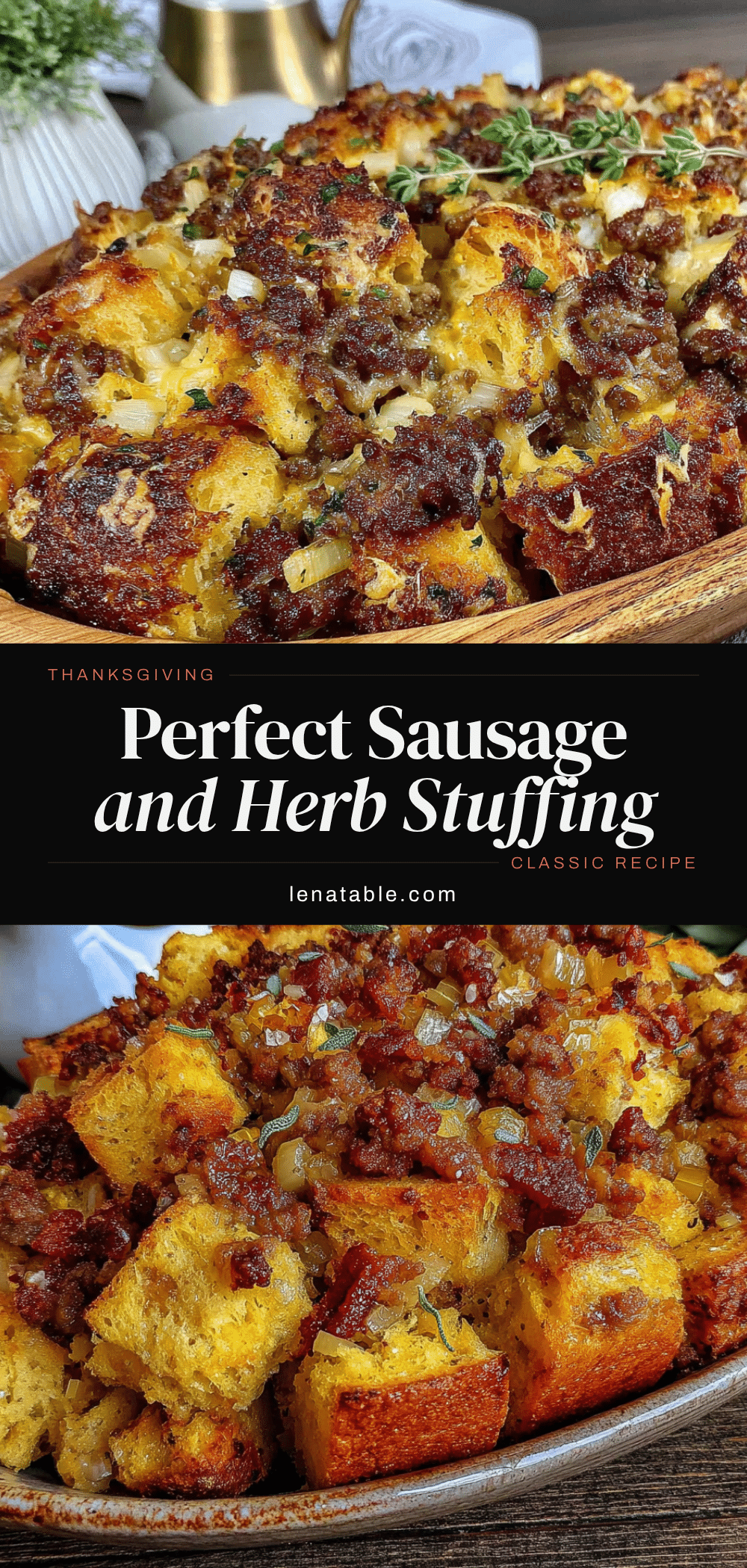
Best Homemade Sausage and Herb Stuffing Recipe

This sausage and herb stuffing is the star of any holiday table, featuring perfectly toasted sourdough, deeply caramelized Italian sausage, and a medley of fresh herbs. It’s make-ahead friendly, crowd-pleasing, and delivers a crispy top with a soft, custardy interior.
- Prep Time: 20 minutes
- Cook Time: 55 minutes
- Total Time: 1 hour 15 minutes
- Yield: 8 servings 1x
- Category: Side Dish
- Cuisine: American
Ingredients
- 1 large loaf (about 1 pound) day-old sourdough bread, cut into 1-inch cubes
- 1 pound mild Italian sausage, casings removed
- 4 tablespoons unsalted butter, divided
- 2 large yellow onions, diced (about 3 cups)
- 4 celery stalks, diced (about 1½ cups)
- 4 cloves garlic, minced
- 2 cups low-sodium chicken broth
- 2 large eggs, lightly beaten
- 1 teaspoon kosher salt, plus more to taste
- ½ teaspoon black pepper, freshly ground
- ¼ cup fresh sage leaves, finely chopped
- 2 tablespoons fresh rosemary, finely chopped
- 2 tablespoons fresh thyme leaves
- ¼ cup fresh parsley, chopped
Instructions
- Preheat your oven to 350°F (175°C).
- Toast the bread cubes: Spread the cubed sourdough on a large baking sheet in a single layer. Toast for 10-12 minutes, stirring halfway through, until the edges are golden and the cubes feel dry to the touch. Set aside to cool.
- Brown the sausage: Heat 1 tablespoon of butter in a large skillet over medium-high heat. Add the sausage, breaking it up with a wooden spoon as it cooks. Let it get deeply browned—about 7-8 minutes. Use a slotted spoon to transfer the cooked sausage to a plate, leaving the drippings in the pan.
- Sauté the aromatics: Add the remaining 3 tablespoons of butter to the pan with the sausage drippings. Once melted, add the diced onions and celery. Cook for 8-10 minutes, stirring occasionally, until the onions are translucent and the celery has softened. Add the minced garlic and cook for another minute until fragrant.
- Combine the base ingredients: In a large mixing bowl, combine the toasted bread cubes, cooked sausage, and the sautéed vegetable mixture. Add the chopped sage, rosemary, and thyme. Toss everything gently until evenly distributed.
- Make the liquid mixture: In a separate bowl or measuring cup, whisk together the chicken broth, beaten eggs, salt, and pepper. Pour this mixture evenly over the bread mixture. Toss gently to coat. Let it sit for 5 minutes so the bread can absorb the liquid.
- Transfer to baking dish: Grease a 9×13-inch baking dish with butter or non-stick spray. Transfer the stuffing mixture to the dish and spread it into an even layer. Don’t press it down too firmly.
- Bake covered: Cover the dish tightly with aluminum foil and bake for 30 minutes.
- Bake uncovered: Remove the foil and bake for another 20-25 minutes, until the top is golden brown and crispy. If desired, broil for 1-2 minutes at the end for extra crispiness.
- Rest before serving: Let the stuffing sit for 5-10 minutes after it comes out of the oven. Sprinkle the fresh parsley over the top right before serving.
Notes
For best texture, use day-old crusty sourdough bread. If bread is fresh, cube and toast at 300°F for 10 minutes to dry out. Don’t skip browning the sausage properly for deep flavor. Season as you go for layered flavor. If making ahead, assemble completely, cover, and refrigerate for up to 24 hours; add 10-15 minutes to covered baking time. The eggs are crucial for custard-like texture—don’t skip them.
Nutrition
- Serving Size: 1 cup
- Calories: 385
- Sugar: 5
- Sodium: 720
- Fat: 18
- Saturated Fat: 8
- Carbohydrates: 38
- Fiber: 3
- Protein: 16
Keywords: stuffing, sausage stuffing, herb stuffing, Thanksgiving stuffing, holiday side dish, sourdough stuffing, make-ahead stuffing