Love this? Save it for later!
Share the inspiration with your friends
My neighbor, a retired librarian named Eleanor, watched me one afternoon as I was trying to coax my toddler into eating something green. She didn’t say anything at first. She just stood there, leaning on her fence, a knowing smile on her face. Then she turned and went back inside her house, returning a few minutes later with a warm, covered dish. “This isn’t green,” she said, handing it over. “But it’s got good stuff in it. Don’t tell anyone.”
That was my first introduction to butternut squash mac and cheese. Honestly, I was skeptical. I mean, sneaking vegetables into mac and cheese felt a little… dishonest? But the smell coming from that dish was ridiculous. It was rich, nutty, and deeply comforting. I took it inside, served it up, and watched my toddler devour it. I also watched my husband go back for seconds. And then I had to stop myself from licking the baking dish clean. Eleanor had shared a recipe, sure, but she’d also shared a secret: comfort food could be clever. It could be a little bit good for you without tasting like a compromise.
The original recipe was simple, but I’ve tinkered with it over the years. I added crispy sage, because honestly, that nutty, earthy flavor is a match made in heaven with the sweet squash. I swapped in a better cheese blend. I figured out how to get that silky, creamy sauce without a ton of heavy cream. And every time I make it, I think of Eleanor standing at her fence, sharing something good just because. Maybe you’ve got a neighbor like that, or maybe you’re just looking for a bowl of something that feels like a hug. Either way, this butternut squash mac and cheese is the one. It’s the recipe that made me stop feeling like I had to choose between healthy and happy.
Why You’ll Love This Recipe
Let me tell you why this particular version of mac and cheese has earned a permanent spot in my weekly rotation. It’s not just another pasta bake. It’s a bowl of pure, unapologetic comfort that happens to be packed with a whole vegetable. You get the creamy, cheesy goodness you crave, but with a subtle sweetness and a gorgeous golden color that makes it feel special. It’s the kind of dish that makes you feel like you’re treating yourself, even when you’re being a little bit good.
- Quick & Easy: This comes together in about 45 minutes, and most of that is hands-off oven time. Perfect for a weeknight when you need something satisfying without a ton of fuss. You can even prep the squash ahead of time.
- Simple Ingredients: No fancy cheese shops or obscure spice blends needed. You’ll find everything at your regular grocery store. The star of the show is butternut squash, which is in season for most of the fall and winter.
- Perfect for Cozy Nights: This is the ultimate comfort food for cold weather, a rainy day, or any time you need a little pick-me-up. It’s rich, warming, and deeply satisfying. Pair it with a simple green salad for a complete meal.
- Crowd-Pleaser: I have served this to picky kids, skeptical adults, and cheese snobs. It gets rave reviews every single time. The squash adds a creamy sweetness that even the most vegetable-averse person will love.
- Unbelievably Delicious: The combination of the creamy, cheesy sauce with the nutty, crispy sage is next-level. The texture is perfect—creamy, tender, with a slightly crunchy topping. It’s comfort food, reimagined.
What makes this recipe different from the rest? It’s the technique. Instead of just stirring in some squash puree, we roast the squash first. This concentrates its natural sugars and gives it a deeper, richer flavor. Then, we blend it right into the cheese sauce. The result is a sauce that’s incredibly creamy and smooth, with no weird chunks. It’s not just “healthy” mac and cheese. It’s the best mac and cheese, period. The kind that makes you close your eyes after the first bite.
What Ingredients You Will Need
This recipe uses simple, wholesome ingredients to deliver a bowl of pure comfort. The magic happens when these everyday items come together. Most of these are pantry staples, especially if you cook regularly. The fresh sage is the one ingredient you might need to pick up, but it’s worth the tiny bit of effort. It adds a flavor that dried sage just can’t match.
- For the Butternut Squash:
- 1 medium butternut squash (about 2-3 pounds), peeled, seeded, and cubed into 1-inch pieces. Look for a squash that feels heavy for its size. This means it’s fresh and moist.
- 2 tablespoons olive oil, for roasting. I like using a good quality extra virgin olive oil here, but any cooking oil will work.
- 1/2 teaspoon salt and 1/4 teaspoon black pepper, for seasoning the squash.
- For the Pasta:
- 1 pound (16 ounces) of your favorite short pasta. I recommend cavatappi, shells, or elbow macaroni. Cavatappi is my personal favorite because the ridges hold onto the sauce so well.
- Salt for the pasta water. Don’t be shy here—the pasta water should taste like the sea. This is your first chance to season the dish.
- For the Creamy Cheese Sauce:
- 4 tablespoons (1/2 stick) unsalted butter. If you only have salted butter, just reduce the added salt in the sauce by a pinch.
- 1/4 cup all-purpose flour. This is our thickener. For a gluten-free version, you can use a 1:1 gluten-free flour blend.
- 3 cups whole milk, warmed. Warm milk helps the sauce come together smoothly and prevents lumps. You can use 2% milk, but the sauce won’t be quite as rich.
- 1 cup reserved pasta water. This starchy water is liquid gold. It helps thin the sauce to the perfect consistency and helps it cling to the pasta.
- 2 cups (8 ounces) sharp cheddar cheese, freshly shredded. Please, please shred your own cheese. Pre-shredded cheese has anti-caking agents that prevent it from melting smoothly. It makes a huge difference.
- 1 cup (4 ounces) Gruyere cheese, freshly shredded. Gruyere adds a nutty, salty complexity that is just incredible. If you can’t find it, you can use all cheddar.
- 1/2 cup (2 ounces) Parmesan cheese, freshly grated. This adds a salty, savory kick.
- 1 teaspoon Dijon mustard. This doesn’t make the sauce taste like mustard. It just brightens all the other flavors.
- 1/4 teaspoon ground nutmeg. A little goes a long way. It adds that classic cozy warmth.
- Salt and black pepper to taste.
- For the Crispy Sage Topping:
- 2 tablespoons unsalted butter.
- 10-12 fresh sage leaves. Look for leaves that are vibrant green and not wilted.
- 1/2 cup panko breadcrumbs. Panko gives the best crunchy texture. Regular breadcrumbs will work, but they won’t be as crispy.
- 1/4 cup Parmesan cheese, freshly grated, for the topping.
Substitution Guidance: For a vegetarian version, you’re already set. For a gluten-free version, use gluten-free pasta and a 1:1 gluten-free flour blend for the roux. For a dairy-free version, you can try using a good quality dairy-free butter and milk, along with a dairy-free cheese shred. The texture will be different, but it can still be delicious. I have a friend who swears by using cashew cream instead of milk for a super rich, dairy-free sauce.
Equipment Needed
You don’t need a ton of fancy equipment to make this recipe, which is part of its charm. Here’s what you’ll need to get the job done.
- Baking Sheet: A rimmed baking sheet is perfect for roasting the squash. Line it with parchment paper for easy cleanup.
- Large Pot: You’ll need a large pot for boiling the pasta. A 6-quart or larger pot is ideal.
- Large Skillet or Dutch Oven: This is for making the cheese sauce. A Dutch oven is great because it’s heavy-bottomed and distributes heat evenly, preventing the sauce from scorching.
- Blender or Immersion Blender: To puree the roasted squash into a smooth sauce. An immersion blender is easier (you can blend it right in the pot), but a regular blender works great too. Just be careful when blending hot liquids.
- 9×13-inch Baking Dish: This is the perfect size for this recipe. You could also use a 3-quart casserole dish.
- Cheese Grater: Please, I’m begging you, don’t buy pre-shredded cheese. A box grater or the grating disc on your food processor will change your life.
- Measuring Cups and Spoons: For accurate measurements.
- Wooden Spoon or Silicone Spatula: For stirring the sauce and combining everything.
If you don’t have a blender, you can mash the roasted squash with a potato masher or fork until it’s very smooth. It won’t be as silky, but it will still taste amazing. I’ve done it before when my blender was in the dishwasher, and honestly? It was just as good.
Preparation Method
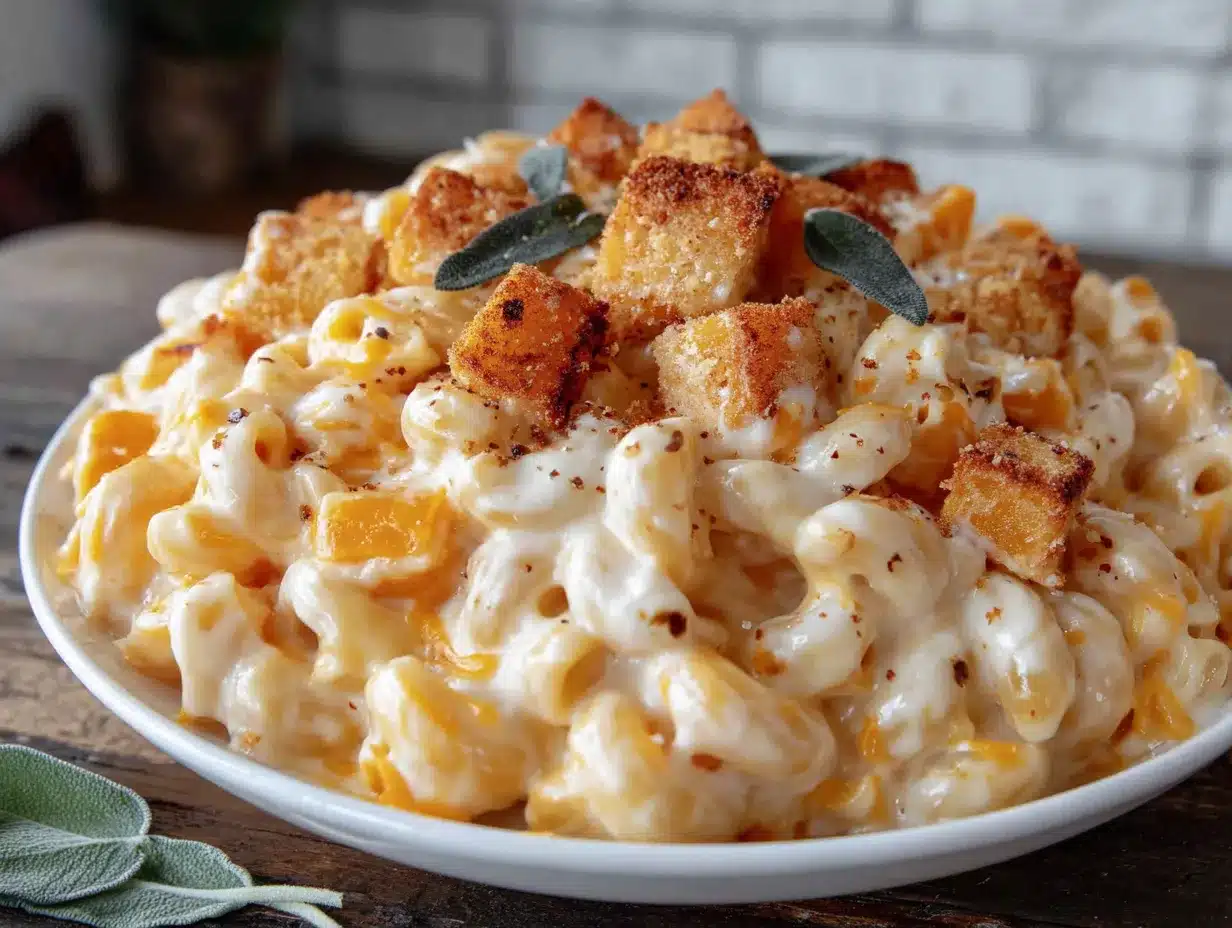
Let’s get cooking. This recipe has a few steps, but they’re all simple and straightforward. The key is to read through everything first so you know what’s coming. Trust me, it’s worth it.
- Roast the Squash: Preheat your oven to 400°F (200°C). On your baking sheet, toss the cubed butternut squash with the olive oil, salt, and pepper. Spread it out in a single layer. Roast for 25-30 minutes, flipping halfway through, until the squash is tender and lightly browned on the edges. You want it to be fork-tender. The smell at this point is already incredible—sweet and nutty.
- Cook the Pasta: While the squash is roasting, bring a large pot of salted water to a boil. Add your pasta and cook it according to the package directions, but aim for al dente—about 1-2 minutes less than the recommended time. It will continue to cook in the oven. Before you drain the pasta, reserve 1 cup of the starchy pasta water. Set it aside. Drain the pasta and set it aside as well. Don’t rinse it! You want that starch to help the sauce stick.
- Make the Sage Butter: In a small skillet, melt 2 tablespoons of butter over medium heat. Add the sage leaves and cook for about 1-2 minutes per side, until they are crispy and the butter is fragrant and just starting to brown. Be careful not to burn the butter. Remove the sage leaves with a fork and set them aside on a paper towel to drain. Leave the browned butter in the pan. Add the panko breadcrumbs and 1/4 cup of Parmesan cheese to the pan. Stir to coat the breadcrumbs in the butter. Cook for another 1-2 minutes, stirring constantly, until the breadcrumbs are golden and toasted. Set this mixture aside as well.
- Blend the Squash: Once the squash is roasted, let it cool for a few minutes. Transfer it to your blender. Add 1/2 cup of the reserved pasta water. Blend until completely smooth. It should look like a thick, velvety puree. Set it aside.
- Make the Cheese Sauce: In your large skillet or Dutch oven, melt the 4 tablespoons of butter over medium heat. Once it’s melted and bubbling, whisk in the flour. Cook for about 1 minute, whisking constantly. This is called a roux, and it’s the base of our sauce. It should smell slightly nutty. Slowly pour in the warm milk, whisking constantly to prevent lumps. Bring the mixture to a gentle simmer, whisking often, until it thickens enough to coat the back of a spoon. This usually takes about 3-5 minutes.
- Add the Cheese and Squash: Reduce the heat to low. Add the shredded cheddar, Gruyere, and 1/2 cup of Parmesan cheese to the sauce. Whisk until completely melted and smooth. The sauce will be thick and luscious. Now, whisk in the butternut squash puree, the Dijon mustard, and the ground nutmeg. Whisk until everything is beautifully combined. Taste the sauce and season with salt and pepper. Remember, the pasta will absorb some of the salt, so don’t be afraid to be generous.
- Combine and Bake: Add the cooked pasta to the cheese sauce and stir until every piece of pasta is coated. If the sauce seems too thick, stir in a little more of the reserved pasta water, a tablespoon at a time, until it reaches your desired consistency. Pour the mac and cheese into your greased 9×13-inch baking dish. Sprinkle the crispy panko breadcrumb mixture evenly over the top. Crumble the crispy sage leaves over the breadcrumbs.
- Bake to Perfection: Bake in the preheated oven at 375°F (190°C) for 15-20 minutes, until the sauce is bubbly and the topping is golden brown. If you want an extra crispy top, you can switch the oven to broil for the last 1-2 minutes. Watch it carefully so it doesn’t burn.
- Rest and Serve: Let the mac and cheese rest for at least 5-10 minutes before serving. This is crucial. It allows the sauce to set up a little so it doesn’t turn into a soupy mess on the plate. The wait is hard, I know, but it’s worth it. Serve hot, garnished with a few extra fresh sage leaves if you’re feeling fancy.
Cooking Tips & Techniques
I’ve made this recipe more times than I can count, and I’ve learned a few things along the way. Let me share some of my hard-won wisdom so you can nail it on your first try.
Don’t Skip Roasting the Squash: I know it’s tempting to just buy pre-cut squash or use canned puree. But roasting brings out a sweetness and depth of flavor that you just can’t get any other way. The caramelized edges are where the magic happens. Plus, it makes your kitchen smell amazing.
Low and Slow for the Sauce: When you’re making the cheese sauce, keep the heat on low once you add the cheese. High heat can cause the cheese to seize up and become grainy. Patience is your friend here. A smooth, creamy sauce is the reward.
The Pasta Water Secret: Never, ever forget to reserve that pasta water. It’s full of starch, which helps the sauce cling to the pasta and gives it a silky texture. It’s also a great way to thin the sauce if it gets too thick without diluting the flavor.
Shred Your Own Cheese: I know I’ve said this before, but it bears repeating. Pre-shredded cheese is coated in cellulose and other anti-caking agents that prevent it from melting smoothly. You’ll end up with a gritty, clumpy sauce. A block of good cheddar and a grater is the way to go. It takes two extra minutes and makes a world of difference.
My Biggest Failure: The first time I made this, I was in a hurry and I skipped the step where you warm the milk. I just poured cold milk into the roux. The result? A lumpy, horrible mess. The cold milk caused the flour to seize up, and I spent 20 minutes trying to whisk out the lumps. Learn from my mistake. Warm the milk. It takes 90 seconds in the microwave.
Variations & Adaptations
One of the best things about this recipe is how versatile it is. You can change it up based on what you have on hand or what you’re in the mood for. Here are a few of my favorite variations.
- Add Some Protein: This mac and cheese is amazing on its own, but it’s also a fantastic base for adding protein. Try stirring in some shredded rotisserie chicken, crispy bacon bits, or even some leftover pulled pork. It turns it into a hearty, complete meal.
- Veggie Boost: Feel free to add other vegetables. A cup of frozen peas stirred in before baking is a classic. You could also add some steamed broccoli florets, roasted cauliflower, or even some sautéed mushrooms. It’s a great way to clean out the fridge.
- Spice It Up: If you like a little heat, add a pinch of cayenne pepper or red pepper flakes to the cheese sauce. You could also stir in a diced jalapeño (seeds removed) for a fresh, spicy kick. The sweetness of the squash is a perfect foil for the heat.
- Make It a One-Pot Meal: For an even easier version, you can make this in a large Dutch oven. Cook the pasta, make the sauce, and then just top it with the breadcrumbs and bake it all in the same pot. Less dishes, more comfort.
- Dairy-Free Adaptation: I have a friend who is lactose intolerant, and I’ve made this for her using unsweetened oat milk, dairy-free butter, and a vegan cheddar shred. The sauce wasn’t quite as creamy, but it was still delicious. The key is to use a good quality vegan cheese that melts well.
Serving & Storage Suggestions
This mac and cheese is a star in its own right, but here’s how to make the most of it, from the first serving to the last leftover.
Serving: Serve it hot, straight from the oven. Let it rest for those crucial 5-10 minutes first. I love to serve it in a big, shallow bowl so the crispy topping stays crunchy. A simple side salad with a bright vinaigrette is the perfect contrast to the rich, creamy pasta. A side of roasted vegetables, like Brussels sprouts or green beans, also works beautifully. For a drink, a crisp apple cider or a light, unoaked Chardonnay is a fantastic pairing.
Storage: This recipe makes great leftovers, if you have any. Let the mac and cheese cool completely, then transfer it to an airtight container. It will keep in the refrigerator for up to 4 days. The flavors actually meld together and get even better overnight. I’m not going to lie, I’ve been known to eat it cold, straight from the fridge.
Reheating: The best way to reheat it is in the oven. Preheat your oven to 350°F (175°C). Place the mac and cheese in an oven-safe dish, add a splash of milk to help restore the creaminess, and cover it with foil. Bake for 15-20 minutes, or until heated through. For a crispy top, remove the foil for the last 5 minutes. You can also reheat it in the microwave in 30-second bursts, but the topping won’t be as crispy.
Freezing: This mac and cheese freezes beautifully. Assemble the dish completely, but don’t bake it. Cover it tightly with plastic wrap and then a layer of foil. Freeze for up to 3 months. When you’re ready to bake it, thaw it in the refrigerator overnight. Then, bake it as directed, adding about 10-15 minutes to the baking time since it will be starting from cold.
Nutritional Information & Benefits
Let’s be real: this is still mac and cheese. It’s comfort food, and it’s meant to be enjoyed. But the butternut squash does bring some serious nutritional benefits to the table. It’s a fantastic source of Vitamin A (great for your eyes and immune system), Vitamin C, and fiber. The squash also adds natural sweetness, which means we can use a little less salt and still get a ton of flavor.
Here’s an approximate nutritional breakdown per serving (based on 8 servings):
| Nutrient | Amount per Serving |
|---|---|
| Calories | 480-520 |
| Fat | 22-26g |
| Saturated Fat | 12-15g |
| Carbohydrates | 52-58g |
| Fiber | 5-7g |
| Sugar | 8-10g |
| Protein | 20-24g |
| Vitamin A | 150-200% DV |
| Calcium | 35-45% DV |
Please note that these are estimates and can vary based on the specific ingredients and brands you use.
Dietary Considerations: This recipe is vegetarian. It can be made gluten-free (use gluten-free pasta and flour) and dairy-free (use plant-based alternatives). It contains gluten and dairy in its standard form.
From a wellness perspective, I love that this recipe lets me have my comfort food and feel good about it. It’s a meal that satisfies my soul and nourishes my body. It’s not about deprivation; it’s about making smart, delicious choices.
Conclusion
This butternut squash mac and cheese with crispy sage is more than just a recipe. It’s a bowl of warmth, a memory of a kind neighbor, and a testament to the fact that comfort food can be clever. It’s creamy, cheesy, and deeply satisfying, with a subtle sweetness and a nutty, crunchy topping that makes it feel special. It’s the kind of dish you make when you need a hug, when you want to impress someone without a ton of stress, or when you just want to enjoy a really, really good meal.
I really hope you give this recipe a try. Don’t be afraid to make it your own—add your favorite protein, swap in different cheeses, or throw in some extra veggies. The best recipes are the ones that become a part of your own story. And when you make it, I’d love to hear about it. Leave a comment below and tell me how it turned out. Did you make any changes? Did your family love it? Your stories are what make this community so special.
So go on, preheat that oven. Your new favorite comfort food is waiting. Happy cooking, friends.
Frequently Asked Questions
Can I use frozen butternut squash instead of fresh?
Yes, you can! Frozen butternut squash is a great time-saver. Thaw it first, pat it dry to remove excess moisture, and then roast it as directed. You might need to roast it for a few minutes less since it’s already been blanched. The flavor won’t be quite as concentrated as fresh-roasted, but it will still be delicious.
Can I make this mac and cheese ahead of time?
Absolutely. You can assemble the entire dish (without the crispy sage topping) up to 24 hours in advance. Cover it and store it in the refrigerator. When you’re ready to bake, let it sit at room temperature for 30 minutes, then top it with the sage and breadcrumbs and bake as directed. You may need to add 5-10 minutes to the baking time.
My cheese sauce turned out grainy. What went wrong?
This usually happens when the heat is too high or when you use pre-shredded cheese. High heat can cause the proteins in the cheese to seize up, resulting in a grainy texture. Always melt your cheese over low heat. And please, shred your own cheese! The anti-caking agents in pre-shredded cheese are a common culprit for grainy sauces.
Can I use a different type of pasta?
Of course! While I love cavatappi for its ridges, any short pasta will work beautifully. Shells, elbows, rotini, or even penne are all great choices. The key is to choose a shape that has nooks and crannies to hold onto that delicious sauce.
How do I make the crispy sage topping if I don’t have fresh sage?
If you can’t find fresh sage, you can still make a delicious topping. Just skip the sage step. Melt the butter and toast the panko breadcrumbs with the Parmesan as directed. You can also add a pinch of dried, rubbed sage to the breadcrumb mixture for a hint of that classic flavor. It won’t be as fragrant, but it will still be tasty.
Pin This Recipe!
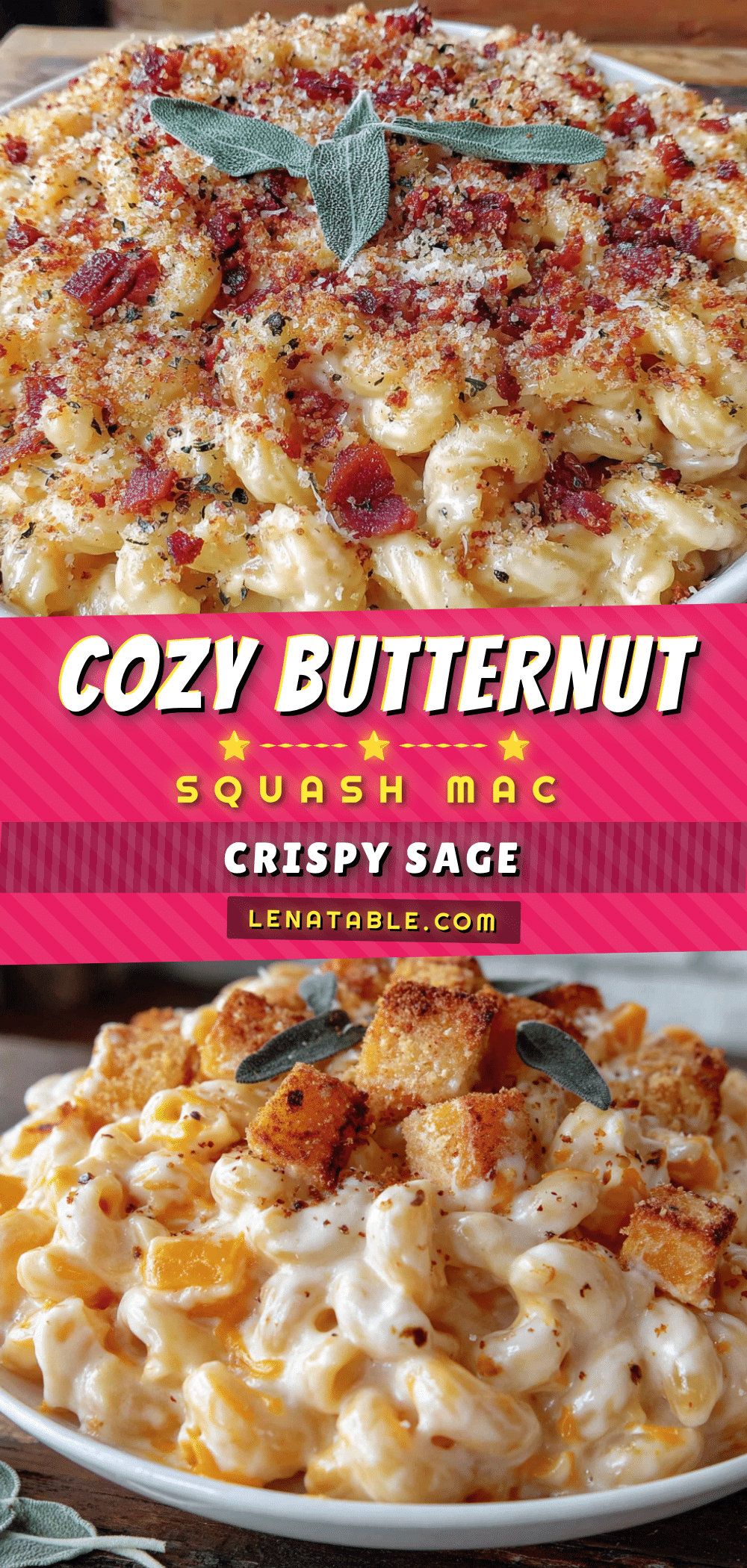
Cozy Butternut Squash Mac and Cheese with Crispy Sage

This creamy, cheesy mac and cheese is packed with roasted butternut squash for a subtle sweetness and a gorgeous golden color. Topped with crispy sage and buttery breadcrumbs, it’s the ultimate comfort food that’s secretly a little bit good for you.
- Prep Time: 15 minutes
- Cook Time: 45 minutes
- Total Time: 1 hour
- Yield: 8 servings 1x
- Category: Main Course
- Cuisine: American
Ingredients
- 1 medium butternut squash (about 2–3 pounds), peeled, seeded, and cubed into 1-inch pieces
- 2 tablespoons olive oil
- 1/2 teaspoon salt
- 1/4 teaspoon black pepper
- 1 pound (16 ounces) short pasta (cavatappi, shells, or elbow macaroni recommended)
- Salt for pasta water
- 4 tablespoons (1/2 stick) unsalted butter
- 1/4 cup all-purpose flour
- 3 cups whole milk, warmed
- 1 cup reserved pasta water
- 2 cups (8 ounces) sharp cheddar cheese, freshly shredded
- 1 cup (4 ounces) Gruyere cheese, freshly shredded
- 1/2 cup (2 ounces) Parmesan cheese, freshly grated
- 1 teaspoon Dijon mustard
- 1/4 teaspoon ground nutmeg
- Salt and black pepper to taste
- 2 tablespoons unsalted butter (for topping)
- 10–12 fresh sage leaves
- 1/2 cup panko breadcrumbs
- 1/4 cup Parmesan cheese, freshly grated (for topping)
Instructions
- Preheat oven to 400°F (200°C). On a baking sheet, toss cubed butternut squash with olive oil, salt, and pepper. Spread in a single layer and roast for 25-30 minutes, flipping halfway, until tender and lightly browned.
- While squash roasts, bring a large pot of salted water to a boil. Cook pasta according to package directions until al dente (1-2 minutes less than recommended). Reserve 1 cup of pasta water before draining. Drain pasta and set aside (do not rinse).
- In a small skillet, melt 2 tablespoons butter over medium heat. Add sage leaves and cook 1-2 minutes per side until crispy. Remove sage and set aside. Add panko breadcrumbs and 1/4 cup Parmesan to the browned butter. Cook 1-2 minutes, stirring constantly, until golden. Set aside.
- Transfer roasted squash to a blender. Add 1/2 cup reserved pasta water and blend until completely smooth. Set aside.
- In a large skillet or Dutch oven, melt 4 tablespoons butter over medium heat. Whisk in flour and cook for 1 minute, whisking constantly. Slowly pour in warm milk, whisking constantly. Bring to a gentle simmer and cook until thickened, about 3-5 minutes.
- Reduce heat to low. Add shredded cheddar, Gruyere, and 1/2 cup Parmesan. Whisk until melted and smooth. Whisk in squash puree, Dijon mustard, and nutmeg. Season with salt and pepper to taste.
- Add cooked pasta to the cheese sauce and stir until coated. If too thick, add more reserved pasta water a tablespoon at a time. Pour into a greased 9×13-inch baking dish.
- Sprinkle the panko breadcrumb mixture evenly over the top. Crumble the crispy sage leaves over the breadcrumbs.
- Bake at 375°F (190°C) for 15-20 minutes, until bubbly and golden brown. For extra crispy top, broil for 1-2 minutes at the end.
- Let rest for 5-10 minutes before serving. Serve hot.
Notes
Don’t skip roasting the squash—it concentrates the flavor. Always shred your own cheese for a smooth sauce. Warm the milk before adding to the roux to prevent lumps. Let the mac and cheese rest for 5-10 minutes after baking to allow the sauce to set.
Nutrition
- Serving Size: 1 serving (about 1/8
- Calories: 500
- Sugar: 9
- Sodium: 650
- Fat: 24
- Saturated Fat: 13.5
- Carbohydrates: 55
- Fiber: 6
- Protein: 22
Keywords: butternut squash mac and cheese, creamy mac and cheese, comfort food, fall recipe, vegetarian mac and cheese, crispy sage, baked mac and cheese