Love this? Save it for later!
Share the inspiration with your friends
My brother swore he hated beef stew. For years. The kind of hatred that made him push his bowl away at family dinners, claiming it was “mushy meat in brown water.” Then one rainy October evening, I caught him standing over my slow cooker, spoon in hand, fishing out chunks of beef when he thought no one was looking. I didn’t say a word, just watched from the doorway as he went back for a third piece, still pretending to be annoyed about something else entirely.
Honestly, I get it now. Most beef stews deserve that skepticism. They’re either too thin, too bland, or the meat turns into sad little shreds that have no business being called “chunks.” But this version, the one I’ve been tweaking for about five fall seasons now, it’s different. The beef stays tender but holds its shape, the broth gets this deep, almost silky richness from the slow-cooked marrow and a splash of red wine, and the vegetables soak up all that flavor without turning to complete mush.
You know that feeling when you come in from the cold and the whole house smells like someone’s been cooking for hours, even though you barely lifted a finger? That’s this recipe. It’s the kind of meal that makes you want to light a candle, pour a glass of something good, and just sit there for a minute. I started making it on Sundays during the first chilly week of October, and it’s become my little seasonal ritual. The weather turns, the leaves change, and the slow cooker comes out of the cabinet. Some traditions just make sense.
Why You’ll Love This Recipe
Let me be straight with you, I tested this stew about seven times before I got it exactly right. The first batch was too watery, the second had chewy meat, and the third, well, let’s just say I learned that too much rosemary tastes like you’re eating a pine tree. But this version, it’s the one I keep coming back to, and here’s why it works:
- Set It and Forget It: Fifteen minutes of prep in the morning, and dinner takes care of itself. No stirring, no watching, no stress. Perfect for those days when you’re running around or just want to curl up with a book.
- Budget-Friendly Cuts: This recipe uses chuck roast, which is one of the most affordable cuts of beef. The slow cooking breaks down the connective tissue, turning a tough, cheap cut into something that tastes like you spent a fortune.
- Deep, Layered Flavor: We’re not just dumping beef and veggies in a pot. A quick sear on the meat, a splash of red wine, and a few anchovy fillets (trust me on this one) create a broth that’s rich, savory, and completely addictive.
- Perfect for Meal Prep: This stew actually gets better after a day or two in the fridge. The flavors meld together, the broth thickens, and it reheats like a dream. Make it on Sunday, eat it all week.
- Crowd-Pleasing Comfort: I’ve served this to picky eaters, fancy dinner guests, and my brother who “hated” stew. Every single person asked for seconds. It’s that kind of recipe.
What makes this different from every other stew recipe out there? It’s the little things. The anchovy that adds umami without tasting fishy. The searing step that most slow cooker recipes skip but makes all the difference. The way the potatoes hold their shape because we add them at the right time. This isn’t just another stew, it’s the stew I make when I want to feel like everything’s going to be okay.
What Ingredients You Will Need
This recipe uses simple, hearty ingredients that work together to create something truly special. Most of these are pantry staples or easy to find at any grocery store. Let me walk you through each one and why it matters.
- 2 pounds beef chuck roast, cut into 2-inch cubes — This is my go-to cut for stew. It has enough marbling to keep the meat tender and flavorful during the long cook. Look for pieces with nice fat streaks running through them. If you can’t find chuck, brisket or bottom round work too, but chuck really is the best.
- 2 tablespoons olive oil, divided — Use a good quality olive oil for searing. I like California Olive Ranch for everyday cooking, it has a clean taste that doesn’t overpower the other ingredients.
- 1 teaspoon salt, plus more to taste — I use kosher salt here. Diamond Crystal is my preference because it’s less salty by volume, giving you more control. Don’t skip salting the meat before searing, it draws out moisture and helps create that beautiful brown crust.
- 1/2 teaspoon black pepper, freshly ground — Pre-ground pepper is fine in a pinch, but fresh cracked pepper adds a subtle heat that makes a difference in the final dish.
- 1 large yellow onion, diced — Yellow onions have the perfect balance of sweetness and sharpness for stew. They melt into the broth as they cook, adding depth without being overpowering.
- 4 cloves garlic, minced — Fresh garlic is non-negotiable here. The jarred stuff has a different flavor, more sharp and less sweet. Take the extra minute to mince fresh cloves.
- 3 tablespoons tomato paste — This adds richness and a touch of acidity. I buy the tubes of tomato paste instead of cans, they last forever in the fridge and you can just squeeze out what you need.
- 1 cup dry red wine (like Cabernet Sauvignon or Merlot) — The alcohol cooks off, leaving behind a deep, fruity complexity. If you don’t cook with wine, substitute with an extra cup of beef broth plus a tablespoon of balsamic vinegar.
- 4 cups low-sodium beef broth — Low-sodium is important here. You want to control the salt level yourself. I like Swanson or Kitchen Basics for consistent flavor.
- 2 anchovy fillets, minced (optional but highly recommended) — I know this sounds weird, but hear me out. Anchovies melt into the broth and add this incredible savory depth without any fishy taste. It’s the secret ingredient that makes people say “what’s in this, it’s amazing?”
- 2 bay leaves — Fresh or dried, either works. Bay leaves add a subtle herbal note that you’ll miss if you leave them out. Just remember to remove them before serving.
- 2 sprigs fresh rosemary — Fresh rosemary has a more delicate flavor than dried. If you only have dried, use 1 teaspoon and add it later in the cooking process so it doesn’t get bitter.
- 3 sprigs fresh thyme — Thyme and beef are a classic combination. The leaves fall off the stems as the stew cooks, infusing the broth with their earthy flavor.
- 4 large carrots, peeled and cut into 1-inch chunks — I like to cut them on a slight diagonal, it looks prettier and they cook more evenly. Don’t cut them too small or they’ll disappear into the stew.
- 3 stalks celery, cut into 1-inch pieces — Celery adds a subtle freshness that balances the richness of the beef. Some people skip it, but I think it’s essential.
- 1.5 pounds Yukon Gold potatoes, cut into 1.5-inch chunks — Yukon Golds are my secret weapon. They hold their shape better than Russets and have a buttery texture that’s perfect for stew. Red potatoes work too, but skip the Russets unless you want mashed potato soup.
- 1 cup frozen peas, thawed — Add these at the very end, just before serving. They bring a pop of color and sweetness that brightens up the whole dish.
- 2 tablespoons cornstarch mixed with 2 tablespoons cold water (optional, for thickening) — I usually don’t need this because the potatoes naturally thicken the broth, but if you like a thicker stew, this slurry will do the trick.
Equipment Needed
You don’t need a fancy kitchen to make this stew. Here’s what you’ll actually use:
- 6-quart slow cooker — This is the sweet spot size for this recipe. Anything smaller and you’ll crowd the ingredients, anything bigger and it might cook too fast. I use a Cuisinart programmable model that I’ve had for about six years, and it’s never let me down.
- Large skillet or Dutch oven — You need this for searing the beef. A cast iron skillet works beautifully, but any heavy-bottomed pan will do. Don’t use non-stick for this, you want those browned bits to stick to the pan so you can scrape them up later.
- Cutting board and sharp knife — A decent chef’s knife makes all the difference. You don’t need anything expensive, just keep it sharp. I sharpen mine with a simple handheld sharpener every few weeks.
- Wooden spoon or spatula — For scraping up those delicious browned bits from the pan. A metal spatula works too, just be gentle with your cookware.
- Measuring cups and spoons — I know some people eyeball everything, but for this recipe, the measurements matter, especially for the liquid ratios.
- Tongs — For flipping the beef while searing. Much easier than using a fork, which can pierce the meat and let the juices escape.
If you don’t have a slow cooker, you can absolutely make this in a Dutch oven on the stovetop or in the oven at 325°F for about 2.5 to 3 hours. I’ve done it both ways, and honestly, the oven version might even be slightly better, but the slow cooker wins for convenience.
Preparation Method
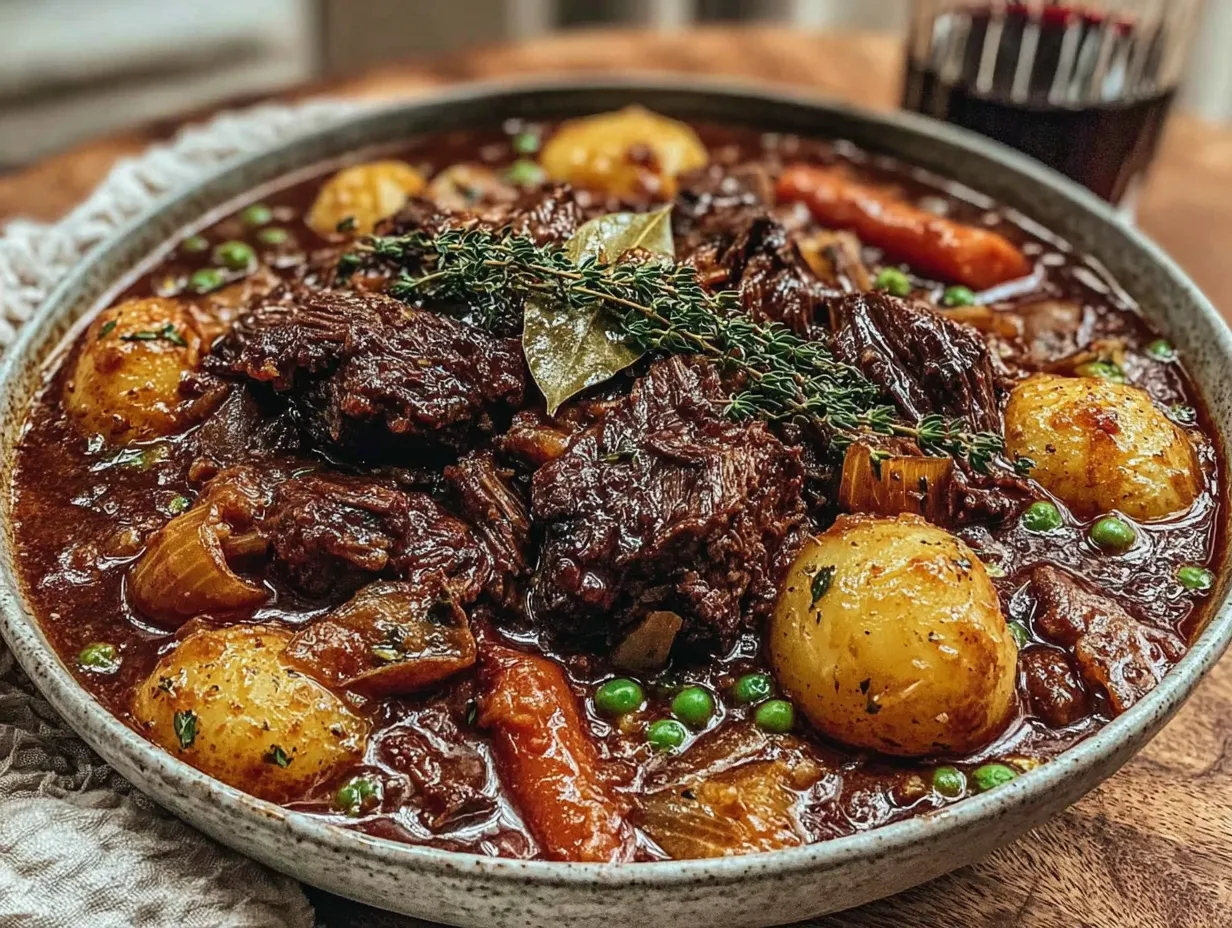
Alright, let’s get cooking. I’ve broken this down into clear steps with all the little details that make a difference. Trust the process, and don’t rush the searing step, it’s where all the magic happens.
- Prep the beef (5 minutes): Pat the beef cubes dry with paper towels. This is crucial, wet meat won’t brown properly. Season generously with salt and pepper on all sides. Let it sit at room temperature while you heat the pan, about 10 minutes.
- Sear the beef (15 minutes): Heat 1 tablespoon of olive oil in your large skillet over medium-high heat until it shimmers. Working in batches so you don’t crowd the pan, add the beef cubes in a single layer. Let them sear without moving for 3-4 minutes until a deep brown crust forms. Flip and sear the other sides, about 2 minutes per side. Transfer the seared beef to your slow cooker. Don’t skip this step, I promise it’s worth the extra time.
- Cook the aromatics (5 minutes): Reduce the heat to medium and add the remaining 1 tablespoon of olive oil to the same skillet. Add the diced onion and cook, stirring occasionally, until it starts to soften, about 3 minutes. Add the minced garlic and cook for another 30 seconds until fragrant. Scrape up any browned bits from the bottom of the pan, that’s pure flavor.
- Add the tomato paste and wine (3 minutes): Stir in the tomato paste and cook for 1 minute, it will darken and become more fragrant. Pour in the red wine and bring to a simmer, scraping up every last bit of goodness from the pan. Let it simmer for 2 minutes to cook off the alcohol and reduce slightly. Pour this mixture over the beef in the slow cooker.
- Add the broth and seasonings (2 minutes): Pour the beef broth into the slow cooker. Add the minced anchovy fillets if using, bay leaves, rosemary sprigs, and thyme sprigs. Give everything a gentle stir to combine.
- Cook low and slow (6-8 hours on low, 4-5 hours on high): Cover and cook on low for 6 hours. At this point, the beef should be fork-tender but still holding its shape. If it’s not quite there, let it go another 30 minutes to an hour. I always use the low setting, it’s more forgiving and the meat stays more tender.
- Add the vegetables (2 hours remaining): After the beef has cooked for 6 hours, add the carrots, celery, and potatoes. Stir them in gently, making sure they’re submerged in the liquid. Cover and continue cooking for another 1.5 to 2 hours on low, until the vegetables are tender but not falling apart. The potatoes should offer a little resistance when pierced with a fork.
- Finish with peas and adjust seasoning (5 minutes): Remove the bay leaves and herb stems. Stir in the frozen peas and let them warm through for about 5 minutes. Taste the broth and adjust salt and pepper as needed. If you want a thicker stew, stir in the cornstarch slurry and let it cook for another 5 minutes until the broth thickens.
- Rest before serving (10 minutes): Let the stew sit for about 10 minutes before serving. This allows the flavors to settle and the broth to thicken slightly. I know it’s hard to wait, but it makes a difference.
Cooking Tips & Techniques
After making this stew more times than I can count, I’ve learned a few things the hard way. Here are my best tips to help you avoid the same mistakes I made.
Don’t skip the sear. I know it’s tempting to just dump everything in the slow cooker and walk away. I’ve done it. And every single time, I regretted it. That brown crust on the beef is pure flavor, and it creates those browned bits in the pan that make the broth so rich. Take the extra 15 minutes, you won’t regret it.
Watch your salt levels. Beef broth, even low-sodium, already contains salt. Add the anchovies and they bring more salt. I learned this the hard way when I made a batch that was basically undrinkable. Season lightly at the beginning, then adjust at the end. You can always add more salt, but you can’t take it out.
Add vegetables at the right time. If you add all the vegetables at the beginning, they’ll turn into mush by the time the beef is tender. The potatoes will dissolve, the carrots will disappear, and you’ll be left with a murky, textureless stew. Adding them later keeps them intact and gives the stew a better overall texture.
Use the right cut of beef. I once tried to save money by using stew meat from the grocery store, the pre-cut stuff in the plastic tray. It was tough and dry. Chuck roast is worth the extra dollar or two. The marbling keeps it moist and tender during the long cook.
Let it rest overnight. If you can, make this stew a day ahead. The flavors meld together overnight in the fridge, and the broth becomes even richer and more complex. I actually prefer the leftovers to the fresh batch. It’s one of those rare recipes that gets better with time.
Variations & Adaptations
One of the best things about this stew is how adaptable it is. Here are some variations I’ve tried and loved.
Gluten-Free Version: This recipe is naturally gluten-free as written, just make sure your beef broth is certified gluten-free. Skip the cornstarch slurry or use arrowroot powder instead. The stew will be slightly thinner, but still delicious.
Low-Carb/Keto Adaptation: Swap the potatoes for cauliflower florets or turnips. Add them in the last 30 minutes of cooking so they don’t get mushy. You can also add more celery and carrots, just keep an eye on the carb count. I’ve made this for my keto friends and they didn’t even miss the potatoes.
Winter Root Vegetable Variation: In the depths of winter, I sometimes swap half the potatoes for parsnips and rutabagas. They add a slightly sweet, earthy flavor that’s perfect for cold weather. Just cut them into similar-sized chunks and add them with the other vegetables.
Herb Variations: Not a fan of rosemary? Try substituting with 1 teaspoon of dried marjoram or oregano. I’ve also made this with a bouquet garni of parsley stems, thyme, and a bay leaf, which gives a more subtle herbal flavor.
Beer-Based Version: Replace the red wine with a dark beer like a stout or porter. The beer adds a malty, slightly bitter note that’s wonderful with the beef. I tried this on a whim one St. Patrick’s Day and it’s become a favorite variation.
Serving & Storage Suggestions
This stew is a meal in itself, but the right accompaniments can make it even better. Here’s how I like to serve and store it.
Serving: Ladle the stew into deep bowls and garnish with a sprinkle of fresh parsley or chives if you have them. A crusty loaf of sourdough bread is essential for soaking up every last drop of that rich broth. I also love serving it over egg noodles or creamy mashed potatoes for an extra hearty meal. For a lighter option, a simple side salad with a tangy vinaigrette cuts through the richness beautifully.
Storage: Let the stew cool completely before storing. Transfer it to an airtight container and refrigerate for up to 4 days. The flavors actually improve over the first 24 hours, so don’t be afraid to make it ahead. I usually make a double batch on Sunday and eat it for lunches all week.
Freezing: This stew freezes beautifully. Portion it into freezer-safe containers or zip-top bags, leaving a little room for expansion. It will keep for up to 3 months. Thaw overnight in the refrigerator before reheating.
Reheating: Reheat gently on the stovetop over medium-low heat, stirring occasionally. Add a splash of beef broth or water if the stew has thickened too much. You can also reheat individual portions in the microwave, just cover the bowl and heat in 1-minute intervals, stirring between each. The stew will be just as delicious as the day you made it.
Nutritional Information & Benefits
Here’s the estimated nutritional breakdown for one serving of this stew (based on 6 servings):
- Calories: Approximately 450-500
- Protein: 35-40 grams
- Fat: 18-22 grams
- Carbohydrates: 30-35 grams
- Fiber: 5-7 grams
- Sugar: 8-10 grams
- Sodium: 600-800 mg (varies based on broth and added salt)
This stew is packed with nutritional benefits. The beef provides high-quality protein and essential nutrients like iron and B vitamins. Carrots are rich in beta-carotene, which supports eye health and immune function. Potatoes offer potassium and vitamin C, especially if you leave the skins on. The bone broth (if you use a quality brand) adds collagen and minerals that support joint health and digestion.
For those watching their sodium, use low-sodium broth and go easy on the added salt. The anchovies add some sodium, but they’re optional. This stew is naturally gluten-free and can be adapted for dairy-free diets easily.
Conclusion
This slow cooker beef stew has become my go-to for chilly fall nights, and I think it’ll become yours too. It’s the kind of recipe that fills your home with warmth and your belly with comfort, all with minimal effort on your part. The rich, savory broth, the tender chunks of beef, the perfectly cooked vegetables, it’s everything a good stew should be.
I love that this recipe is forgiving enough for beginners but impressive enough for company. You can tweak it based on what’s in your fridge, make it ahead for busy weeks, or freeze it for those days when you just need a hug in a bowl. It’s more than just a recipe, it’s a little piece of coziness you can create anytime you need it.
So grab your slow cooker, pick up some chuck roast, and give this a try. I’d love to hear how it turns out for you. Did you make any substitutions? Serve it with something unexpected? Let me know in the comments below, and don’t forget to share this recipe with someone who needs a little comfort this season. Happy cooking!
Frequently Asked Questions
Can I make this stew in an Instant Pot?
Absolutely! Use the sauté function to sear the beef and cook the aromatics right in the pot. Then add the broth and cook on high pressure for 35 minutes with a natural release. Add the vegetables and cook for another 5 minutes under pressure. The flavor won’t be quite as deep as the slow cooker version, but it’s still delicious and much faster.
Why is my stew broth thin and watery?
This usually happens if you add too much liquid or if the potatoes aren’t given enough time to break down and release their starch. Next time, try using less broth, about 3 cups instead of 4, and make sure you’re cooking on low for the full time. The potatoes will naturally thicken the broth as they cook.
Can I use frozen beef instead of fresh?
You can, but I don’t recommend it. Frozen beef releases a lot of water as it thaws, which makes it harder to get a good sear. If you’re in a pinch, thaw the beef completely in the refrigerator first, then pat it very dry with paper towels before searing.
How do I prevent the beef from being tough?
Tough beef is usually a sign that it hasn’t cooked long enough. Chuck roast needs time for the connective tissue to break down, at least 6 hours on low. If your beef is still tough after that, let it cook for another hour and check again. Also, make sure you’re cutting the beef against the grain, this makes a big difference in tenderness.
Can I add other vegetables like mushrooms or bell peppers?
Definitely! Mushrooms are a fantastic addition, add them with the carrots and celery. I wouldn’t recommend bell peppers, they can become bitter during the long cooking time. If you want to add them, stir them in during the last 30 minutes of cooking so they retain some texture.
Pin This Recipe!
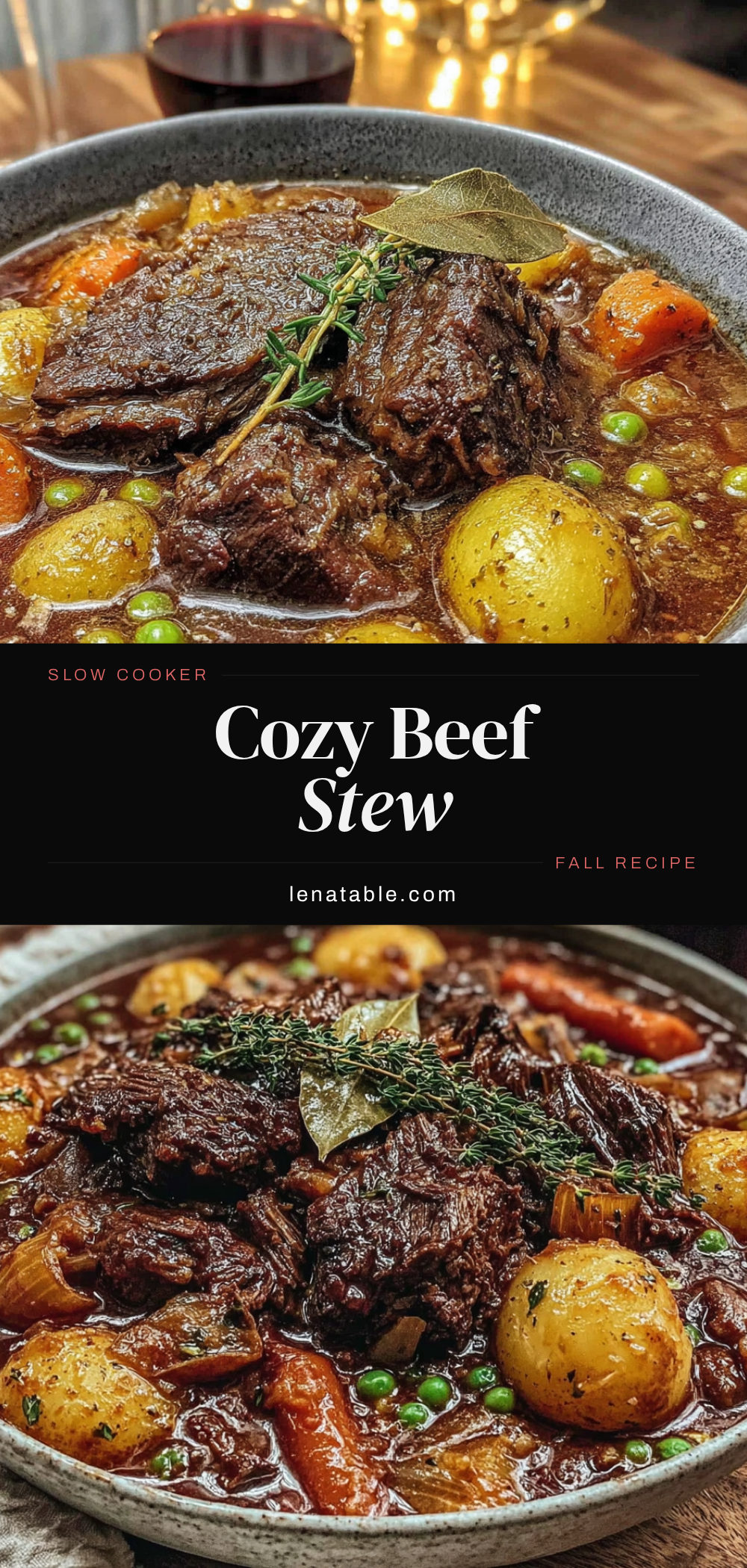
Cozy Slow Cooker Beef Stew for Chilly Fall Nights
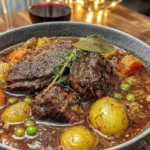
A rich, savory beef stew made in the slow cooker with tender chunks of chuck roast, hearty vegetables, and a deeply flavorful broth. Perfect for chilly fall nights, this set-it-and-forget-it recipe is budget-friendly, crowd-pleasing, and even better the next day.
- Prep Time: 15 minutes
- Cook Time: 6 hours 30 minutes
- Total Time: 6 hours 45 minutes
- Yield: 6 servings 1x
- Category: Main Course
- Cuisine: American
Ingredients
- 2 pounds beef chuck roast, cut into 2-inch cubes
- 2 tablespoons olive oil, divided
- 1 teaspoon salt, plus more to taste
- 1/2 teaspoon black pepper, freshly ground
- 1 large yellow onion, diced
- 4 cloves garlic, minced
- 3 tablespoons tomato paste
- 1 cup dry red wine (like Cabernet Sauvignon or Merlot)
- 4 cups low-sodium beef broth
- 2 anchovy fillets, minced (optional but highly recommended)
- 2 bay leaves
- 2 sprigs fresh rosemary
- 3 sprigs fresh thyme
- 4 large carrots, peeled and cut into 1-inch chunks
- 3 stalks celery, cut into 1-inch pieces
- 1.5 pounds Yukon Gold potatoes, cut into 1.5-inch chunks
- 1 cup frozen peas, thawed
- 2 tablespoons cornstarch mixed with 2 tablespoons cold water (optional, for thickening)
Instructions
- Prep the beef (5 minutes): Pat the beef cubes dry with paper towels. Season generously with salt and pepper on all sides. Let it sit at room temperature while you heat the pan, about 10 minutes.
- Sear the beef (15 minutes): Heat 1 tablespoon of olive oil in your large skillet over medium-high heat until it shimmers. Working in batches so you don’t crowd the pan, add the beef cubes in a single layer. Let them sear without moving for 3-4 minutes until a deep brown crust forms. Flip and sear the other sides, about 2 minutes per side. Transfer the seared beef to your slow cooker.
- Cook the aromatics (5 minutes): Reduce the heat to medium and add the remaining 1 tablespoon of olive oil to the same skillet. Add the diced onion and cook, stirring occasionally, until it starts to soften, about 3 minutes. Add the minced garlic and cook for another 30 seconds until fragrant. Scrape up any browned bits from the bottom of the pan.
- Add the tomato paste and wine (3 minutes): Stir in the tomato paste and cook for 1 minute. Pour in the red wine and bring to a simmer, scraping up every last bit of goodness from the pan. Let it simmer for 2 minutes to cook off the alcohol and reduce slightly. Pour this mixture over the beef in the slow cooker.
- Add the broth and seasonings (2 minutes): Pour the beef broth into the slow cooker. Add the minced anchovy fillets if using, bay leaves, rosemary sprigs, and thyme sprigs. Give everything a gentle stir to combine.
- Cook low and slow (6-8 hours on low, 4-5 hours on high): Cover and cook on low for 6 hours. At this point, the beef should be fork-tender but still holding its shape. If it’s not quite there, let it go another 30 minutes to an hour.
- Add the vegetables (2 hours remaining): After the beef has cooked for 6 hours, add the carrots, celery, and potatoes. Stir them in gently, making sure they’re submerged in the liquid. Cover and continue cooking for another 1.5 to 2 hours on low, until the vegetables are tender but not falling apart.
- Finish with peas and adjust seasoning (5 minutes): Remove the bay leaves and herb stems. Stir in the frozen peas and let them warm through for about 5 minutes. Taste the broth and adjust salt and pepper as needed. If you want a thicker stew, stir in the cornstarch slurry and let it cook for another 5 minutes until the broth thickens.
- Rest before serving (10 minutes): Let the stew sit for about 10 minutes before serving. This allows the flavors to settle and the broth to thicken slightly.
Notes
For best results, sear the beef in batches to avoid crowding the pan. Add vegetables later in the cooking process to prevent them from turning to mush. The stew improves after a day in the fridge, so consider making it ahead. If you don’t have a slow cooker, you can make this in a Dutch oven on the stovetop or in the oven at 325°F for about 2.5 to 3 hours.
Nutrition
- Serving Size: 1 serving (about 1.5
- Calories: 475
- Sugar: 9
- Sodium: 700
- Fat: 20
- Saturated Fat: 7
- Carbohydrates: 33
- Fiber: 6
- Protein: 38
Keywords: slow cooker beef stew, fall stew, comfort food, beef stew, easy dinner, meal prep, gluten-free