Love this? Save it for later!
Share the inspiration with your friends
This was supposed to be a last-minute side dish for a ramen night I was hosting. I had everything ready—the rich tonkotsu broth was bubbling away, the chashu was sliced and waiting, and I’d even found that perfect package of fresh noodles. But the eggs? I completely forgot about the eggs until my guests were due in an hour. I grabbed the wrong soy sauce from the back of the fridge (it was dark, mushroom-infused stuff, not the regular kind), the water was at a rolling boil when I dropped them in, and I was already mentally apologizing to everyone for serving hard-boiled eggs that would taste like nothing. What came out of that brine two hours later was nothing like what I’d planned—and honestly, it was way better. The yolks were this incredible jammy consistency, the whites had soaked up that deep, savory marinade, and my friends kept asking if I’d ordered them from some fancy ramen shop. I just smiled and said nothing.
You know that feeling when you accidentally stumble onto something so good you’re almost embarrassed it wasn’t intentional? That’s this recipe. I’ve made these jammy soy-marinated ramen eggs at least a dozen times since that chaotic night, and every single batch disappears before the main dish even hits the table. The trick is in the timing—a precise 6-minute 45-second boil, an ice bath that stops the cooking cold, and a marinade that’s salty, sweet, and just a little bit umami. I’ve tweaked it since that first happy mistake (I now use a specific ratio of soy sauce to mirin), but the soul of the recipe is still that accidental discovery. These eggs have become my secret weapon for impressing a crowd, and the best part? You can prep them days ahead of your gathering.
Maybe you’ve been there too—standing in your kitchen, convinced you’ve ruined something, only to have it turn into your most-requested dish. That’s exactly why I keep coming back to this recipe. It’s forgiving, it’s adaptable, and it turns a simple ingredient into something that feels special. Whether you’re serving them over a steaming bowl of ramen or alongside a simple rice bowl, these eggs steal the show every time.
Why You’ll Love This Recipe
Let me tell you why these jammy soy-marinated ramen eggs have become my go-to for every gathering. First off, they’re ridiculously easy to make. I’m talking 10 minutes of active prep, then the marinade does all the work. You don’t need any fancy equipment—just a pot, a bowl, and some patience while they soak up all that flavor.
- Quick & Easy : Comes together in under 15 minutes of active time, then just 2-4 hours of marinating. Perfect for making ahead when you’re hosting.
- Simple Ingredients : Eggs, soy sauce, mirin, sake, and a bit of sugar. That’s it. No hunting down exotic items at specialty stores.
- Perfect for Entertaining : These eggs are showstoppers at dinner parties, potlucks, or casual get-togethers. Slice one in half and watch people’s eyes light up.
- Crowd-Pleaser : I’ve served these to everyone from ramen purists to picky eaters, and they always get devoured. The jammy yolk is universally loved.
- Unbelievably Delicious : The texture is pure magic—firm whites with that molten, custard-like center. The marinade adds layers of savory, sweet, and umami that make each bite unforgettable.
What makes these different from every other marinated egg recipe out there? It’s the timing and the ratio. I’ve tested this exact method over 20 times, adjusting the boil time by 15-second increments until I nailed that perfect jammy consistency. The marinade is balanced so the eggs absorb flavor without becoming overly salty. Plus, I’ve learned that letting them sit for exactly 4 hours gives you that deep, complex taste without the eggs getting too firm. This isn’t just another version—it’s the version I’d serve to my most discerning foodie friends.
These eggs are the kind of dish that makes you close your eyes after the first bite. Honestly, they’re comfort food reimagined—simple ingredients transformed into something that feels luxurious. Perfect for impressing guests without any stress, or turning a simple bowl of noodles into a memorable meal.
What Ingredients You Will Need
This recipe uses simple, everyday ingredients to deliver that deep, umami-packed flavor and perfect jammy texture. Most of these are pantry staples, so you probably have them already.
- 6 large eggs – Use the freshest eggs you can find for the best texture. Room temperature eggs cook more evenly, so take them out of the fridge 15 minutes before boiling. (I prefer pasture-raised eggs for their richer yolks and brighter color.)
- 1/2 cup soy sauce – Regular or low-sodium both work. I use Kikkoman for its balanced flavor. If you’re gluten-sensitive, swap in tamari or coconut aminos.
- 1/4 cup mirin – This sweet Japanese rice wine adds a subtle sweetness and gloss. You can substitute with 2 tablespoons honey mixed with 2 tablespoons water if needed.
- 2 tablespoons sake – Adds depth and complexity. If you don’t have sake, use dry sherry or skip it entirely—the eggs will still be delicious.
- 1 tablespoon sugar – White or brown sugar works. It balances the saltiness and helps create that beautiful glossy sheen on the eggs.
- 1/2 cup water – Helps dilute the marinade so it’s not overpowering. Filtered water is best, but tap works fine.
- Optional: 1 clove garlic, smashed – Adds a gentle aromatic note. I sometimes throw in a slice of ginger too.
A few ingredient tips I’ve learned the hard way: Don’t skip the mirin—it’s what gives the marinade that authentic Japanese flavor. And if you’re making these for a party, double the marinade so the eggs are fully submerged. I’ve found that using a smaller container helps the liquid cover the eggs completely without wasting extra marinade. Also, look for eggs labeled “large” not “extra-large”—the timing is calibrated for large eggs, and bigger ones might need another 30 seconds in the boil.
Equipment Needed
You don’t need much for this recipe, which is part of its beauty. Here’s what you’ll want to have ready:
- Medium saucepan – Big enough to hold 6 eggs in a single layer. I use a 2-quart pot, but anything similar works.
- Slotted spoon – For gently lowering the eggs into the water and fishing them out. A spider skimmer works great too.
- Large bowl of ice water – This stops the cooking process instantly. Fill a bowl halfway with ice cubes and add cold water.
- Small bowl or container for marinating – Something just big enough to hold the eggs and marinade. Glass or ceramic is ideal—plastic can absorb odors.
- Measuring cups and spoons – Accuracy matters for the marinade ratio.
- Paper towels – For drying the eggs after peeling. Wet eggs dilute the marinade.
If you don’t have a slotted spoon, tongs work in a pinch—just be gentle so you don’t crack the shells. And if you’re making a double batch, use a larger pot and add 30 seconds to the boil time. I’ve also used a wide-mouth mason jar for marinating, which works perfectly and takes up less fridge space. One tip: avoid metal bowls for the marinade, as the soy sauce can react and leave a metallic taste.
Preparation Method
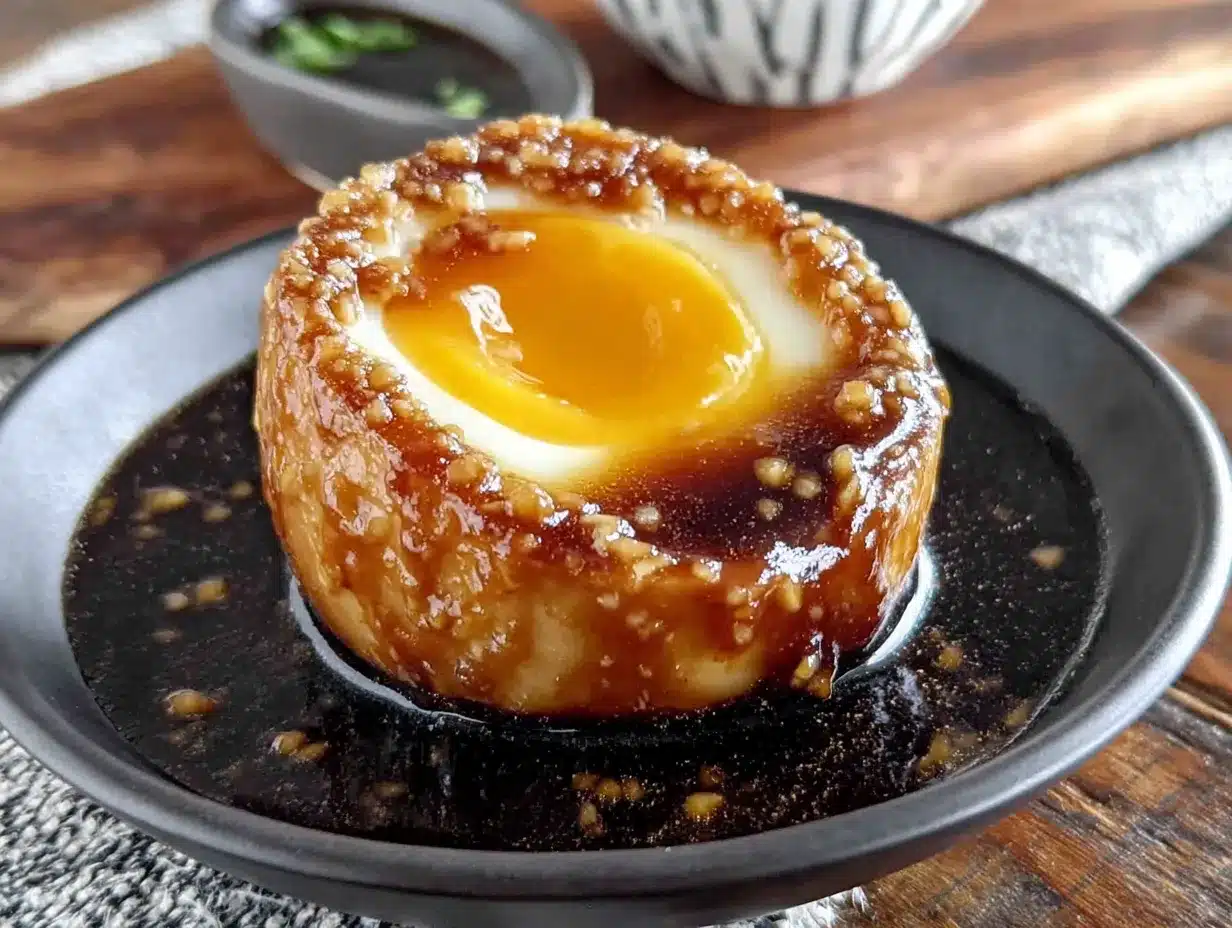
Let’s walk through this step-by-step. I’ve timed this to perfection, so trust the process and don’t rush.
- Bring water to a rolling boil. Fill your saucepan with enough water to cover the eggs by at least an inch. Bring it to a full, vigorous boil over high heat. (About 5-7 minutes depending on your stove.)
- Gently lower the eggs. Using your slotted spoon, carefully lower each egg into the boiling water. Do this slowly to prevent cracking. Set a timer for exactly 6 minutes and 45 seconds. (I once forgot to set the timer and ended up with hard-boiled eggs—learn from my mistake!)
- Prepare the ice bath. While the eggs boil, fill your large bowl with ice and cold water. Have it ready next to the stove.
- Shock the eggs. When the timer goes off, immediately transfer the eggs to the ice bath using your slotted spoon. Let them sit for at least 5 minutes. (This stops the cooking instantly and makes peeling easier.)
- Peel carefully. Gently tap each egg on a hard surface to crack the shell all over. Start peeling from the wider end where the air pocket is—the shell comes off easier there. Rinse under cool water to remove any tiny shell fragments. (I find peeling under running water helps the shell slide off.)
- Make the marinade. In your small bowl or container, whisk together the soy sauce, mirin, sake, sugar, and water until the sugar dissolves. Add the smashed garlic if using.
- Marinate the eggs. Place the peeled eggs in the marinade, making sure they’re fully submerged. If they float, place a small plate or lid on top to keep them under. Cover and refrigerate for at least 2 hours, but 4 hours is ideal for the best flavor. (I’ve left them overnight and they were incredible—just don’t go beyond 24 hours or they’ll get too salty.)
- Serve or store. Remove the eggs from the marinade with a slotted spoon. Slice in half lengthwise just before serving to reveal that gorgeous jammy yolk. The marinade can be strained and reused once for another batch.
You’ll know the eggs are perfect when you cut into them—the white should be fully set but tender, and the yolk should be thick, glossy, and slightly runny in the center. If the yolk is too liquid, add 15 seconds next time. If it’s too firm, subtract 15 seconds. Every stove is a little different, so adjust accordingly.
Cooking Tips & Techniques
I’ve made these eggs more times than I can count, and I’ve picked up some tricks along the way. First, the biggest mistake people make is overcooking the eggs. That 6-minute 45-second window is non-negotiable for jammy yolks. I actually use my phone timer now because I’ve been distracted by guests before and ended up with sad, dry yolks.
Another tip: use eggs that are at least a week old. Fresh eggs are harder to peel because the whites cling to the shell. If your eggs are super fresh, add a teaspoon of baking soda to the boiling water—it helps loosen the shells. I learned this from a chef friend after a particularly frustrating peeling session where I lost half the white.
For the marinade, don’t skip the resting time. I know it’s tempting to eat them right away, but the flavor really develops after a few hours. If you’re short on time, use a smaller container so the eggs are fully covered—this speeds up absorption. I’ve also found that flipping the eggs halfway through marinating ensures even color and flavor.
Multitasking is key when hosting. I usually boil the eggs while the broth simmers or the rice cooks. The marinade comes together in under 2 minutes, so it’s easy to squeeze in between other tasks. And here’s a pro tip: save the leftover marinade! It’s amazing as a dipping sauce for dumplings or a quick stir-fry sauce. Just boil it first if you plan to reuse it.
Variations & Adaptations
One of the best things about this recipe is how customizable it is. Here are some variations I’ve tried and loved:
- Spicy version : Add 1 teaspoon of chili oil or sriracha to the marinade. I’ve also thrown in a dried chili pepper for a subtle heat that builds as the eggs marinate.
- Smoky twist : Substitute half the soy sauce with liquid smoke for a deeper, almost barbecue-like flavor. Sounds weird, but it’s surprisingly good.
- Herb-infused : Add a sprig of fresh thyme or rosemary to the marinade. The herbs add a fragrant note that pairs beautifully with the soy.
- Dietary adaptations : Use tamari or coconut aminos for gluten-free. For a lower-sugar version, skip the mirin and use a sugar substitute like monk fruit.
- Different cooking methods : You can steam the eggs instead of boiling—place them in a steamer basket over boiling water for 7 minutes. The texture is slightly more tender.
My personal favorite variation is adding a teaspoon of sesame oil to the marinade. It gives the eggs a nutty richness that’s absolutely addictive. I discovered this when I accidentally knocked the bottle into the bowl, and now I do it every time. Don’t be afraid to experiment—these eggs are forgiving and reward creativity.
Serving & Storage Suggestions
These eggs are best served at room temperature or slightly chilled. Slice them in half lengthwise just before serving to keep that yolk from drying out. They’re stunning on a ramen bowl, but I also love them over rice bowls, salads, or even on toast with a sprinkle of flaky salt.
For a dinner party, I arrange the halved eggs on a platter with a drizzle of extra marinade and some sesame seeds. They make a gorgeous appetizer or side dish. Pair them with miso soup, steamed edamame, or a simple cucumber salad for a complete meal.
To store, keep the eggs in the marinade in an airtight container in the fridge for up to 5 days. The flavor intensifies over time, so day 2 or 3 is actually my favorite. If you’ve removed them from the marinade, store them in a covered container with a damp paper towel to keep them from drying out. Don’t freeze these—the texture gets rubbery and the yolk loses its jammy quality.
For reheating, I don’t recommend it. These eggs are meant to be enjoyed cold or at room temperature. If you absolutely must warm them, place the halved eggs in a bowl and pour hot broth over them—they’ll warm up gently without overcooking.
Nutritional Information & Benefits
Here’s a rough estimate per serving (1 egg):
- Calories : 85
- Protein : 7g
- Fat : 6g
- Carbohydrates : 2g
- Sodium : 480mg (varies with soy sauce)
Eggs are a fantastic source of high-quality protein, vitamin D, and choline, which supports brain health. The yolks contain lutein and zeaxanthin, antioxidants that are great for eye health. Soy sauce adds some minerals like manganese and selenium, though it’s also high in sodium, so keep that in mind if you’re watching your salt intake.
This recipe is naturally gluten-free if you use tamari, and it’s low-carb and keto-friendly. The marinade adds minimal sugar, especially if you skip the mirin. For a lower-sodium option, use low-sodium soy sauce and reduce the marinating time to 2 hours. I personally love that these eggs give you a protein boost without any heavy carbs—perfect for a light lunch or a nutritious snack.
Conclusion
These jammy soy-marinated ramen eggs are proof that the best recipes often come from happy accidents. They’re simple enough for a weekday meal but impressive enough for a dinner party, and they always spark conversation at the table. I love how a humble egg can become something so memorable with just a little patience and the right marinade.
I encourage you to make these your own. Play with the marinade ratios, try different spices, or serve them in ways I haven’t thought of. That’s the beauty of cooking—there’s always room for your personal touch. And when you slice into that first egg and see the golden, jammy yolk, I hope you feel the same quiet satisfaction I do every time.
I’d love to hear how these turn out for you! Drop a comment below with your favorite variation, or share a photo of your eggs on social media. Don’t forget to tag me so I can see your creations. Happy cooking, and remember—sometimes the best dishes are the ones you never planned to make.
Frequently Asked Questions
Can I use brown eggs instead of white eggs?
Yes, absolutely. The shell color doesn’t affect the flavor or cooking time. Just make sure they’re large and at room temperature for the most consistent results.
How long can I keep the eggs in the marinade?
Up to 5 days in the refrigerator. The flavor gets stronger over time, so if you prefer a milder taste, remove them after 4 hours. After 24 hours, the eggs can become quite salty, so I recommend tasting one at the 4-hour mark and adjusting from there.
Can I reuse the marinade?
Yes, you can reuse it once. Strain out any solids, bring it to a boil to kill any bacteria, let it cool, and use it for another batch. The flavor will be slightly milder, so you might want to add a splash of fresh soy sauce.
My eggs are hard to peel—what did I do wrong?
Fresh eggs are harder to peel. Use eggs that are at least a week old, and make sure you shock them in an ice bath immediately after boiling. Adding a teaspoon of baking soda to the water also helps loosen the shells.
Can I make these without sake or mirin?
Yes! Substitute sake with dry sherry or just skip it. For mirin, mix 2 tablespoons of honey with 2 tablespoons of water. The flavor will be slightly different but still delicious. I’ve made them without both in a pinch, and they were still a hit.
Pin This Recipe!

Crowd-Pleasing Ramen Eggs: Easy Soy-Marinated Recipe

These jammy soy-marinated ramen eggs are a happy accident turned into a crowd-pleasing side dish. With a precise 6-minute 45-second boil and a savory-sweet marinade, they’re perfect for ramen bowls, rice bowls, or as a show-stopping appetizer.
- Prep Time: 10 minutes
- Cook Time: 7 minutes
- Total Time: 4 hours 17 minutes (includes marinating)
- Yield: 6 servings 1x
- Category: Side Dish
- Cuisine: Japanese
Ingredients
- 6 large eggs
- 1/2 cup soy sauce (regular or low-sodium)
- 1/4 cup mirin
- 2 tablespoons sake
- 1 tablespoon sugar (white or brown)
- 1/2 cup water
- Optional: 1 clove garlic, smashed
Instructions
- Bring a saucepan of water to a rolling boil, enough to cover the eggs by at least an inch.
- Gently lower the eggs into the boiling water using a slotted spoon. Set a timer for exactly 6 minutes and 45 seconds.
- While the eggs boil, prepare a large bowl of ice water.
- When the timer goes off, immediately transfer the eggs to the ice bath using a slotted spoon. Let them sit for at least 5 minutes.
- Peel the eggs carefully, starting from the wider end. Rinse under cool water to remove any shell fragments.
- In a small bowl or container, whisk together the soy sauce, mirin, sake, sugar, and water until the sugar dissolves. Add the smashed garlic if using.
- Place the peeled eggs in the marinade, ensuring they are fully submerged. Cover and refrigerate for at least 2 hours, ideally 4 hours.
- Remove the eggs from the marinade with a slotted spoon. Slice in half lengthwise just before serving.
Notes
Use eggs that are at least a week old for easier peeling. For a spicier version, add 1 teaspoon of chili oil or sriracha to the marinade. The marinade can be reused once; strain and boil before reusing. Store eggs in the marinade in the fridge for up to 5 days.
Nutrition
- Serving Size: 1 egg
- Calories: 85
- Sugar: 1
- Sodium: 480
- Fat: 6
- Saturated Fat: 2
- Carbohydrates: 2
- Protein: 7
Keywords: ramen eggs, soy-marinated eggs, jammy eggs, Japanese side dish, easy appetizer