Love this? Save it for later!
Share the inspiration with your friends
Introduction
I wasn’t expecting baking advice from my accountant, but there I was, knee-deep in tax paperwork, listening to Mr. Henderson describe exactly how to make Pan de Muerto. The man who usually talks about deductions and quarterly estimates had suddenly transformed into a passionate baker, his hands moving through the air as he shaped invisible dough. “You have to let it rise twice,” he said, looking more animated than I’d ever seen him. “My grandmother taught me when I was just a kid in Mexico City.”
Honestly, I almost laughed. Here was this quiet, buttoned-up man who always wore the same gray sweater, and he was telling me about the most soulful bread I’d ever heard described. He wrote the recipe on the back of an old envelope—his handwriting surprisingly elegant—and told me to make it on a chilly evening when I needed something warm. Let me tell you, that envelope is now taped inside my favorite cookbook, stained with butter and orange zest. Maybe you’ve been there—finding a recipe in the most unexpected place and knowing instantly it would become part of your story.
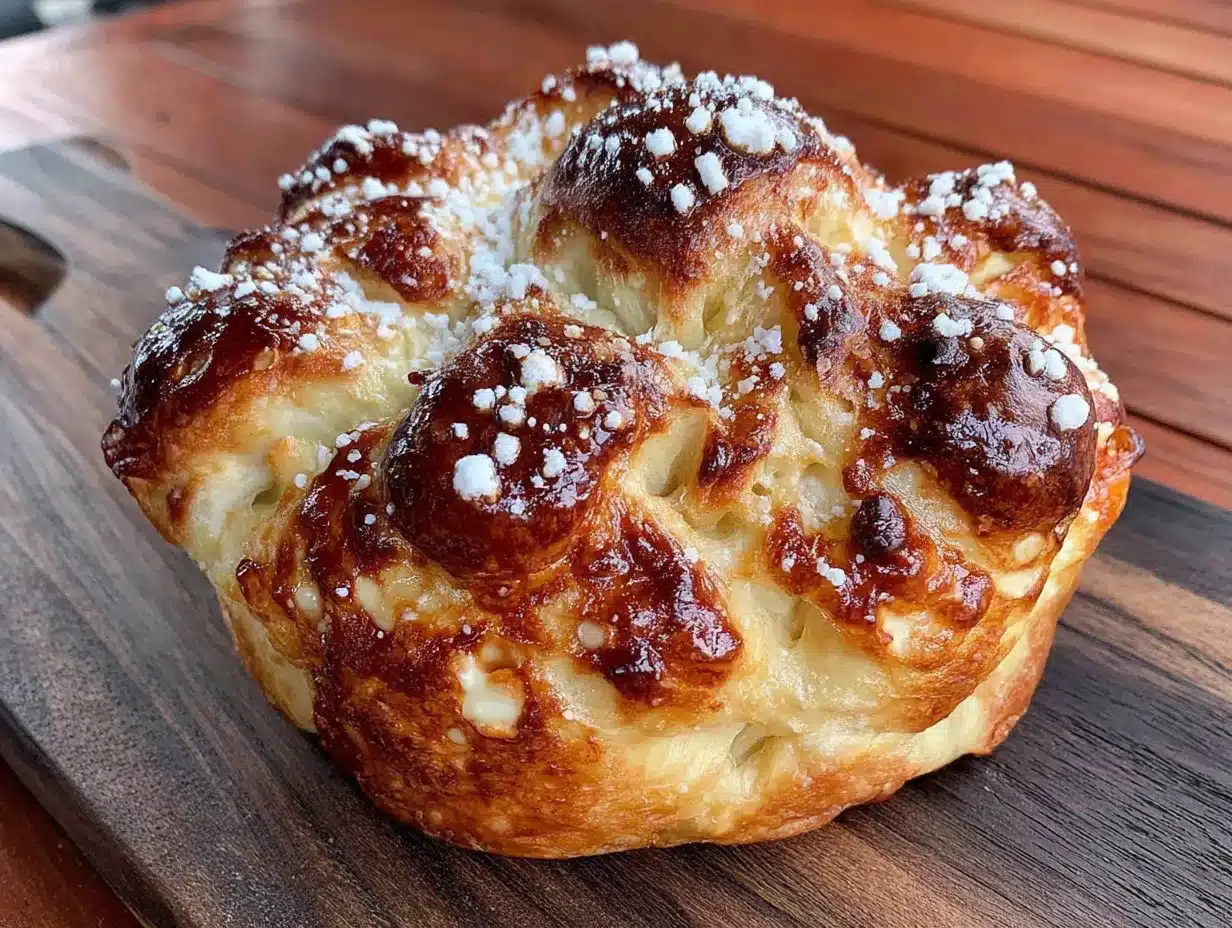
The first time I baked it, my kitchen smelled like orange blossoms and warm butter. The bread came out golden, slightly sweet, and so soft it practically melted. I ate a piece while it was still warm, and something clicked. This wasn’t just bread. It was comfort wrapped in a circle, topped with little bone-shaped decorations that somehow felt more cozy than spooky. Three winters later, I still make this Pan de Muerto every November, and it always brings that same feeling of warmth and connection.
Why You’ll Love This Recipe
This isn’t just another bread recipe. After testing this version at least a dozen times, tweaking the hydration and proving times, I can honestly say this is the Pan de Muerto that delivers every single time. It’s the kind of bread that makes you close your eyes after the first bite.
- Simple Ingredients : You probably already have flour, butter, eggs, and yeast in your kitchen. No fancy grocery trips needed for this one.
- Perfect for Día de Muertos : Whether you’re setting up an ofrenda or just want to honor the tradition, this bread is the heart of the celebration.
- Crowd-Pleaser : Kids love the slightly sweet orange flavor, and adults appreciate the soft, brioche-like texture. It always gets rave reviews.
- Unbelievably Cozy : The combination of orange zest, warm butter, and a light dusting of sugar creates comfort food at its finest.
What makes this recipe different from the rest? It’s the technique I picked up from Mr. Henderson’s grandmother—letting the dough rest overnight in the fridge. This slow fermentation develops a deeper flavor and gives the bread that perfect, tender crumb. It’s comfort food reimagined—easier than traditional brioche, but with the same soul-soothing satisfaction. Perfect for impressing guests without stress, or turning a simple evening into something memorable.
What Ingredients You Will Need
This recipe uses simple, wholesome ingredients to deliver bold flavor and satisfying texture without the fuss. Most of these are pantry staples, which makes this bread easy to whip up whenever the craving hits.
- All-purpose flour, 4 cups (500g) – I recommend King Arthur Flour for consistent results, but any brand works fine
- Active dry yeast, 2 ¼ teaspoons (1 packet) – Make sure it’s fresh; check the expiration date before starting
- Warm milk, ½ cup (120ml), heated to about 110°F – Not too hot, or you’ll kill the yeast
- Granulated sugar, ½ cup (100g) – Adds sweetness and helps the yeast activate
- Unsalted butter, ½ cup (113g), softened – Adds richness; use European-style butter for extra flavor
- Large eggs, 3, room temperature – Cold eggs can slow down the dough
- Orange zest, from 2 large oranges – This is where the magic happens; don’t skip it
- Orange blossom water, 2 tablespoons (optional but recommended) – Adds that floral note that makes Pan de Muerto authentic
- Salt, 1 teaspoon – Balances the sweetness
- Vanilla extract, 1 teaspoon – Adds warmth and depth
For the topping:
- Unsalted butter, ¼ cup (57g), melted
- Granulated sugar, ½ cup (100g), for coating
- Orange zest, from 1 orange, for garnish (optional)
A quick note on substitutions: You can use bread flour for a chewier texture, but all-purpose gives that soft, pillowy crumb that’s perfect for this bread. If you don’t have orange blossom water, just use fresh orange juice—it won’t be exactly the same, but it’ll still be delicious. For a dairy-free version, swap the butter with vegan butter and use oat milk instead of whole milk. I’ve tried both, and honestly, the flavor is still wonderful.
Equipment Needed
You don’t need a professional bakery setup for this recipe. Most of these tools are probably already in your kitchen.
- Stand mixer with dough hook – Makes kneading easier, but you can absolutely knead by hand if you prefer
- Large mixing bowl – Glass or ceramic works best
- Baking sheet – A standard half-sheet pan is perfect
- Parchment paper – Prevents sticking and makes cleanup easy
- Pastry brush – For applying the melted butter topping
- Kitchen scale – I recommend this for accuracy, but measuring cups work too
- Plastic wrap or a clean kitchen towel – For covering the dough while it rises
- Cooling rack – Helps the bread cool evenly
If you don’t have a stand mixer, don’t worry. I actually made this bread by hand the first few times, and it turned out beautifully. It just takes a bit more elbow grease and about 10 extra minutes of kneading. Also, a bench scraper is helpful for dividing the dough, but a sharp knife works just fine.
Preparation Method
Let’s get to the fun part. This recipe takes about 3 hours total, including rising time, but most of that is hands-off. The overnight rest makes the process even easier.
- Activate the yeast. In a small bowl, combine the warm milk, 1 tablespoon of sugar, and the yeast. Let it sit for 5-10 minutes until it becomes frothy. If it doesn’t foam, your yeast might be dead—start over with fresh yeast.
- Mix the dry ingredients. In the bowl of your stand mixer, whisk together the flour, remaining sugar, and salt. Add the orange zest and rub it into the flour with your fingers until it smells fragrant.
- Combine the wet ingredients. In a separate bowl, whisk together the eggs, vanilla extract, and orange blossom water (if using).
- Bring it together. Add the yeast mixture and the egg mixture to the flour. Mix on low speed with the dough hook until a shaggy dough forms. This takes about 2 minutes.
- Add the butter. With the mixer running on medium-low, add the softened butter one tablespoon at a time. Wait until each piece is mostly incorporated before adding the next. This takes patience—about 5 minutes total. The dough will look messy at first, but it will come together.
- Knead the dough. Increase the speed to medium and knead for 8-10 minutes. The dough should be smooth, elastic, and slightly sticky. It should pass the windowpane test—stretch a small piece thin enough to see light through without tearing.
- First rise. Place the dough in a lightly greased bowl, cover with plastic wrap, and let it rise in a warm spot for 1.5 to 2 hours, until doubled in size. I usually put it in my oven with the light on—it stays perfectly warm in there.
- Overnight rest (optional but recommended). Punch down the dough, cover tightly, and refrigerate overnight. This develops flavor and makes the dough easier to shape.
- Shape the dough. Turn the dough onto a lightly floured surface. Divide it into two pieces—one large piece (about two-thirds) for the base, and one smaller piece for the decorations. Shape the large piece into a round loaf and place it on a parchment-lined baking sheet.
- Make the decorations. Divide the smaller piece into 5 equal parts. Roll four pieces into ropes about 6 inches long. Place them on top of the loaf in a cross pattern to represent the bones. Roll the fifth piece into a small ball and place it in the center.
- Second rise. Cover the shaped loaf loosely with plastic wrap and let it rise for 45 minutes to 1 hour, until puffy.
- Bake. Preheat your oven to 350°F (175°C). Bake the bread for 25-30 minutes, until golden brown and hollow-sounding when tapped on the bottom. If the top browns too quickly, tent it with foil halfway through.
- Finish with topping. While the bread is still warm, brush it generously with melted butter. Sprinkle with granulated sugar and additional orange zest. Let it cool on a wire rack for at least 20 minutes before serving.
Cooking Tips & Techniques
I’ve made this bread more times than I can count, and I’ve definitely had my share of failures. Here’s what I’ve learned the hard way so you don’t have to.
Temperature is everything. The first time I made Pan de Muerto, I killed the yeast by using milk that was too hot. It was like watching a sad science experiment. Use a kitchen thermometer if you have one—aim for 110°F. If you don’t have a thermometer, the milk should feel warm but not hot on your wrist, like baby bottle temperature.
Don’t skip the orange zest. This is where the flavor lives. I once tried making it with just orange extract, and honestly, it was flat. The oils in fresh zest give that bright, aromatic quality that makes Pan de Muerto so special. Rub it into the sugar first to release the oils.
Be patient with the butter. Adding butter to yeast dough can be frustrating because it feels like the dough is falling apart. That’s normal. Just keep mixing, and it will come together into a silky, beautiful dough. I almost gave up the first time because it looked so messy, but trust the process.
Watch the second rise. The shaped bread should look puffy but not overly expanded. If it rises too long, the decorations might lose their definition. I usually set a timer for 45 minutes and check it—if it looks pillowy, it’s ready.
Brush while hot. The butter and sugar topping sticks best when the bread is still warm from the oven. If you wait too long, the butter won’t soak in as nicely.
Variations & Adaptations
One of the things I love about this recipe is how adaptable it is. Here are some variations I’ve tried and loved.
Chocolate Pan de Muerto. Replace ¼ cup of flour with unsweetened cocoa powder and add ½ cup of dark chocolate chips to the dough. The chocolate pairs beautifully with the orange flavor. I made this version for a friend who doesn’t love traditional sweet breads, and she ate three pieces.
Vegan version. Use vegan butter, oat milk, and a flax egg (1 tablespoon ground flaxseed mixed with 3 tablespoons water per egg). The texture is slightly denser but still delicious. I tested this for a friend who’s vegan, and honestly, I was surprised at how well it worked.
Spiced variation. Add 1 teaspoon of cinnamon, ½ teaspoon of nutmeg, and ¼ teaspoon of cloves to the flour mixture. This gives the bread a warm, holiday-like flavor that’s perfect for cold evenings.
Gluten-free option. Use a 1:1 gluten-free flour blend that contains xanthan gum. The dough will be stickier, so you might need to add a bit more flour during shaping. I’ve had mixed results with this, so I recommend sticking with all-purpose flour if you can.
Filled version. After the first rise, flatten the dough and spread a layer of dulce de leche or cajeta in the center before shaping. It creates a gooey, sweet surprise in the middle. My kids go crazy for this version.
Serving & Storage Suggestions
Pan de Muerto is best served warm, but it’s wonderful at room temperature too. Here’s how to make the most of it.
Serving temperature. I love serving this bread slightly warm, about 20 minutes after it comes out of the oven. The butter and sugar topping is still glossy, and the bread is soft and tender. It pairs beautifully with a cup of Mexican hot chocolate or café de olla.
Presentation ideas. Arrange the bread on a beautiful platter and dust it with extra orange zest. If you’re celebrating Día de Muertos, place it on your ofrenda alongside marigolds and photos of loved ones. It’s a meaningful way to honor the tradition.
Storage. Store leftover bread in an airtight container at room temperature for up to 3 days. The sugar topping might soften slightly, but the flavor stays wonderful. Do not refrigerate—it will dry out the bread.
Freezing. This bread freezes beautifully. Wrap it tightly in plastic wrap, then in foil, and freeze for up to 3 months. To thaw, leave it at room temperature for a few hours, then warm it in a 300°F oven for 10 minutes.
Reheating. For that just-baked experience, reheat slices in a toaster oven or microwave for 15-20 seconds. The butter and sugar topping will soften again, and the bread will taste almost fresh.
Flavor development. Honestly, this bread tastes even better the next day. The orange flavor deepens, and the crumb becomes even more tender. I sometimes make it a day ahead on purpose.
Nutritional Information & Benefits
While Pan de Muerto is definitely a treat, it does offer some nutritional benefits worth noting.
Estimated per serving (1 slice, 1/12 of loaf):
- Calories: 285
- Carbohydrates: 42g
- Protein: 6g
- Fat: 11g
- Fiber: 1g
- Sugar: 18g
Key ingredient benefits: Oranges provide vitamin C and antioxidants, while eggs offer high-quality protein and B vitamins. The butter adds vitamin A, and the flour provides energy-sustaining carbohydrates.
Dietary considerations: This recipe contains gluten, dairy, and eggs. For allergen-friendly versions, see the variations section above. It’s not low-carb or keto-friendly, but it’s a wonderful occasional indulgence that nourishes the soul as much as the body.
Wellness perspective: I believe food is about more than numbers. This bread is about connection—to tradition, to loved ones, and to the comfort of a warm kitchen. Enjoy it mindfully, share it generously, and don’t worry about the calories.
Conclusion
This Pan de Muerto has become a November tradition in my home, and I hope it becomes one in yours too. It’s more than just bread—it’s a way to slow down, to remember, and to share something beautiful with the people you love. The soft, orange-scented crumb, the buttery sugar topping, the little bone decorations that make you smile—every bite is a reminder that comfort food can also be meaningful.
I’d love to hear how yours turns out. Did you add any twists of your own? Did you serve it with something special? Drop a comment below and let me know—I read every single one, and your stories inspire me more than you know. And if you make this for your ofrenda, share a photo and tag me. There’s nothing quite like seeing this bread in kitchens around the world.
So go ahead, preheat that oven, and give yourself the gift of a cozy baking afternoon. You deserve it, and honestly, so does everyone you’ll share it with.
Frequently Asked Questions
Can I make Pan de Muerto without a stand mixer?
Absolutely! You can knead the dough by hand for about 12-15 minutes until it’s smooth and elastic. It takes a bit more effort, but the result is just as good. I actually prefer hand-kneading sometimes—it’s meditative.
Why didn’t my dough rise?
This usually happens if the yeast is old or the milk was too hot. Check the expiration date on your yeast, and use a thermometer to ensure the milk is around 110°F. If your kitchen is cold, let the dough rise in the oven with just the light on.
Can I freeze the dough instead of baking it?
Yes! After the first rise, punch down the dough, shape it into a ball, wrap it tightly, and freeze for up to 3 months. Thaw in the refrigerator overnight, then let it come to room temperature before shaping and baking.
What’s the best way to shape the bone decorations?
Roll each piece of dough into a rope about 6-8 inches long. Gently press the ends to taper them slightly. Place them on top of the loaf in a cross pattern, then place the small ball in the center. Don’t press them too firmly—they should sit on top.
Can I use orange juice instead of orange blossom water?
Yes, you can substitute fresh orange juice, but the flavor will be different. Orange blossom water adds a floral, aromatic quality that’s traditional in Pan de Muerto. If you can find it at a Latin grocery store or online, it’s worth the effort.
Pin This Recipe!
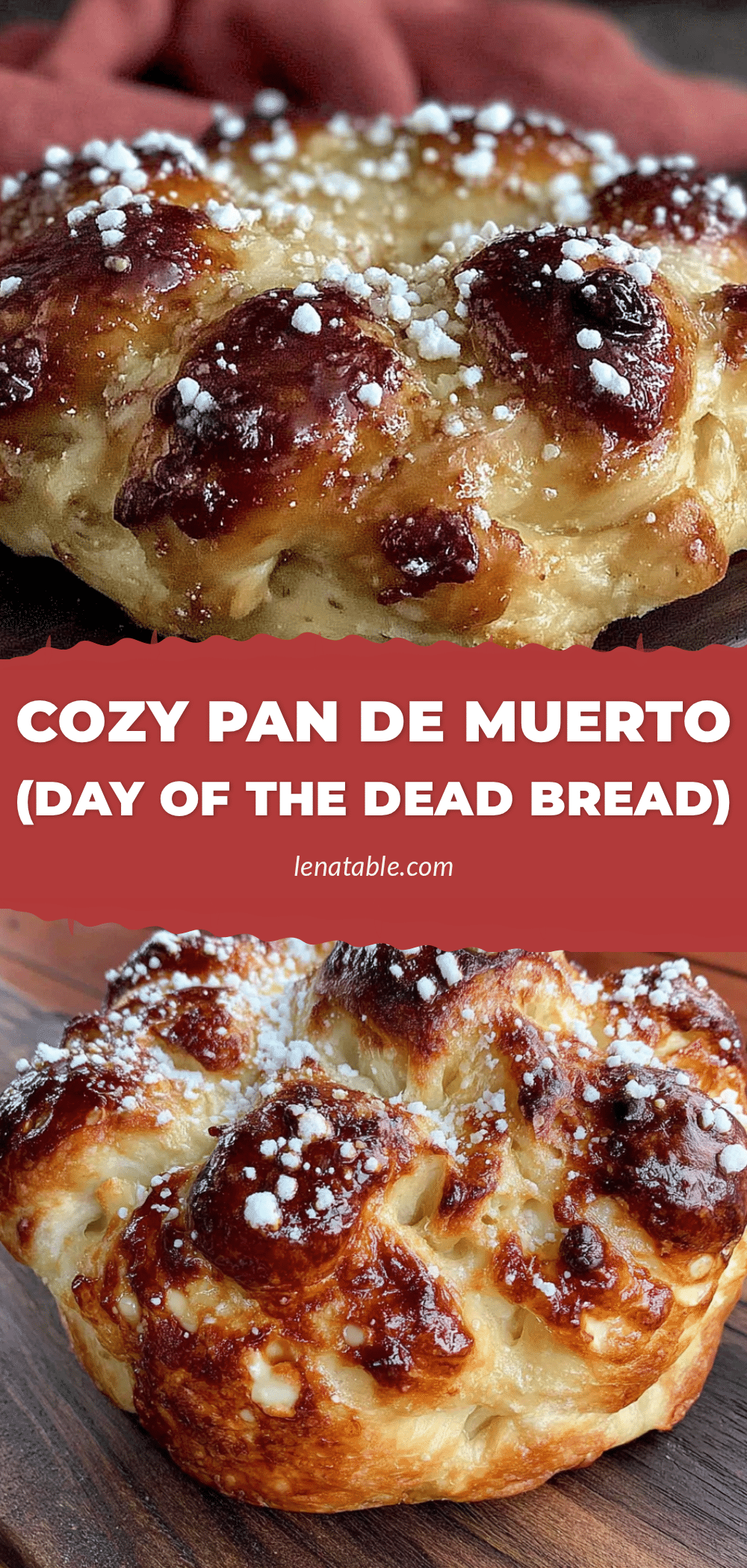
Easy Cozy Pan de Muerto: Best Day of the Dead Bread Recipe

This Pan de Muerto is a soft, slightly sweet bread infused with orange zest and orange blossom water, topped with melted butter and sugar. It’s a comforting, soulful bread perfect for Día de Muertos celebrations or any cozy occasion.
- Prep Time: 30 minutes
- Cook Time: 25-30 minutes
- Total Time: 3 hours (including rising time; overnight rest optional)
- Yield: 12 servings 1x
- Category: Bread
- Cuisine: Mexican
Ingredients
- 4 cups (500g) all-purpose flour
- 2 ¼ teaspoons (1 packet) active dry yeast
- ½ cup (120ml) warm milk (about 110°F)
- ½ cup (100g) granulated sugar
- ½ cup (113g) unsalted butter, softened
- 3 large eggs, room temperature
- Zest of 2 large oranges
- 2 tablespoons orange blossom water (optional but recommended)
- 1 teaspoon salt
- 1 teaspoon vanilla extract
- For the topping:
- ¼ cup (57g) unsalted butter, melted
- ½ cup (100g) granulated sugar, for coating
- Zest of 1 orange, for garnish (optional)
Instructions
- Activate the yeast: In a small bowl, combine warm milk, 1 tablespoon of sugar, and yeast. Let sit for 5-10 minutes until frothy.
- Mix dry ingredients: In the bowl of a stand mixer, whisk together flour, remaining sugar, and salt. Add orange zest and rub into flour with fingers until fragrant.
- Combine wet ingredients: In a separate bowl, whisk together eggs, vanilla extract, and orange blossom water (if using).
- Bring it together: Add yeast mixture and egg mixture to flour. Mix on low speed with dough hook until a shaggy dough forms (about 2 minutes).
- Add butter: With mixer on medium-low, add softened butter one tablespoon at a time, waiting until each piece is mostly incorporated before adding the next (about 5 minutes total).
- Knead dough: Increase speed to medium and knead for 8-10 minutes until dough is smooth, elastic, and slightly sticky. It should pass the windowpane test.
- First rise: Place dough in a lightly greased bowl, cover with plastic wrap, and let rise in a warm spot for 1.5 to 2 hours until doubled in size.
- Overnight rest (optional but recommended): Punch down dough, cover tightly, and refrigerate overnight.
- Shape dough: Turn dough onto a lightly floured surface. Divide into two pieces—one large piece (about two-thirds) for the base, and one smaller piece for decorations. Shape large piece into a round loaf and place on a parchment-lined baking sheet.
- Make decorations: Divide smaller piece into 5 equal parts. Roll four pieces into ropes about 6 inches long. Place on top of loaf in a cross pattern to represent bones. Roll fifth piece into a small ball and place in center.
- Second rise: Cover shaped loaf loosely with plastic wrap and let rise for 45 minutes to 1 hour until puffy.
- Bake: Preheat oven to 350°F (175°C). Bake bread for 25-30 minutes until golden brown and hollow-sounding when tapped on bottom. If top browns too quickly, tent with foil halfway through.
- Finish with topping: While bread is still warm, brush generously with melted butter. Sprinkle with granulated sugar and additional orange zest. Let cool on a wire rack for at least 20 minutes before serving.
Notes
Temperature is key: use a thermometer to ensure milk is around 110°F. Don’t skip the orange zest—it’s where the flavor lives. Be patient when adding butter; the dough will look messy but will come together. Watch the second rise to avoid over-proofing. Brush with butter while bread is still hot for best topping adherence. Bread tastes even better the next day.
Nutrition
- Serving Size: 1 slice (1/12 of loa
- Calories: 285
- Sugar: 18
- Sodium: 200
- Fat: 11
- Saturated Fat: 6
- Carbohydrates: 42
- Fiber: 1
- Protein: 6
Keywords: Pan de Muerto, Day of the Dead bread, Mexican sweet bread, orange bread, brioche, Día de Muertos, traditional bread