Love this? Save it for later!
Share the inspiration with your friends
This was supposed to be a fancy whole roasted fish situation. I had this vision, you know—a beautiful branzino, stuffed with lemon slices and herbs, laid out on a platter like something from a magazine cover. The kind of dinner that makes people say “whoa” when you walk to the table. I bought the fish the day before, got the butcher to clean it and everything. Then Tuesday happened. I woke up late, the power flickered during a storm, and by the time I got to the kitchen at 6 PM, I realized I had zero energy for my grand fish plan. And honestly? That defrosted salmon filet sitting in the fridge was looking at me with a kind of “just use me already” energy.
So I grabbed the sheet pan I’d meant to return to my neighbor Beth, threw the salmon on it, and started tossing things around—some butter, a lemon that was about to go soft, garlic because when is garlic a bad idea, and whatever spring vegetables were wilting in my crisper drawer. I wasn’t even trying to make something good. I was trying to make something edible before my hangry partner started pacing around the kitchen. What came out of the oven was nothing like the plan. It was better. The salmon came out flaky and buttery, the vegetables had these gorgeous caramelized edges, and the whole thing smelled like a restaurant kitchen that actually cares about you. I stood there with my fork, honestly confused about how this thrown-together mess turned into the best weeknight dinner I’d made in months.
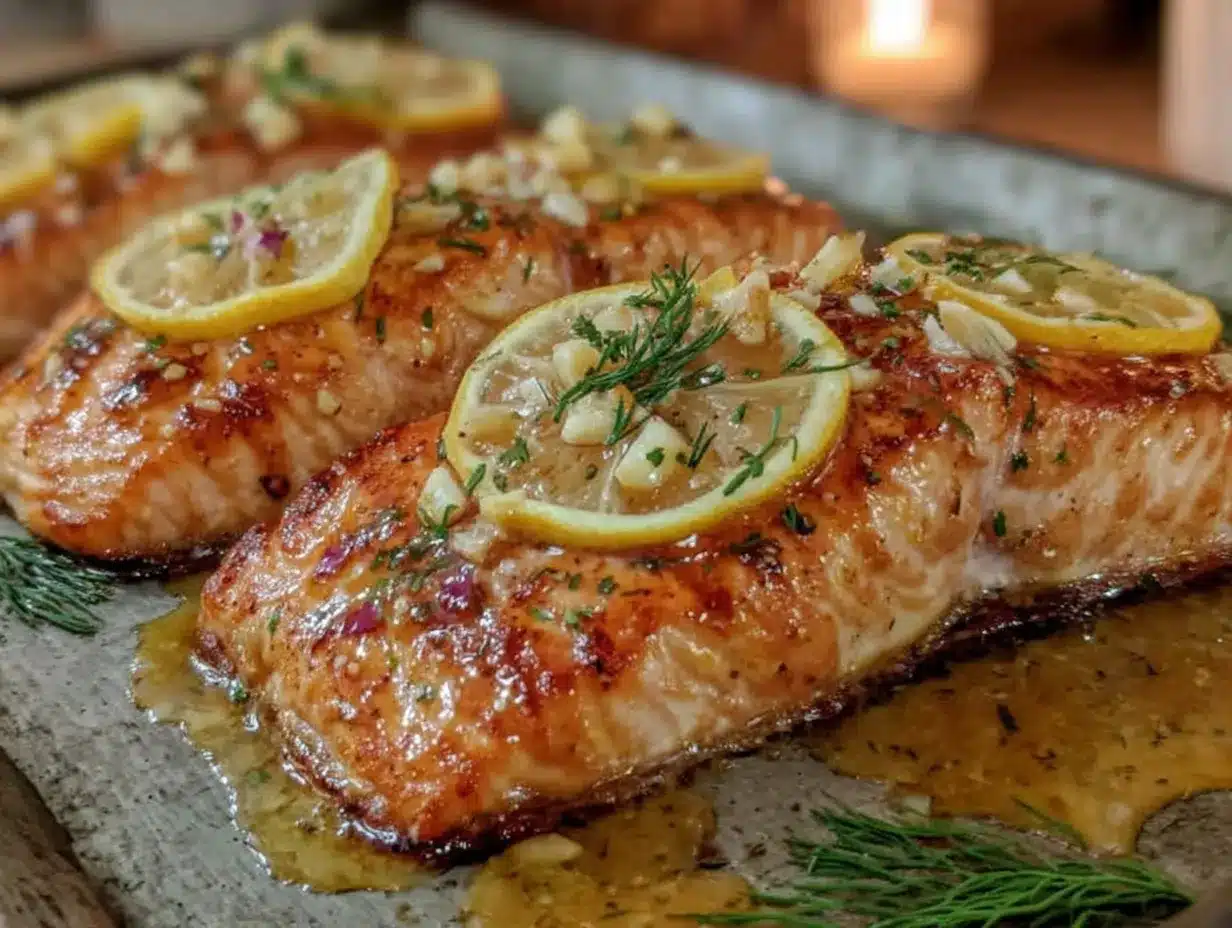
I’ve made this spring sheet pan salmon at least a dozen times since that Tuesday. It’s become my go-to for those evenings when I want something that feels special but doesn’t require me to scrub a million dishes. Maybe you’ve been there—you plan this elaborate meal, life gets in the way, and the simple thing you threw together out of desperation becomes the recipe you actually keep coming back to. That’s this salmon for me. It’s the happy accident I didn’t know I needed.
Why You’ll Love This Recipe
Let me tell you why this spring sheet pan salmon with lemon garlic butter has completely taken over my dinner rotation. It’s not just because it tastes incredible—though honestly, it does. It’s because this recipe solves about seven different dinner problems all at once.
- Quick & Easy: From fridge to table in under 30 minutes. No marinating, no complicated techniques, no standing over a hot stove. You toss everything on a pan, let the oven do the work, and dinner just happens.
- Simple Ingredients: Salmon, butter, lemon, garlic, and whatever spring vegetables look good at the store. That’s it. No trips to specialty markets or hunting down obscure ingredients.
- Perfect for Spring: This is the ultimate seasonal dinner. It celebrates asparagus, peas, radishes, and tender greens at their peak. It’s light enough for warm evenings but satisfying enough to feel like a real meal.
- Crowd-Pleaser: I’ve served this to picky kids, seafood skeptics, and my dad who “doesn’t eat vegetables.” Everyone cleans their plate. The lemon garlic butter does something magical—it makes everything taste familiar but special.
- Unbelievably Delicious: The salmon comes out perfectly flaky with these crispy edges where the butter caramelizes. The vegetables soak up all that lemony garlic goodness. It’s comfort food that doesn’t weigh you down.
What makes this recipe different from every other sheet pan salmon out there? It’s the technique. Most recipes tell you to toss everything together and hope for the best. I learned the hard way that timing matters. The butter needs to be cold when it goes on the salmon, not melted. The vegetables need to be cut to the right size so they cook evenly. And that lemon—you want thin slices, not thick chunks, so they soften and release their juice without turning bitter. These small details make the difference between good salmon and “I’m texting this recipe to everyone I know” salmon.
This is the kind of dinner that makes you close your eyes after the first bite. It’s spring on a plate—bright, fresh, and full of flavor. And the best part? You get to eat it without spending hours in the kitchen.
What Ingredients You Will Need
This recipe uses simple, fresh ingredients to create a dinner that tastes way more complicated than it actually is. The key is choosing good-quality salmon and vegetables that are in season—spring is the perfect time for this dish because everything at the market just looks happier.
For the Salmon
- 4 salmon filets (6 ounces each) – Look for filets that are about 1 inch thick so they cook evenly. I prefer wild-caught salmon when I can find it, but good-quality farmed salmon works beautifully too. Pat them dry with paper towels before seasoning—this helps the butter stick and gives you those nice crispy edges.
- 4 tablespoons unsalted butter, cold – This is important. Cold butter melts slowly in the oven, creating this rich, emulsified sauce as it cooks. If you use melted butter, it just runs off the salmon and pools on the pan. I use Kerrygold because it has a higher butterfat content, but any good unsalted butter works.
- 4 cloves garlic, thinly sliced – Thin slices are better than minced here. They soften and caramelize without burning, and you get these little pockets of garlicky goodness throughout the dish.
- 1 lemon, thinly sliced – Use a sharp knife or a mandoline if you have one. The slices should be thin enough that they soften in the oven but thick enough that they hold their shape. Remove any seeds.
- Salt and black pepper – Don’t be shy with the salt. Salmon needs a generous seasoning to bring out its flavor.
- Fresh dill or parsley for garnish – Optional but highly recommended. The freshness cuts through the richness of the butter.
For the Spring Vegetables
- 1 bunch asparagus, woody ends trimmed – Snap off the ends where they naturally break. If your asparagus is thick, peel the bottom half of the stalks for a more tender texture.
- 1 cup sugar snap peas, strings removed – Those little strings can be tough. Just pinch the tip and pull down—it’s oddly satisfying.
- 1 cup radishes, halved or quartered – Roasted radishes are a revelation. They lose their peppery bite and become sweet and tender, almost like little potatoes but lighter.
- 2 tablespoons olive oil – For coating the vegetables. Use a good extra-virgin olive oil if you have it.
- Salt and black pepper – Season the vegetables separately from the salmon so everything gets evenly seasoned.
For the Lemon Garlic Butter Sauce
- 2 tablespoons unsalted butter, melted – This gets drizzled over everything before it goes in the oven.
- 2 cloves garlic, minced – Minced here because it infuses the butter more quickly.
- 1 tablespoon fresh lemon juice – Fresh is non-negotiable. Bottled lemon juice has a flat, acidic taste that just doesn’t work here.
- 1 teaspoon lemon zest – This adds a brightness that juice alone can’t achieve. Zest the lemon before you slice it for the salmon.
- Pinch of red pepper flakes (optional) – I add this when I want a little heat. It’s not traditional but it works beautifully with the lemon.
Equipment Needed
You don’t need a lot of fancy equipment for this recipe, which is honestly one of the reasons I love it. Here’s what you’ll need:
- Half-sheet pan (13×18 inches) – This is the standard size for most sheet pan recipes. It gives you enough room to spread everything out without overcrowding. If your pan is smaller, use two pans or cook in batches. Overcrowding leads to steamed vegetables instead of roasted ones.
- Parchment paper or aluminum foil – Line your pan for easy cleanup. I prefer parchment paper because it doesn’t react with the lemon juice. If you use foil, go for the heavy-duty kind.
- Sharp chef’s knife – For slicing vegetables and garlic. A dull knife makes everything harder and more dangerous.
- Cutting board – Preferably one that won’t slide around on your counter. Put a damp paper towel under it if needed.
- Small bowl – For mixing the lemon garlic butter sauce.
- Citrus zester or microplane – For getting that lemon zest without the bitter white pith.
- Tongs – For flipping the vegetables halfway through cooking. A spatula works too, but tongs give you more control.
- Instant-read thermometer (optional but recommended) – Salmon is perfectly cooked at 125-130°F for medium. If you don’t have a thermometer, look for the fish to flake easily with a fork.
I used to think I needed a fancy fish spatula or a special roasting pan for recipes like this. Turns out, a basic sheet pan and a good knife are all you really need. If you don’t have a zester, you can use the fine side of a box grater or just skip the zest—the lemon slices will still add plenty of flavor.
Preparation Method
Alright, let’s make this spring sheet pan salmon. I’ve broken it down into clear steps so you don’t miss anything. Trust me, I’ve made every mistake possible with this recipe, so I’m telling you exactly what to do and what to avoid.
Step 1: Preheat and Prep
Preheat your oven to 400°F (200°C). While it’s heating up, line your sheet pan with parchment paper. Position your oven rack in the middle—not too high or too low. This ensures even cooking without burning the vegetables.
Step 2: Prepare the Vegetables
Wash and trim all your vegetables. Snap the woody ends off the asparagus—they’ll break naturally where the tough part ends. Remove the strings from the sugar snap peas by pinching the tip and pulling down along the seam. Halve or quarter the radishes depending on their size—you want them all roughly the same size so they cook evenly.
In a medium bowl, toss the vegetables with 2 tablespoons of olive oil, a generous pinch of salt, and some black pepper. Spread them out on one side of the prepared sheet pan, leaving room for the salmon. Don’t crowd them—they need space to roast, not steam.
Step 3: Season the Salmon
Pat the salmon filets dry with paper towels. This step matters more than you think—dry salmon gets crispy edges, wet salmon just steams. Season both sides generously with salt and pepper. Place the filets on the other side of the sheet pan, skin-side down if your filets have skin.
Step 4: Add the Cold Butter and Lemon Slices
Here’s the trick that makes this recipe special. Cut your cold butter into thin pats and place them on top of each salmon filet—about 1 tablespoon per filet. Layer a few thin lemon slices on top of the butter. The cold butter will melt slowly in the oven, basting the salmon as it cooks. If you use melted butter, it just runs off and pools on the pan. I learned this the hard way after three sad, dry filets.
Step 5: Make the Lemon Garlic Butter Sauce
In a small bowl, combine the melted butter, minced garlic, fresh lemon juice, lemon zest, and a pinch of red pepper flakes if you’re using them. Whisk it together with a fork. Drizzle this mixture over the vegetables, not the salmon—the salmon already has its butter pats. Toss the vegetables gently with tongs to coat them evenly.
Step 6: Roast Everything Together
Place the sheet pan in the preheated oven. Roast for 12-15 minutes, depending on the thickness of your salmon. At the 8-minute mark, use tongs to toss the vegetables so they cook evenly. The salmon is done when it flakes easily with a fork and the internal temperature reaches 125-130°F for medium. If you like your salmon more well-done, cook it to 135-140°F, but be careful not to overcook it—it goes from perfect to dry really fast.
Step 7: Garnish and Serve
Remove the pan from the oven. Let it rest for 2-3 minutes—this lets the juices redistribute. Sprinkle fresh dill or parsley over everything. The heat from the salmon will wilt the herbs just enough to release their flavor. Serve immediately, with extra lemon wedges on the side if you want more brightness.
A quick note about timing: If your vegetables are thicker (like chunky asparagus or large radishes), give them a 5-minute head start in the oven before adding the salmon. This way everything finishes at the same time. I forgot to do this once and ended up with perfectly cooked salmon and crunchy, underdone vegetables. Still edible, but not ideal.
Cooking Tips & Techniques
I’ve made this spring sheet pan salmon more times than I can count, and I’ve definitely learned a few things along the way. Here are the tips that make the biggest difference.
Don’t skip drying the salmon. This is probably the most common mistake I see. Wet salmon doesn’t brown properly, and you end up with pale, sad-looking filets. Take the extra 30 seconds to pat them dry. Your taste buds will thank you.
Cut vegetables to the right size. Asparagus should be about the same thickness, radishes should be halved or quartered evenly, and snap peas can stay whole. If your pieces are wildly different sizes, some will burn while others stay raw. I learned this after a particularly sad batch where my tiny radish pieces turned into charcoal.
Use cold butter, not melted. I know I keep saying this, but it’s genuinely the key to this recipe. Cold butter melts slowly, creating a rich, emulsified sauce that coats the salmon as it cooks. Melted butter just runs off and burns on the pan. Trust me on this one.
Don’t overcrowd the pan. If everything is crammed together, the vegetables steam instead of roast. You lose those beautiful caramelized edges that make this dish so good. If you’re cooking for a crowd, use two pans or cook in batches.
Check the salmon early. Ovens vary, and salmon cooks fast. Start checking at the 10-minute mark if your filets are thin. I’ve ruined plenty of salmon by assuming it needed the full cooking time. An instant-read thermometer is your best friend here.
Let it rest. That 2-3 minute rest after cooking isn’t just for show. It lets the juices redistribute so the salmon stays moist. Cut into it too early and all that buttery goodness ends up on your cutting board instead of in your mouth.
Variations & Adaptations
One of the best things about this spring sheet pan salmon is how easy it is to adapt. Here are some variations I’ve tried and loved.
Vegetable Swaps
Not a fan of asparagus? No problem. Swap in broccoli florets, green beans, or zucchini slices. In early spring, I use ramps or spring onions instead of regular garlic. In late spring, I add halved cherry tomatoes—they burst in the oven and create this amazing little sauce. Just remember to adjust cooking times for denser vegetables. Broccoli needs about the same time as asparagus, but zucchini cooks faster, so add it halfway through.
Dietary Adaptations
Dairy-free version: Replace the butter with a good-quality olive oil or a dairy-free butter alternative. The texture will be slightly different, but it’s still delicious. I’ve used Miyoko’s vegan butter with great results.
Low-carb option: This recipe is naturally low in carbs, but you can swap the sugar snap peas for more radishes or add some zucchini for extra volume.
Gluten-free: This recipe is naturally gluten-free as written. Just double-check your spice blends if you’re adding any.
Flavor Twists
Herb crust: Mix chopped fresh herbs (dill, parsley, chives) with panko breadcrumbs and a little olive oil, then press onto the salmon before roasting. It adds a lovely crunchy texture.
Spicy version: Add more red pepper flakes to the butter sauce, or rub the salmon with a little harissa paste before adding the butter. The heat pairs beautifully with the lemon.
Mediterranean twist: Add olives, capers, and sun-dried tomatoes to the vegetable mix. Use oregano instead of dill for garnish.
My personal favorite variation? I swap the radishes for thinly sliced fennel and add a handful of fresh peas in the last 5 minutes of cooking. The fennel gets sweet and tender, and the peas stay bright green. It’s spring in every bite.
Serving & Storage Suggestions
This spring sheet pan salmon is incredibly versatile when it comes to serving. Here’s how I like to enjoy it.
Serving temperature: Serve it hot out of the oven for the best texture. The butter should be melted and glossy, the vegetables tender but not mushy. If you’re serving it to guests, bring the whole sheet pan to the table—it looks beautiful and makes serving easy.
What to serve with it: This dish is pretty complete on its own, but I love adding a simple side. A bed of fluffy rice or quinoa soaks up all that lemony butter sauce. Crusty bread is also amazing for sopping up every last drop. For a lighter option, serve it over a bed of arugula dressed with lemon juice and olive oil—the warm salmon wilts the greens just enough.
Beverage pairings: A crisp white wine like Sauvignon Blanc or Pinot Grigio is perfect with the lemon and garlic. For a non-alcoholic option, sparkling water with a slice of lemon or a cucumber-infused water works beautifully.
Storage instructions: Store leftovers in an airtight container in the refrigerator for up to 3 days. The salmon will lose some of its flakiness when reheated, but the flavor is still great. I don’t recommend freezing this dish—the texture of both the salmon and vegetables suffers too much.
Reheating tips: The best way to reheat is in a low oven (300°F) for about 10 minutes. This gently warms everything without drying out the salmon. You can also reheat in a skillet over medium-low heat with a splash of water or broth. Avoid the microwave if you can—it tends to make the salmon rubbery and the vegetables mushy.
One thing I’ve noticed: the flavors actually deepen overnight. The lemon and garlic meld together, and the vegetables soak up all that buttery goodness. Leftover salmon is amazing flaked over a salad for lunch the next day.
Nutritional Information & Benefits
This spring sheet pan salmon isn’t just delicious—it’s genuinely good for you. Here’s a breakdown of what you’re getting in each serving.
Estimated nutritional values per serving (1 salmon filet with vegetables):
- Calories: 420-450
- Protein: 35-38g
- Fat: 28-30g (mostly healthy fats from salmon and olive oil)
- Carbohydrates: 10-12g
- Fiber: 4-5g
- Sugar: 4-5g (naturally occurring)
Health benefits: Salmon is packed with omega-3 fatty acids, which support heart health and brain function. It’s also an excellent source of high-quality protein and vitamin D. The spring vegetables add fiber, vitamins A and C, and antioxidants. Asparagus is particularly rich in folate, while radishes provide a good dose of vitamin C and potassium.
Dietary considerations: This recipe is naturally gluten-free, low-carb, and can be made dairy-free with a simple substitution. It’s also relatively low in carbohydrates, making it suitable for many dietary preferences. The main allergens are fish and dairy (butter), so keep that in mind if you’re cooking for someone with sensitivities.
I love that this meal feels indulgent—all that butter and garlic—but it’s actually packed with nutrients. It’s the kind of dinner that makes you feel good while you’re eating it and good after, too. No heavy, weighed-down feeling. Just satisfaction.
Conclusion
This spring sheet pan salmon with lemon garlic butter has become my go-to for so many reasons. It’s quick enough for a busy Tuesday, but impressive enough for a dinner party. It celebrates the best of spring produce without requiring you to spend all day in the kitchen. And honestly? It’s just really, really good.
I love how forgiving this recipe is. You can swap vegetables based on what’s at the market, adjust the seasoning to your taste, and it still turns out beautifully. The lemon garlic butter does all the heavy lifting—it makes everything taste special without any complicated techniques.
I hope you give this recipe a try. Maybe you’ll make it exactly as written, or maybe you’ll add your own twist. That’s the beauty of a simple recipe like this—it leaves room for your own creativity. If you do make it, I’d love to hear how it turned out. Leave a comment below or tag me in your photos. And if you have a favorite variation, please share it—I’m always looking for new ideas to try.
Here’s to spring dinners that feel like a celebration, even on a random Tuesday night. Happy cooking!
Frequently Asked Questions
Can I use frozen salmon for this recipe?
Yes, you can use frozen salmon, but you’ll need to thaw it completely first. The best way is to transfer it to the refrigerator the night before. If you’re in a hurry, place the sealed salmon in a bowl of cold water for about 30 minutes. Pat it very dry before seasoning—frozen salmon tends to release more water as it cooks.
How do I know when the salmon is fully cooked?
The most reliable method is using an instant-read thermometer. Salmon is perfectly cooked at 125-130°F for medium (still slightly translucent in the center) or 135-140°F for well-done. If you don’t have a thermometer, look for the fish to flake easily with a fork and the flesh to be opaque all the way through.
Can I prepare this recipe ahead of time?
You can prep the vegetables and make the lemon garlic butter sauce up to a day in advance. Store them separately in the refrigerator. When you’re ready to cook, just arrange everything on the pan and roast. I don’t recommend assembling the full dish ahead of time, as the salmon will release moisture and the vegetables will get soggy.
What other vegetables work well in this recipe?
Almost any spring vegetable works beautifully. Try broccoli florets, green beans, zucchini slices, halved cherry tomatoes, or thinly sliced fennel. Just adjust cooking times based on density—denser vegetables like broccoli need the full cooking time, while softer ones like zucchini should be added halfway through.
Can I make this recipe with other types of fish?
Absolutely. This recipe works well with any firm, flaky fish. Try it with arctic char, trout, halibut, or even thick white fish like cod or haddock. Adjust cooking times based on thickness—thinner fish will cook faster, so start checking at the 8-minute mark.
Pin This Recipe!
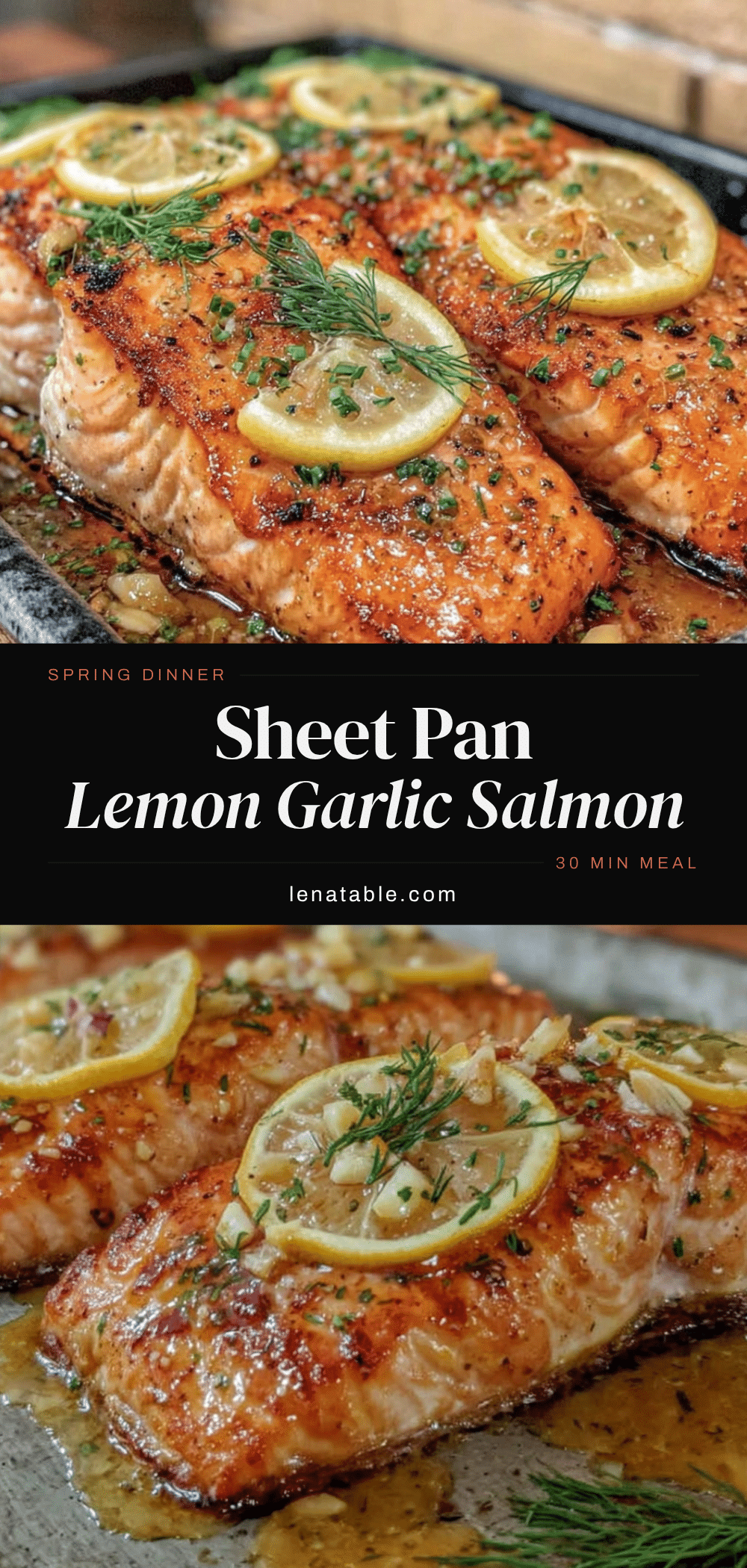
Spring Sheet Pan Salmon – Easy Lemon Garlic Butter Recipe
A quick and easy sheet pan salmon with lemon garlic butter and spring vegetables, perfect for busy weeknights. Ready in under 30 minutes with minimal cleanup.
- Prep Time: 10 minutes
- Cook Time: 15 minutes
- Total Time: 25 minutes
- Yield: 4 servings 1x
- Category: Main Course
- Cuisine: American
Ingredients
- 4 salmon filets (6 ounces each)
- 4 tablespoons unsalted butter, cold
- 4 cloves garlic, thinly sliced
- 1 lemon, thinly sliced
- Salt and black pepper to taste
- Fresh dill or parsley for garnish
- 1 bunch asparagus, woody ends trimmed
- 1 cup sugar snap peas, strings removed
- 1 cup radishes, halved or quartered
- 2 tablespoons olive oil
- Salt and black pepper to taste
- 2 tablespoons unsalted butter, melted
- 2 cloves garlic, minced
- 1 tablespoon fresh lemon juice
- 1 teaspoon lemon zest
- Pinch of red pepper flakes (optional)
Instructions
- Preheat your oven to 400°F (200°C). Line a half-sheet pan with parchment paper. Position the oven rack in the middle.
- Wash and trim the vegetables. Snap woody ends off asparagus, remove strings from sugar snap peas, and halve or quarter radishes. In a medium bowl, toss vegetables with 2 tablespoons olive oil, salt, and pepper. Spread on one side of the prepared sheet pan.
- Pat salmon filets dry with paper towels. Season both sides generously with salt and pepper. Place filets on the other side of the sheet pan, skin-side down if applicable.
- Cut cold butter into thin pats and place on top of each salmon filet (about 1 tablespoon per filet). Layer thin lemon slices on top of the butter.
- In a small bowl, combine melted butter, minced garlic, lemon juice, lemon zest, and red pepper flakes (if using). Drizzle over the vegetables and toss gently with tongs.
- Roast for 12-15 minutes. At the 8-minute mark, toss the vegetables. Salmon is done when it flakes easily with a fork and internal temperature reaches 125-130°F for medium.
- Remove from oven and let rest for 2-3 minutes. Sprinkle with fresh dill or parsley. Serve immediately with extra lemon wedges if desired.
Notes
For thicker vegetables, give them a 5-minute head start in the oven before adding the salmon. Use cold butter for best results. Let salmon rest before serving.
Nutrition
- Serving Size: 1 salmon filet with
- Calories: 435
- Sugar: 4.5
- Sodium: 480
- Fat: 29
- Saturated Fat: 12
- Carbohydrates: 11
- Fiber: 4.5
- Protein: 36
Keywords: sheet pan salmon, lemon garlic butter, spring vegetables, quick dinner, healthy salmon recipe