Love this? Save it for later!
Share the inspiration with your friends
I’m not supposed to play favorites with recipes, but let me be honest with you for a second. For years, corned beef and cabbage was the meal I made for myself on St. Patrick’s Day while everyone else in my house ate something else. My kids claimed they hated it. My husband gave it that polite “it’s fine” nod that every cook knows means “please don’t make this again.” And honestly? I couldn’t blame them. The version I grew up with was tough, salty, and the cabbage turned into this sad, gray, slimy mess that smelled like a wet sock. I kept making it anyway, because tradition, right?
Then last March, everything changed. I had a brisket in the slow cooker (I was determined to use up the freezer stash before spring hit), and my youngest wandered into the kitchen around 4 PM, sniffing the air like a cartoon character. “What’s that smell?” she asked. Not in a gross way. In a curious way. I almost dropped my spatula. She asked for a taste of the meat when I pulled it out to slice it, and I watched her chew, expecting the usual scrunched-up face. Instead, she held out her hand for more. My husband came home early that day and found three kids standing around the kitchen island, eating corned beef straight off the cutting board. Nobody even noticed I’d put the cabbage on the table until my son asked, “Wait, is that the cabbage? It doesn’t look gross.”
That was the moment I realized the problem wasn’t corned beef and cabbage. It was the way I’d been cooking it. This slow cooker version changed everything, and I haven’t made it any other way since. If you’ve got a family full of skeptics, or maybe you’re the skeptic yourself, this one’s for you.
Why You’ll Love This Slow Cooker Corned Beef and Cabbage
Let me tell you why this recipe is different from every other corned beef you’ve tried. I’ve tested this method about a dozen times over the past year, tweaking the timing and the liquid ratio until I got it just right. My neighbor, who runs a small catering business out of her home, actually asked me for the recipe after I brought her a plate. That’s when I knew I had something worth sharing.
- Set It and Forget It : This recipe does all the hard work while you go about your day. Fifteen minutes of prep in the morning, and dinner is ready when you are. Perfect for busy weeknights or lazy weekends.
- Simple Ingredients : You only need a handful of things. The corned beef brisket comes with its own seasoning packet, so you don’t have to hunt down obscure spices. Potatoes, carrots, and cabbage are cheap and easy to find.
- Perfect for Family Dinners : This isn’t just a St. Patrick’s Day meal. It’s the kind of dinner that makes a Tuesday feel special without breaking the bank or your energy.
- Crowd-Pleaser : The meat comes out so tender that even picky eaters forget they’re eating “grown-up food.” My kids went from avoiding it to asking for seconds.
- Unbelievably Delicious : The slow cooking process breaks down the brisket until it’s fork-tender and juicy. The cabbage stays sweet and firm, not mushy or stinky. The vegetables soak up all that savory, spiced broth until they’re the best part of the plate.
This isn’t just another corned beef recipe. It’s the one that converts people. It’s the one that makes you close your eyes after the first bite and wonder why you didn’t try this sooner. It’s comfort food that actually delivers, without the stress or the weird smells.
What Ingredients You Will Need
This recipe uses simple, honest ingredients that you can find at any grocery store. The magic happens in the slow cooker, where everything gets cozy and flavorful together.
- Corned beef brisket (3 to 4 pounds) – Look for one with the seasoning packet included. I usually grab whatever brand is on sale, but I’ve had good luck with the store brand at my local market. If you can find a flat cut (leaner) or point cut (more marbled, extra tender), either works great here.
- Seasoning packet (included with the brisket) – Don’t toss this! It’s a blend of peppercorns, mustard seeds, and bay leaves that gives the broth its signature flavor.
- Yellow onions (2 medium, quartered) – They melt into the broth and add sweetness without being overpowering.
- Garlic cloves (4 to 5, smashed) – Adds depth. I just smash them with the side of my knife, no need to chop finely.
- Baby potatoes (1.5 pounds, about 6 to 8 cups) – No need to peel them. Just give them a good scrub. If you can’t find baby potatoes, Yukon Golds cut into 2-inch chunks work perfectly.
- Carrots (4 to 5 large, peeled and cut into 2-inch chunks) – They get sweet and buttery from the slow cooking.
- Green cabbage (1 medium head, cut into 8 wedges) – This is the star that usually gets a bad rap. Cutting it into wedges instead of shredding it helps it hold its shape and stay sweet.
- Water or low-sodium beef broth (2 cups) – I use water most of the time because the brisket releases so much flavor. Beef broth adds an extra layer if you have it on hand.
- Apple cider vinegar (2 tablespoons) – This is my secret weapon. It cuts through the richness and brightens up the whole dish. Don’t skip it.
- Brown sugar (1 tablespoon, packed) – Just a touch to balance the saltiness. You won’t taste it as “sweet,” I promise.
A note on the brisket : I recommend rinsing the brisket under cold water before cooking to remove some of the surface brine. Some folks skip this, but I find it gives you a more balanced flavor. Pat it dry with paper towels afterward.
Equipment Needed
You don’t need a fancy kitchen to pull this off. Here’s what you’ll need:
- Slow cooker (6 to 7 quarts) – This is non-negotiable. A 4-quart will be too small for a 3-pound brisket plus all the vegetables. I use a 6-quart Crock-Pot that I got on sale for thirty bucks, and it’s been going strong for five years.
- Cutting board – One for raw meat, one for vegetables. Or just wash it well in between.
- Chef’s knife – A sharp one makes cutting the cabbage wedges so much easier and safer.
- Vegetable peeler – For the carrots, unless you’re using baby carrots.
- Measuring cups and spoons – For the liquid and seasonings.
- Paper towels – For patting the brisket dry.
- Tongs – For handling the hot brisket and vegetables.
- Large serving platter – For presenting everything nicely.
If you don’t have a slow cooker, you can use a Dutch oven in a 300°F oven for about 3 to 4 hours, but you’ll need to check the liquid level more often. The slow cooker is really the easiest route, especially if you’re feeding a family on a busy day.
Preparation Method
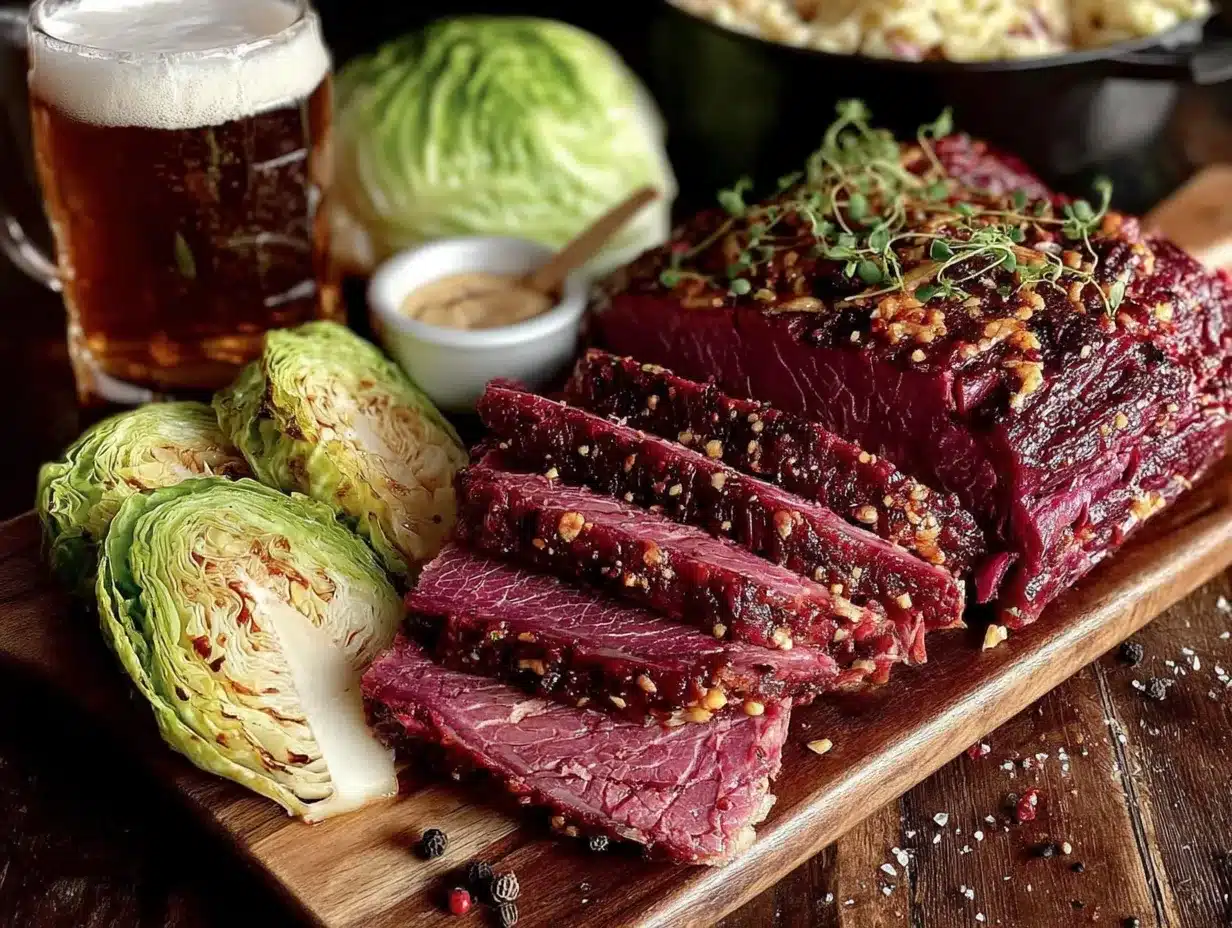
Alright, let’s get cooking. This is straightforward, but I’ll walk you through every step so you feel confident.
- Prep the brisket (5 minutes) : Take the corned beef out of its package. Reserve the seasoning packet. Rinse the brisket under cold running water for about 30 seconds to remove excess brine. Pat it completely dry with paper towels. This step makes a noticeable difference in the saltiness of the final dish.
- Layer the aromatics (5 minutes) : Place the quartered onions and smashed garlic cloves in the bottom of your slow cooker. This creates a little bed for the brisket to sit on, which helps it cook evenly and infuses the meat with flavor from underneath.
- Add the brisket and seasonings (2 minutes) : Place the brisket on top of the onions, fat side up. Sprinkle the contents of the seasoning packet over the top. If you want a little extra peppery kick, you can add a few more whole peppercorns, but the packet is usually plenty.
- Add the liquid (1 minute) : Pour the 2 cups of water (or beef broth) around the side of the brisket, being careful not to wash off the seasonings. Add the apple cider vinegar and sprinkle the brown sugar over the top.
- Slow cook the meat (8 to 10 hours on low, or 5 to 6 hours on high) : Put the lid on and let it do its thing. I prefer cooking on low for 8 to 9 hours. The meat gets significantly more tender at the lower temperature. If you’re in a rush, high works, but the texture won’t be quite as melt-in-your-mouth.
- Add the vegetables (about 1 hour before serving) : Here’s the trick that changed everything for me. About 60 to 90 minutes before you want to eat, add the baby potatoes and carrot chunks to the slow cooker. Push them down into the liquid as much as you can. Replace the lid and continue cooking.
- Add the cabbage (30 minutes before serving) : After the potatoes and carrots have been cooking for about 30 minutes, nestle the cabbage wedges into the liquid around the brisket. Spoon some of the broth over the top of the cabbage. Cover and cook for the final 30 minutes. The cabbage should be tender but still have a little bite to it. It will be sweet and savory, not mushy or bitter.
- Rest and slice (10 minutes) : Carefully remove the brisket from the slow cooker using tongs and place it on a cutting board. Let it rest for 10 minutes before slicing. This lets the juices redistribute so the meat stays moist. Slice against the grain into 1/4-inch to 1/2-inch thick slices. If the meat is falling apart (which it should be if you cooked it low and slow), just pull it into large chunks.
- Serve it up (5 minutes) : Arrange the sliced brisket, potatoes, carrots, and cabbage wedges on a large platter. Spoon a little of the cooking liquid over everything for extra moisture and flavor. Serve with a side of whole-grain mustard or horseradish if you like, though my kids prefer it just as it is.
Cooking Tips & Techniques
I’ve made this recipe enough times to know where things can go wrong. Here’s what I’ve learned, sometimes the hard way.
Don’t skip the rinse. The first time I made this, I didn’t rinse the brisket, and the broth was so salty I could barely eat it. The brine is there to preserve and flavor the meat, but it’s concentrated. A quick rinse balances everything out.
Fat side up, always. The fat cap renders down as it cooks, basting the meat and keeping it juicy. If you put it fat side down, it can get greasy and the lean side can dry out.
The cabbage timing is everything. I learned this the hard way when I threw the cabbage in at the beginning with the meat. Eight hours later, it was a sad, gray, smelly mess that nobody touched. Cabbage only needs 30 to 45 minutes in the slow cooker. Any longer, and it turns into something that gives corned beef a bad name.
Low and slow is worth the wait. I know it’s tempting to crank it to high and get dinner done faster, but the brisket really benefits from the longer, gentler cooking. Collagen breaks down more completely at lower temperatures, giving you that fork-tender texture. If you’re short on time, high for 5 hours works, but low for 8 to 9 is where the magic happens.
Multitasking hack : While the meat is resting, I use that 10 minutes to set the table and wrangle the kids to wash their hands. It’s a small window, but it makes the final serving feel less chaotic.
Variations & Adaptations
This recipe is flexible, and I love that about it. Here are a few ways to make it your own.
Gluten-free option : This recipe is naturally gluten-free as written, as long as you check that your corned beef seasoning packet doesn’t contain any wheat-based fillers. Most brands are safe, but it’s worth a quick label read.
Low-carb version : Skip the potatoes and double up on the cabbage and carrots. You can also add some turnips or rutabaga chunks, which hold up well in the slow cooker and have a similar texture to potatoes without the carbs.
Extra veggies : I’ve added parsnips and celery root to the mix when I had them on hand. They soak up the broth beautifully. Just cut them into similar-sized chunks as the carrots.
Spicy twist : My husband likes things with a kick, so sometimes I add a teaspoon of red pepper flakes to the broth along with the seasoning packet. It gives the whole dish a warm, subtle heat that doesn’t overwhelm the kids.
Make it a one-pot meal : If you have a large enough slow cooker, you can add everything at once (except the cabbage, which still goes in late). I’ve done this when I’m really pressed for time, and it works, though the vegetables are softer than I prefer.
Leftover makeover : The leftover meat makes incredible sandwiches the next day. I pile it on rye bread with Swiss cheese and a smear of Russian dressing. My kids like it in quesadillas with cheddar cheese, which sounds weird but is surprisingly delicious.
Serving & Storage Suggestions
This dish is best served hot, right off the platter. I like to spoon a little of the cooking liquid over everything just before serving to keep it moist and flavorful. A side of grainy mustard or creamy horseradish sauce is traditional, but my family eats it straight up with no complaints.
For a complete meal, I sometimes add a simple green salad with a tangy vinaigrette to cut through the richness. The acidity of the dressing plays nicely with the savory beef. Crusty bread is also a great addition for sopping up the broth, though we don’t always need it.
Storage : Leftovers keep well in an airtight container in the refrigerator for up to 4 days. The flavors actually get better as they sit, especially the cabbage and potatoes.
Reheating : The best way to reheat this is in a covered skillet or saucepan over medium-low heat with a splash of water or beef broth. Microwave works in a pinch, but it can dry out the meat. If you’re reheating just the meat, slice it thin and warm it gently in the broth.
Freezing : The cooked brisket freezes well for up to 3 months. Slice it before freezing, and wrap it tightly in foil or freezer paper, then place it in a freezer bag. The vegetables don’t freeze as well—they get mushy when thawed—so I recommend freezing only the meat. Thaw overnight in the refrigerator before reheating.
Nutritional Information & Benefits
This meal is hearty and satisfying, and it brings some good nutrition to the table along with the comfort.
Estimated per serving (based on 8 servings) : Calories: 420, Protein: 28g, Fat: 18g, Carbohydrates: 35g, Fiber: 6g, Sugar: 10g, Sodium: 980mg. These are rough estimates and will vary based on the specific cut of meat and vegetables you use.
Health highlights : Corned beef is a good source of protein, iron, and B vitamins, especially B12, which is important for energy and brain function. Cabbage is packed with vitamin C and fiber, and it’s a cruciferous vegetable that supports digestive health. Potatoes and carrots add potassium and vitamin A to the mix. It’s not a light meal, but it’s a balanced one that leaves you feeling satisfied, not stuffed.
Dietary considerations : This recipe is gluten-free and dairy-free as written. It’s high in sodium due to the brining process, so if you’re watching your salt intake, be mindful of portions and skip the extra salt.
Conclusion
This slow cooker corned beef and cabbage has become a regular in our dinner rotation, not just a once-a-year holiday dish. It’s the kind of recipe that proves you don’t need fancy techniques or expensive ingredients to make something memorable. You just need a little patience and a slow cooker.
I love this recipe because it brought my family together around a meal they used to avoid. It’s practical, affordable, and forgiving. You can tweak it based on what you have in your fridge, and it still turns out great. That’s the kind of cooking I believe in—smart, resourceful, and full of heart.
If you give this a try, I’d love to hear how it went. Did your kids surprise you? Did you add your own twist? Drop a comment below and let me know. And if you’re looking for more family-friendly meals that won’t break the bank, stick around—I’ve got plenty more where this came from.
Frequently Asked Questions
Can I use a different cut of beef for this recipe?
Corned beef is specifically a brined brisket, so it’s hard to replicate exactly with another cut. You could use a bottom round or chuck roast, but you’d need to add your own pickling spices and brine it overnight. The texture and flavor won’t be the same. I’d recommend sticking with the brisket for the best results.
Do I have to use the seasoning packet that comes with the brisket?
Not necessarily, but it’s convenient and perfectly balanced for this dish. If you’ve lost the packet or prefer to make your own, you can use a mix of 1 teaspoon whole black peppercorns, 1 teaspoon mustard seeds, 1 teaspoon coriander seeds, and 2 bay leaves. It’s a close match.
Why did my cabbage turn out bitter?
Cabbage can become bitter if it’s overcooked or if it’s an older head. Make sure you’re adding it only for the last 30 minutes of cooking, and try to buy a fresh, firm head of cabbage. The sweetness of the carrots and the touch of brown sugar in the broth also help balance any bitterness.
Can I cook this on high instead of low?
Yes, you can cook it on high for 5 to 6 hours instead of low for 8 to 10. The meat will be tender, but it won’t be quite as melt-in-your-mouth. If you’re in a pinch, high works fine. Just keep an eye on the liquid level, as high heat can evaporate more moisture.
How do I slice corned beef without it falling apart?
Let the brisket rest for at least 10 minutes after you take it out of the slow cooker. This allows the juices to settle and the meat to firm up slightly. Use a sharp knife and slice against the grain (look for the lines running through the meat and cut perpendicular to them). If it’s falling apart anyway, just pull it into chunks—it’s still delicious.
Pin This Recipe!
Easy Slow Cooker Corned Beef and Cabbage for Kids
This slow cooker corned beef and cabbage is so tender and flavorful that even picky eaters will ask for seconds. With just 15 minutes of prep, you can set it and forget it for a comforting family dinner that turns skeptics into fans.
- Prep Time: 15 minutes
- Cook Time: 8 hours 30 minutes
- Total Time: 8 hours 45 minutes
- Yield: 8 servings 1x
- Category: Main Course
- Cuisine: Irish-American
Ingredients
- 3 to 4 pounds corned beef brisket (with seasoning packet)
- 1 seasoning packet (included with brisket)
- 2 medium yellow onions, quartered
- 4 to 5 garlic cloves, smashed
- 1.5 pounds baby potatoes (about 6 to 8 cups), scrubbed
- 4 to 5 large carrots, peeled and cut into 2-inch chunks
- 1 medium head green cabbage, cut into 8 wedges
- 2 cups water or low-sodium beef broth
- 2 tablespoons apple cider vinegar
- 1 tablespoon packed brown sugar
Instructions
- Prep the brisket: Remove corned beef from package, reserve seasoning packet. Rinse brisket under cold water for 30 seconds, then pat dry with paper towels.
- Layer the aromatics: Place quartered onions and smashed garlic cloves in the bottom of a 6- to 7-quart slow cooker.
- Add the brisket and seasonings: Place brisket on top of onions, fat side up. Sprinkle seasoning packet over the top.
- Add the liquid: Pour 2 cups water or beef broth around the side of the brisket. Add apple cider vinegar and sprinkle brown sugar over the top.
- Slow cook the meat: Cover and cook on low for 8 to 10 hours or on high for 5 to 6 hours.
- Add the vegetables: About 60 to 90 minutes before serving, add baby potatoes and carrot chunks to the slow cooker, pushing them into the liquid. Cover and continue cooking.
- Add the cabbage: After 30 minutes, nestle cabbage wedges into the liquid around the brisket. Spoon some broth over the cabbage. Cover and cook for the final 30 minutes.
- Rest and slice: Carefully remove brisket from slow cooker and let rest on a cutting board for 10 minutes. Slice against the grain into 1/4- to 1/2-inch thick slices, or pull into large chunks if falling apart.
- Serve: Arrange sliced brisket, potatoes, carrots, and cabbage wedges on a large platter. Spoon some cooking liquid over everything. Serve with whole-grain mustard or horseradish if desired.
Notes
Rinsing the brisket removes excess brine for a more balanced flavor. Always place brisket fat side up so the fat renders and bastes the meat. Add cabbage only for the last 30 minutes to avoid a mushy, bitter result. Low and slow (8-9 hours on low) yields the most tender meat. Leftover meat makes excellent sandwiches or quesadillas.
Nutrition
- Serving Size: 1 serving (about 1/8
- Calories: 420
- Sugar: 10
- Sodium: 980
- Fat: 18
- Saturated Fat: 6
- Carbohydrates: 35
- Fiber: 6
- Protein: 28
Keywords: slow cooker corned beef, corned beef and cabbage, St. Patrick's Day, family dinner, easy corned beef, kid-friendly corned beef